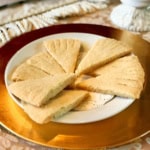
A Classic Scottish Shortbread
Classic Scottish Shortbread is a simple, buttery cookie with a tender, crumbly texture. Made with just a few pantry staples and baked low and slow, it’s a timeless favorite for holidays, cookie trays, and afternoon tea.
Servings: 36 servings
Calories: 124kcal
Ingredients
- 1 ⅓ cup butter 2 sticks plus 6 tablespoons, softened
- 1 cup sugar superfine is best but granulated works too
- 1 teaspoon vanilla
- ¾ teaspoon salt
- 3 ⅓ cup all-purpose flour
Instructions
- There are several ways to make this Scottish Shortbread recipe. The dough fits easily into a 13" x 9" baking pan, which I score before baking. It's also perfect for shortbread molds, like my Snowflake Shortbread Cookies. But it also works well shaped into petticoat tails, which are rounded discs with crimped or lined edges. But anyway you shape them, they are a treat everyone will love.
- To make the dough: Preheat the oven to 275°F and spray your baking pan with nonstick cooking spray or line with parchment paper, which is my preferred method.
- Cream the butter in a stand mixer until it is light and fluffy -- about 3 minutes. Add sugar and continue to cream until the sugar is completely incorporated. Add salt and vanilla and stir to combine.
- Add the flour to the butter mixture and the dough comes together and is just combined. Press dough into prepared pan, mold, or shape on a parchment-lined baking sheet.
- 9x13-inch Pan: If you are using a 9x13-inch pan, score the dough lengthwise into 9 strips and then cut crosswise into 36, 3-inch strips. Use the tins of a fork to create a perforated pattern. Sprinkle with sanding sugar if desired.
- Round Petticoat Trails on a Sheet Pan: If you're shaping the shortbread into discs, divide the dough in half. Shape each half into a circular disc, smooth the top and round the edges. And then either crimp the edges with your fingers or score them with a sharp knife.
- Bake: Bake shortbread in a 275° oven for 60 - 75 minutes or until evenly pale golden. Cool completely. Use a serrated knife to cut.
Notes
- Traditional Ratio: Classic Scottish shortbread is often described by a 1-2-3 ratio — 1 part sugar, 2 parts butter, and 3 parts flour — measured by weight. This recipe uses familiar U.S. cup measurements that closely reflect the traditional balance while producing reliable, buttery results.
- Sugar Choice: Superfine (caster) sugar is traditional and creates a delicate, tender crumb. Granulated sugar works well too and is more commonly available in U.S. kitchens.
- Vanilla: Vanilla extract isn’t strictly traditional, but a small amount adds warmth and enhances the buttery flavor without overpowering the shortbread.
- Low and Slow Baking: Shortbread is baked at a low temperature to gently dry the dough rather than brown it. The cookies should remain pale with just a hint of golden color.
- Shaping Options: This dough works well pressed into a 9×13-inch pan, shaped into round petticoat tails, or baked in shortbread molds. Baking times may vary slightly depending on thickness and shape.
- Make Ahead & Storage: Shortbread improves with age. Store in an airtight container at room temperature for up to one week, or freeze baked shortbread for up to 3 months.
Nutrition
Serving: 1g | Calories: 124kcal | Carbohydrates: 14g | Protein: 1g | Fat: 7g | Saturated Fat: 4g | Polyunsaturated Fat: 2g | Cholesterol: 18mg | Sodium: 98mg | Sugar: 6g