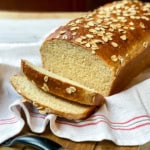
Simple Oatmeal Sandwich Bread
A soft honey oat bread made with rolled oats and honey. This sliceable sandwich loaf is lightly sweet, easy to make, and perfect for sandwiches, toast, and everyday baking.
Servings: 16 servings
Calories: 149kcal
Ingredients
- 3 cups all-purpose flour or bread flour
- 1 cup old fashioned oats
- 2 tablespoons butter
- 1 ½ teaspoon salt
- 3 tablespoons honey
- 2 teaspoons instant yeast or 1 packet
- 1 ¼ cup lukewarm milk
Egg Wash & Topping
- 1 egg white beaten
- 1 tablespoon water
- 2 tablespoons oats
Instructions
- Make the Dough: In a large mixing bowl, or in the bowl of a stand mixer, mix together all of the ingredients to form a rough, shaggy dough. I like to use a to bring the dough together quickly. It is becoming my FAVORITE bread dough tool.
- Knead the dough: Knead by hand or in the stand mixer fitted with the dough hook until it is soft, about 5 to 7 minutes. The dough will be quite sticky in the beginning, but try not to add additional flour, as it will make the bread dry. As it kneads, especially if kneaded by hand, the dough should become springy but soft.
- First Rise: Place the dough in a lightly greased bowl, turn to coat, and then cover with plastic wrap. Set it in a warm place and let it rise for 1 hour. It will be puffy but may not double in size.
- Shape the Dough: Transfer the dough to a very lightly floured surface. Flatten it into a rectangle shape. Fold the top of the rectangle down to the center, pressing firmly to seal. Pull the upper left and right corners into the center, pressing to seal. Repeat until you've created a log. Tuck the ends under slightly, and place, seam side down, in a lightly greased 9" x 5" loaf pan.
- Second Rise: Cover with dough with lightly greased plastic wrap. Let the dough rise in a warm place for 1 to 1 ½ hours, or until the dough has crested the rim of the pan by about 1 inch.
- Preheat the Oven: In the latter half of the second rise, preheat the oven to 350°F with a rack in the center.
- Add the topping: Whisk together the egg white and water. Brush the mixture over the crust of the risen loaf. Sprinkle with old fashioned oats.
- Bake the Bread: Bake the bread in the preheated oven for 35 to 40 minutes or until golden brown and a digital thermometer registers 190°F. Another way to tell if the bread is done is to lightly tap the top of the loaf. You should hear a hollow sound. Cover the bread with foil during the last 10 minutes of cooking if it browns too quickly.
- Cool the Bread: Turn the baked bread onto a rack to cool completely before slicing. Store, wrapped, at room temperature for several days; freeze for longer storage.
Notes
- Oats: Use old-fashioned rolled oats for the best texture. Quick oats can be used in a pinch, but the crumb will be slightly softer and less hearty.
- Milk temperature: Warm milk should be just warm to the touch (about 100–110°F). If it’s too hot, it can damage the yeast; too cool, and the dough may rise slowly.
- Flour choice: All-purpose flour works well for a soft loaf. For a sturdier sandwich bread, use bread flour for a slightly chewier crumb.
- Dough texture: The dough should feel soft and slightly tacky, but not sticky. Add flour a tablespoon at a time if needed, especially in humid kitchens.
- Rising time: Rise times can vary depending on room temperature. The dough should double in size, not just sit for a set amount of time.
- Baking: If the top browns too quickly, tent loosely with foil during the last 10 minutes of baking.
- Cooling: Let the bread cool completely before slicing. Cutting too soon can compress the crumb and make the loaf gummy.
- Storage: Store tightly wrapped at room temperature for up to 3–4 days, or freeze slices for longer storage.
Nutrition
Serving: 1g | Calories: 149kcal | Carbohydrates: 27g | Protein: 5g | Fat: 3g | Saturated Fat: 1g | Polyunsaturated Fat: 0.3g | Monounsaturated Fat: 1g | Trans Fat: 0.1g | Cholesterol: 6mg | Sodium: 241mg | Potassium: 95mg | Fiber: 2g | Sugar: 4g | Vitamin A: 75IU | Vitamin C: 0.02mg | Calcium: 31mg | Iron: 1mg