
Authentic Traditional Dublin Coddle: A Classic Irish Sausage Stew
This post may contain affiliate links. Please read our disclosure policy.



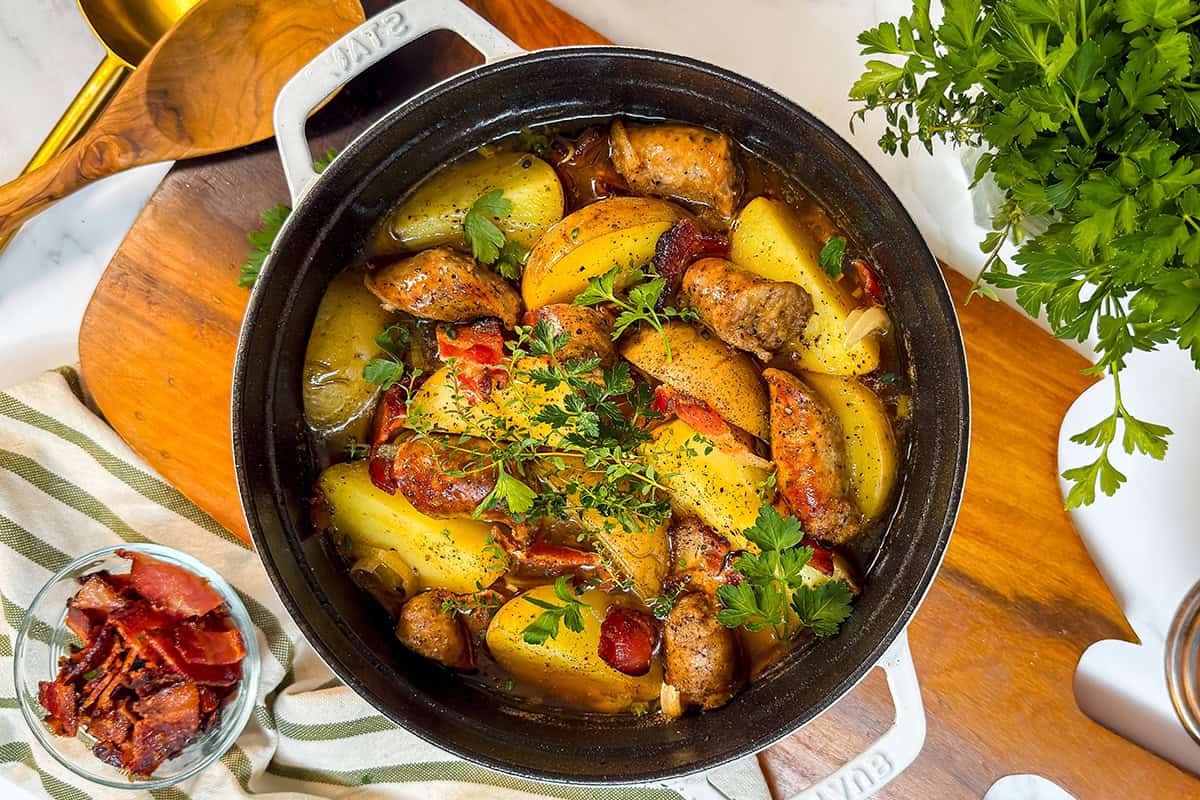
If you want to warm up on a brisk and chilly day or celebrate St. Patrick's Day in true Dublin style, a traditional Dublin Coddle is your authentically Irish recipe. It's an easy Irish Potato and Sausage Stew packed with hearty, warming flavors that slowly cook in one pot!
Jump to:
- The Soul of Dublin in a Single Pot
- A Historic City Dish: From Swift to Joyce
- The Ritual of the Thursday Night Coddle
- The Essential Pairing: Irish Soda Bread
- A St. Patrick's Day Greeting
- Irish Sausage Stew Ingredients
- How to Make Dublin Coddle
- Pro-Tips for the Perfect Coddle
- Can You Make Dublin Coddle in a Slow Cooker?
- To Brown or Not to Brown?
- More Irish Pub Recipes
- Traditional Dublin Coddle: Authentic Irish Sausage Stew
- 💬 Comments
The Soul of Dublin in a Single Pot
As the calendar turns to March and we see the first resilient greens emerging in the garden, my kitchen naturally shifts toward the Emerald Isle or Irish Pub Foods. If you are looking to warm up on a brisk Seattle afternoon or celebrate St. Patrick's Day with true authenticity, the Dublin Coddle is the recipe you need.
This isn't just a meal; it's a piece of Irish history. A traditional Irish potato and sausage stew, it's packed with hearty, warming flavors that slow-cook in one pot-which, thankfully, means less time washing up and more time by the fire.
A Historic City Dish: From Swift to Joyce
The Dublin Coddle is a "city dish," traditionally enjoyed in the winter months. According to Irish Central, this warming meal of sausages and potatoes dates back to the 1700s. It has been a mainstay of Irish culture for centuries, even finding its way into the hearts (and stomachs) of Ireland's greatest writers.
- The Literary Connection: It was famously a favorite of Jonathan Swift, the author of Gulliver's Travels.
- A Taste of Literature: You'll find many references to the Coddle throughout Irish literature, most notably in the works of James Joyce.
The Ritual of the Thursday Night Coddle
Historically, the Coddle was the star of Thursday nights. In a predominantly Catholic country where Fridays were meat-free, Irish households used the Coddle as a delicious way to use up the remaining bacon and sausage in the larder before the fast began. It's the ultimate "low and slow" comfort food-braised gently in broth until the potatoes are tender and the flavors are perfectly melded.
The Essential Pairing: Irish Soda Bread
To eat a Dublin Coddle authentically, you simply must have a loaf of Irish Soda Bread nearby. The hearty, crusty bread is necessary for soaking up every drop of that flavorful, onion-rich broth. (Truthfully, any excuse to bake a fresh loaf of soda bread is good enough for me!)
Chef's Note: While this traditional version is my go-to for heritage storytelling, if you're looking for a slightly quicker weeknight version, be sure to check out my Skillet Dublin Coddle with Barley.
A St. Patrick's Day Greeting
As they say in Ireland, "Lá Fhéile Pádraig Sona Duit!" (Pronounced: Law Ale-yeh Pawd-rig Sunna Ditch!)
It means "Happy St. Patrick's Day to you!" and it's the perfect sentiment to share as you bring this pot to the table.
See our Irish Pub Foods or our Irish recipe collection for more ideas.
Irish Sausage Stew Ingredients
The ingredient measurements are in the recipe card at the bottom of this post, but this list will get you started!
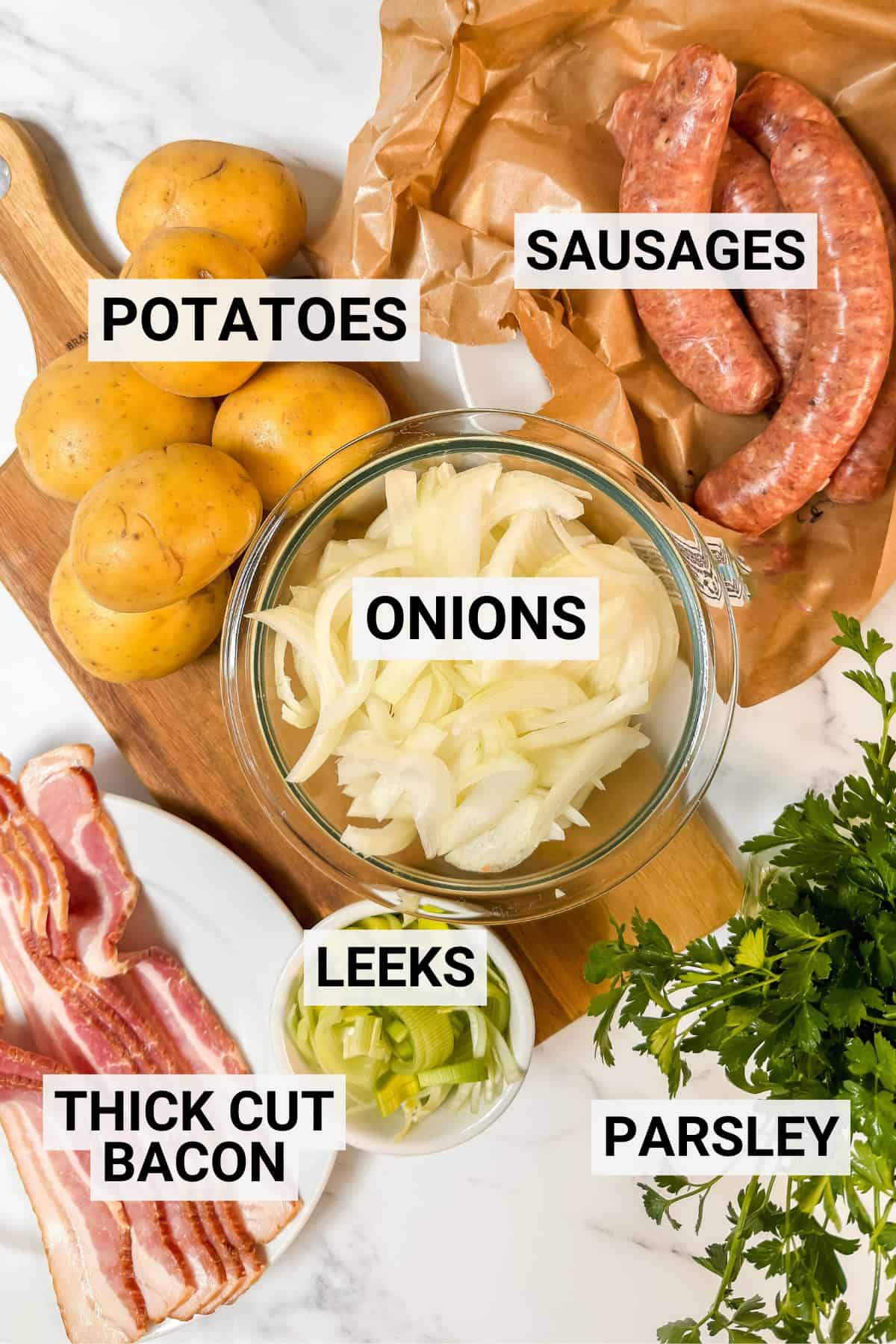
- Bacon: I prefer thick-cut bacon
- Sausages: Look for Irish Banger Sausages or quality pork sausage
- Aromatics: onions, leek (white and light green parts), bay leaves, fresh thyme and parsley, and garlic cloves.
- Potatoes: Yukon gold potatoes or red potatoes will hold up during slow cooking, but peeled russet potatoes will also work
- Beef broth for simmering liquid
How to Make Dublin Coddle
Step-by-step instructions are in the recipe card below, but this quick overview will show you how simple this delicious Irish comfort food is to make!
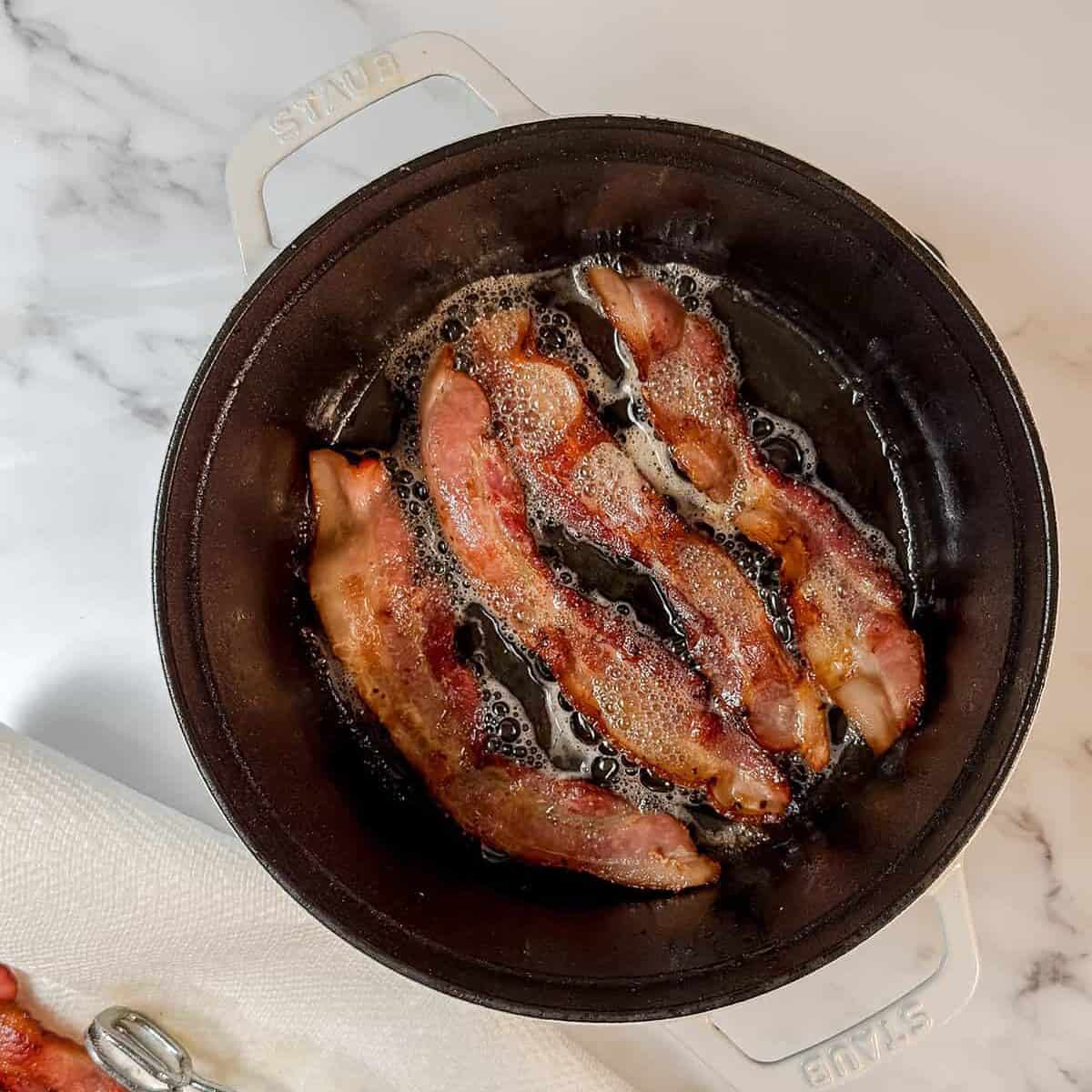
- Step 1: Cook the Bacon
Preheat the oven to 325F. Then, in a heat-resistant Dutch oven over medium-high heat, cook the bacon until crispy. Remove from the pot and drain on a paper towel. Remove all but 1 tablespoon of the drippings.

- Step 2: Brown Sausages
Add the sausages to the pot and briefly cook them, turning as needed, until browned. Remove from the skillet, blot, and cut into chunks.
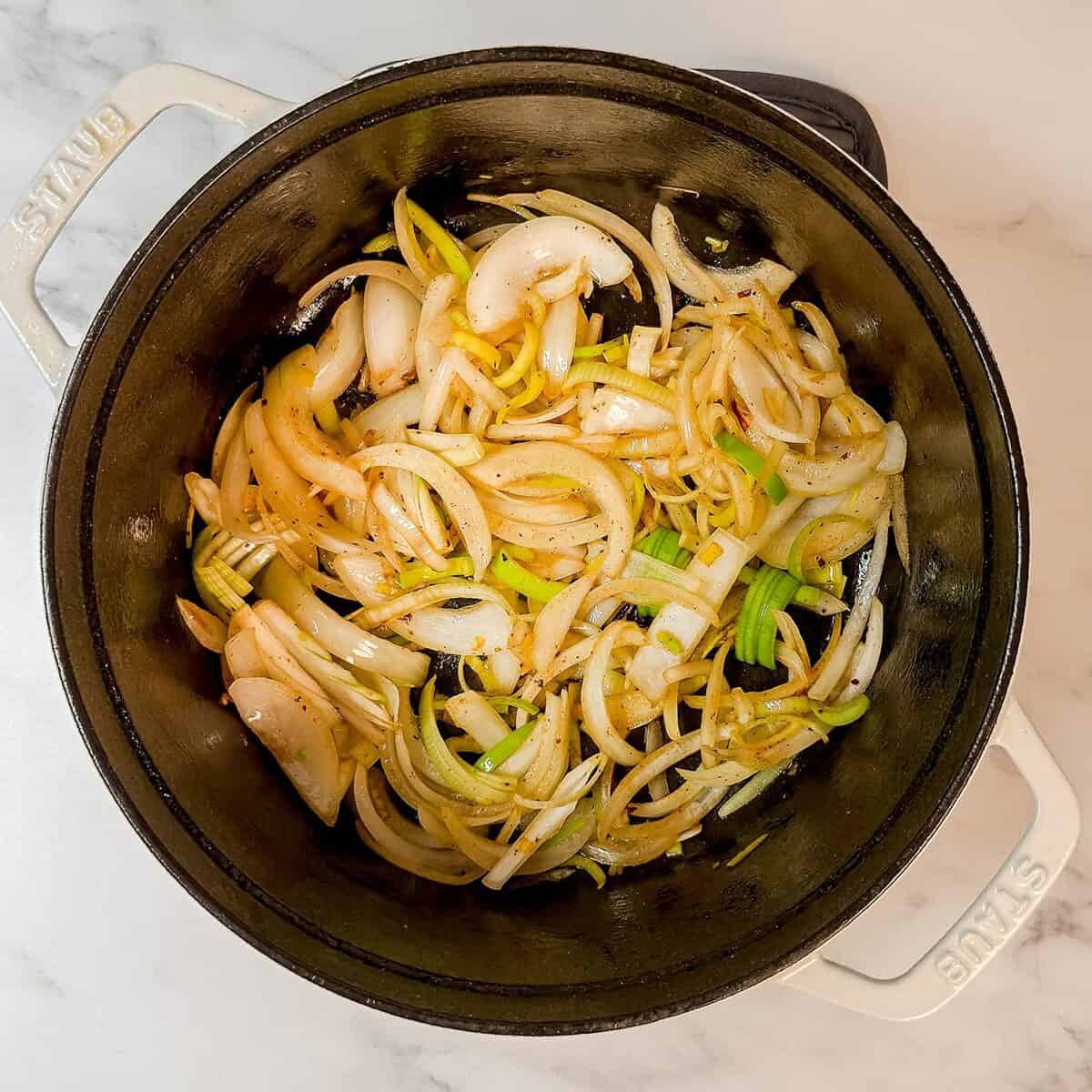
- Step 3: Sauté the onions & leeks
In the same pot, saute the onions and leeks until soft, about 3-5 minutes.
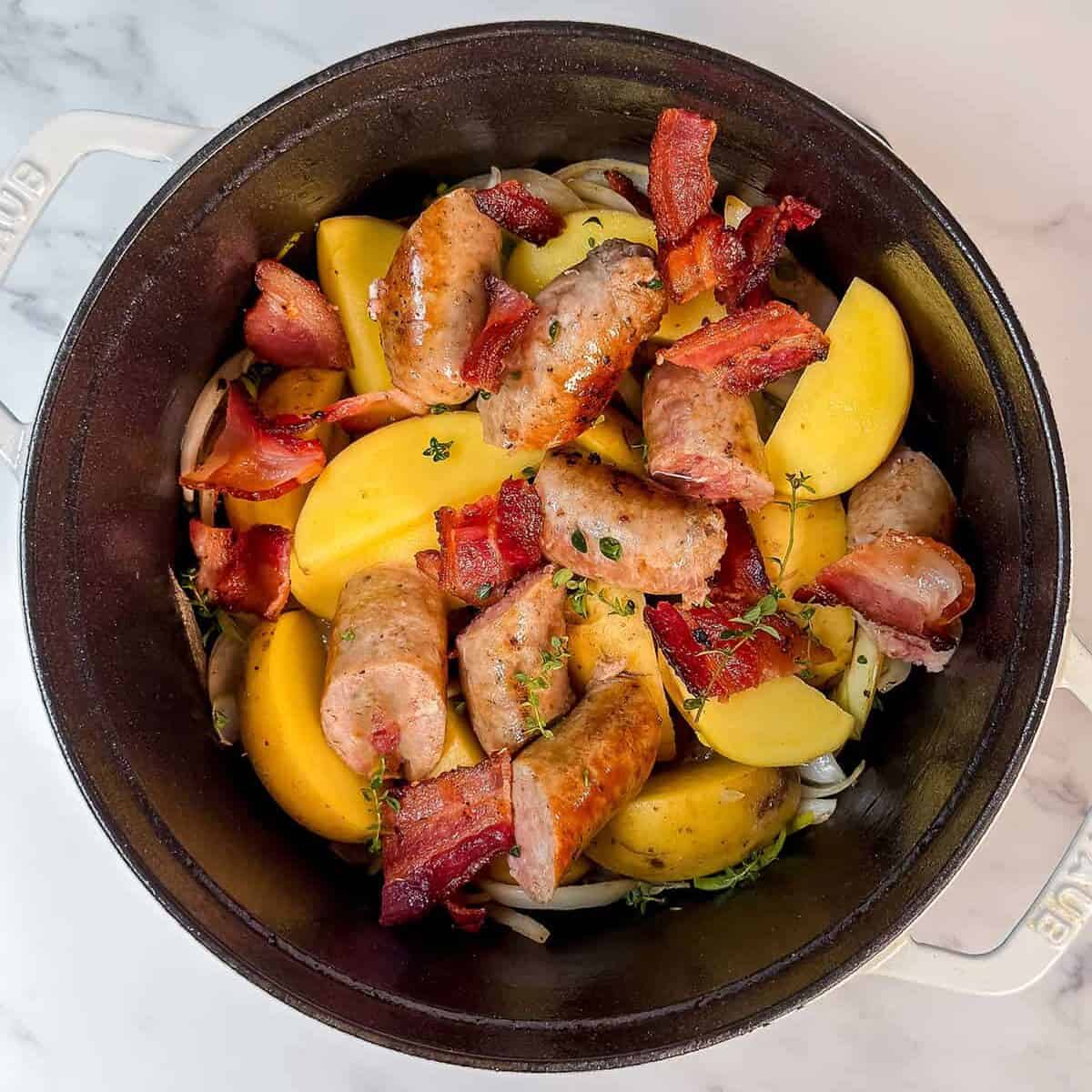
- Step 4: Layer the Dublin Coddle
Layer the onions and leeks, half of the banger sausages, and bacon in the bottom of the dish, seasoning each layer with freshly ground black pepper to taste. Add the herbs and garlic, then top with the potatoes and remaining banger sausages and bacon. Season again with black pepper. Pour the beef broth over the sausages and vegetables.
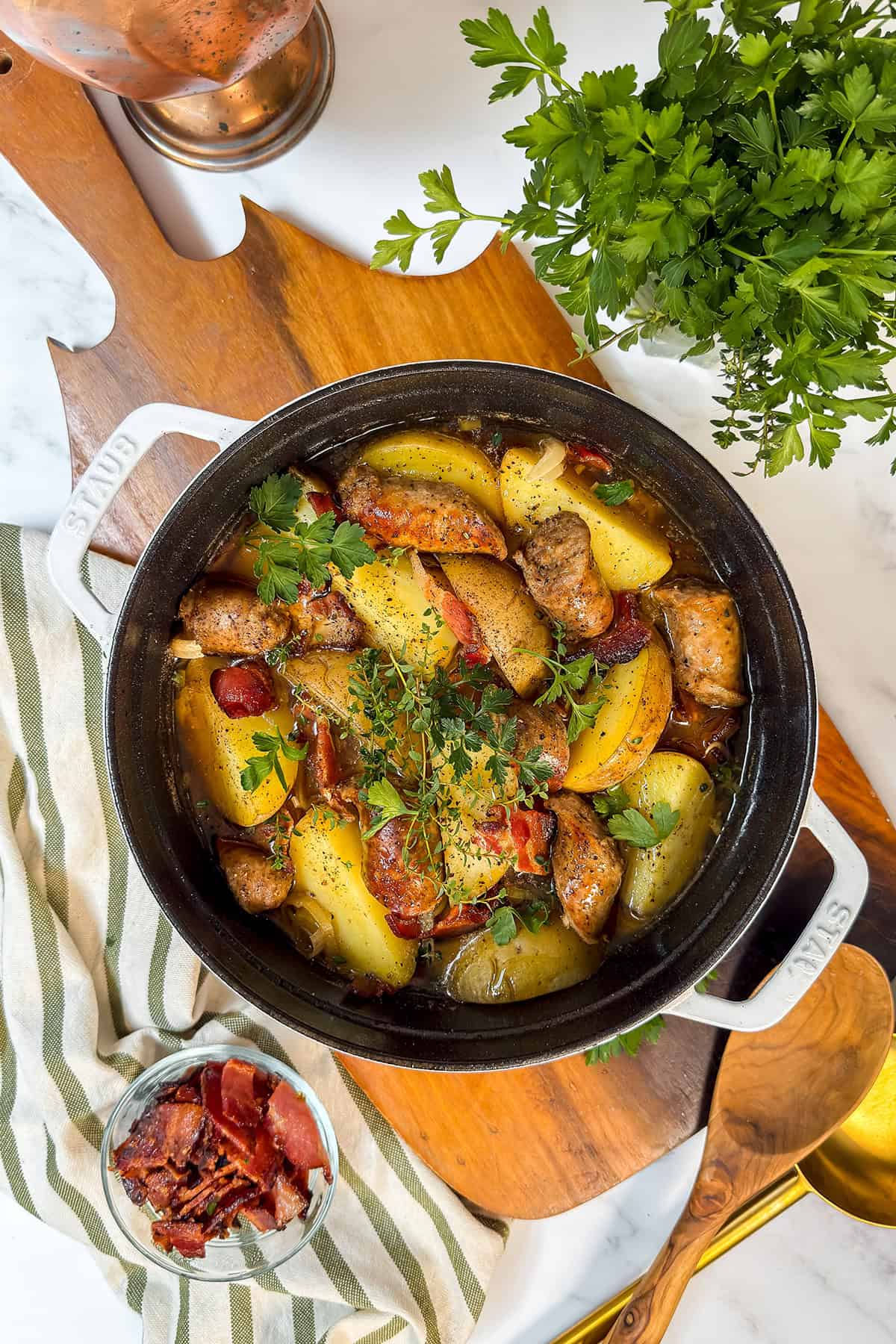
- Step 5: Bake the Dublin Coddle
Cover the pot and bake for 40-45 minutes, or until the potatoes are tender.
Pro-Tips for the Perfect Coddle
From my kitchen to yours, after two decades of perfecting this Irish classic:
- The Layering Technique: Don't just toss everything in! Start with a base of onions, then a layer of potatoes, then the meat. Repeat the layers. This ensures the sausages "steam-braise" on top of the vegetables, letting their juices drip down and season the potatoes.
- The "Coddle" Heat: True to its name, you must "coddle" this dish. Keep the heat low. If the broth boils too hard, the sausages can burst, and the potatoes will turn to mush. You want a gentle, lazy simmer.
- The Sausage Choice: For the most authentic flavor, use a high-quality pork banger or a mild breakfast link. Avoid strongly spiced sausages (like Italian or Chorizo), as they will overwhelm the delicate, onion-sweetened broth.
- The Browning Debate: Traditionally, the meat isn't browned first (it's a "white" stew), but for a modern palate, I often give the sausages a quick sear in the pan first for extra color and a deeper flavor profile.
Can You Make Dublin Coddle in a Slow Cooker?
While the traditional method involves a heavy-bottomed pot on the stove or in a low oven, the "low and slow" nature of a Coddle makes it a perfect candidate for the slow cooker.
- The Adjustment: To prevent the dish from becoming too watery (as slow cookers trap all steam), reduce the added broth by about 25%.
- The Timing: Cook on Low for 6 to 8 hours. This allows the potatoes to fully absorb the savory juices from the bacon and sausages without falling apart.
To Brown or Not to Brown?
In Dublin, a "white" Coddle-where the meat is added directly to the pot without searing-is the historical standard. However, for a modern palate, I recommend a quick sear.
- The Benefit: Searing the sausages and thick-cut bacon (rashers) in the pot before layering adds a "Maillard reaction" depth to the broth that you simply can't get from boiling alone.
- The Technique: Brown the sausages just until they have some color, remove them, and then use the rendered fat to soften your onions and leeks before layering everything back in.
More Irish Pub Recipes
- Easy Slow Cooker Corned Beef and Cabbage Recipe with Potatoes
- Traditional Creamy Irish Potato and Leek Soup
- Irish Soda Bread with Buttermilk and Raisins
- Easy Shepherd's Pie Recipe with Champ
- Cottage Pie Recipe with Puff Pastry




SAVE THIS AND PIN IT FOR LATER!
Make sure you don't lose track of this recipe by pinning it for later! If you are not already you can follow me on Pinterest, as well as keep up with me on Facebook, Instagram and YouTube. If you make this recipe I would also love it if you'd tag me in your photos and leave a star rating below!
Want to save this recipe?
Enter your email, and we'll send it to your inbox. Plus, you'll get delicious new recipes from us every Friday!
Traditional Dublin Coddle: Authentic Irish Sausage Stew
Equipment
Ingredients
- ½ pound thick cut bacon 6-8 slices, chopped
- 1 pound Irish banger sausages or good quality pork sausage
- 2 onions sliced
- 1 medium leek white with light green parts, sliced
- black pepper to taste
- 2 bay leaves
- 2 sprigs fresh thyme
- ¼ cup fresh parsley chopped
- 2 garlic cloves minced
- 6 gold potatoes cut into large chunks
- 2 cups beef broth

Instructions
- Preheat the oven to 325℉
- Cook the bacon in an oven-safe Dutch oven over medium-high heat. Remove the bacon and drain it on a paper towel. Reserve 1 tablespoon of the drippings in the pan and remove the excess.
- Reduce the heat to medium and add the banger sausages. Cook, turning as needed until evenly browned, about 15 minutes. Remove the sausages and set aside. When cool, cut them into bite-sized chunks. Sauté the onions and leeks until soft, about 3-5 minutes.
- In the Dutch oven, layer the onions and leeks, half of the banger sausages, and bacon in the bottom of the dish, seasoning each layer with freshly ground black pepper to taste. Add the herbs and garlic, then top with the potatoes and the remaining banger sausages and bacon. Season again with black pepper. Pour the beef broth over the sausages and vegetables.
- Cover the Dutch oven with a lid and bake for 40-45 minutes, or until the potatoes are tender. This dish is traditionally served with Irish Soda Bread to mop up the juices.
Notes
- Cooking Pot: Use a heavy-bottomed pot (like a Dutch oven) to prevent scorching.
- Sausages: In my market, banger sausages are always stocked near the bratwurst. If you can't find them, use a good-quality pork sausage. This could be bratwurst, though the sausage's spices are a bit different. Large breakfast sausages (not links) could also be substituted.
- Potatoes: I prefer waxy potatoes (like Yukon golds), but russets will also work, although they will break down a bit while baking.
Nutritional information is only an estimate. The accuracy of the nutritional information for any recipe on this site is not guaranteed.
Making this now! Taste and smells amazing! Thanks!
That's what I thought too! The smell alone is amazing! Enjoy 🙂