
Classic British Bread and Butter Pudding (A Royal Favorite)
This post may contain affiliate links. Please read our disclosure policy.

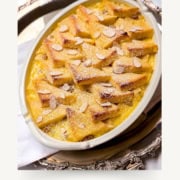
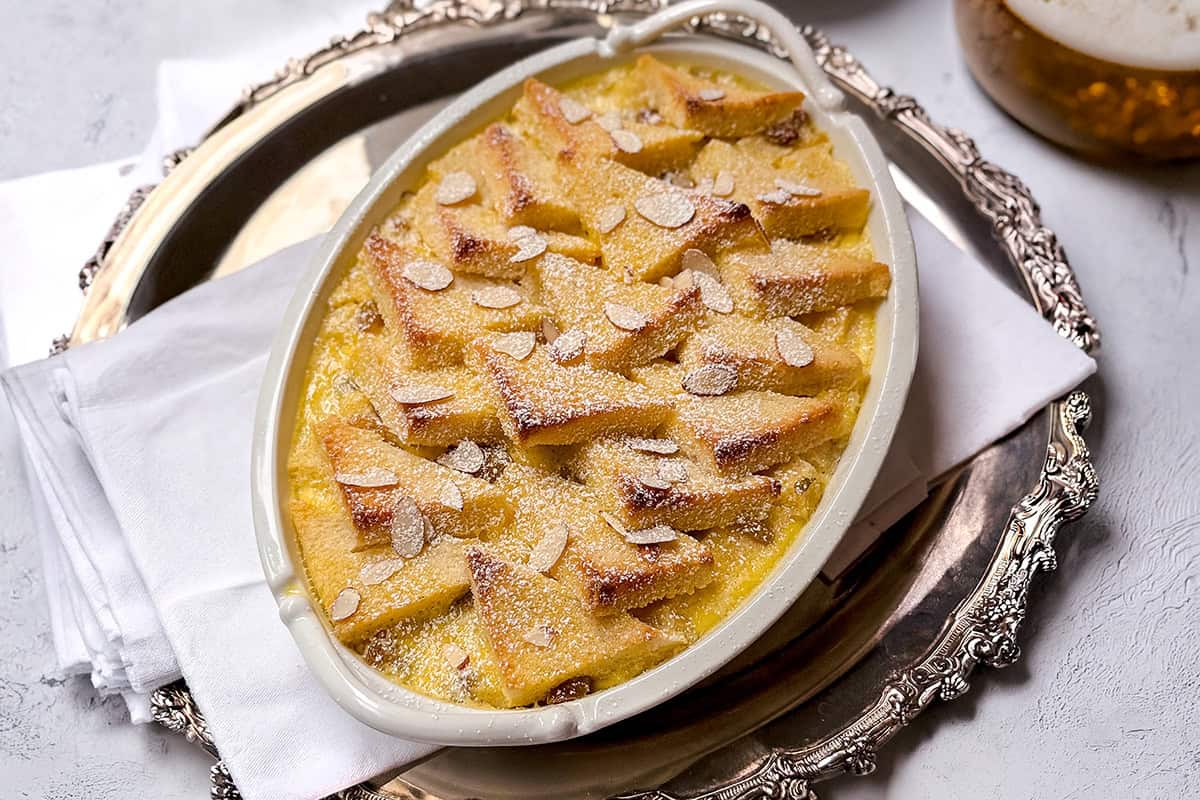
Few desserts feel as comforting or as timeless as a traditional British bread and butter pudding. Rich with custard, gently scented with almond, and finished with toasted almonds and powdered sugar. It's warm, elegant, and unapologetically nostalgic.
This recipe is adapted from the royal kitchen and long associated with one of Britain's most beloved figures.

About the Royal Inspiration
This bread and butter pudding is adapted from a recipe shared by Darren McGrady, who served for more than 15 years as a private chef to Queen Elizabeth II, Prince Philip, and Diana, Princess of Wales.
According to Chef McGrady, this rich, custard-based pudding was a favorite dessert of Diana, Princess of Wales-simple and comforting in spirit, yet luxurious in its execution. It's a classic British dessert, elevated just enough to feel special without losing its humble roots.
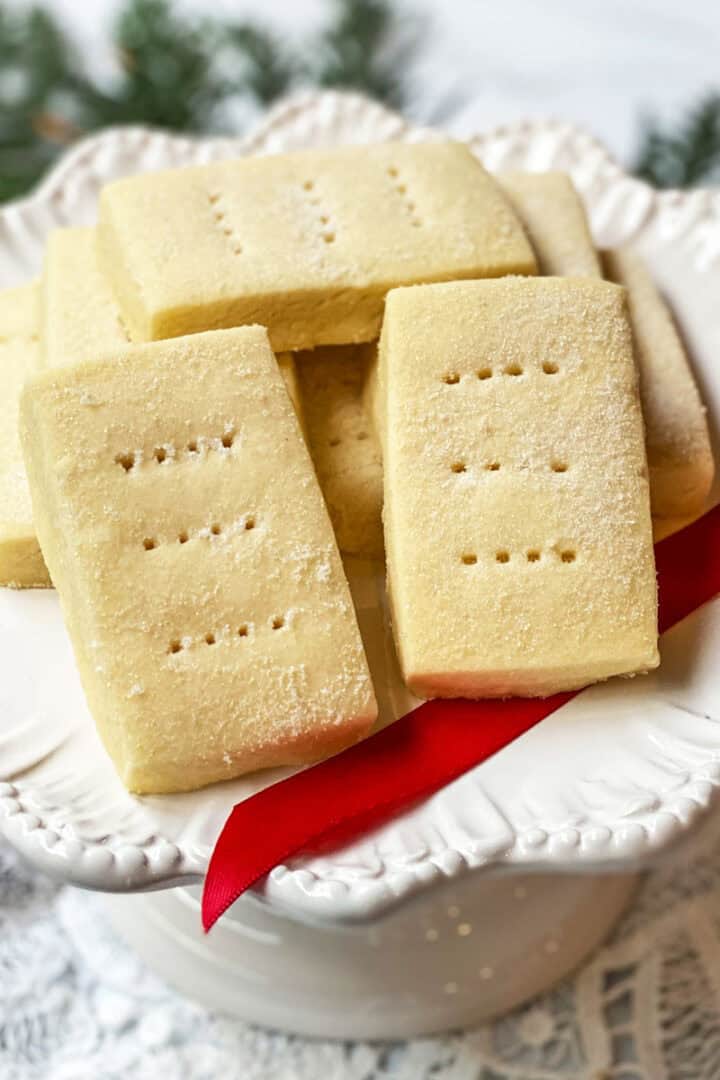
If you enjoy royal-inspired bakes, you may also love my Buckingham Palace Shortbread or this collection of Queen Elizabeth's Afternoon Tea Recipes, both inspired by traditional British tea tables.
Recipe Overview
This pudding is a classic baked custard, meant to be softly set and spoonable rather than firm. The raisins are soaked ahead of time to infuse them with almond flavor, and the assembled pudding rests briefly before baking so the custard can fully absorb into the bread.
Baking time can vary depending on the size and depth of your baking dish. The pudding is ready when the center is just set and still slightly jiggly-this ensures a silky texture and creates a natural sauce beneath the bread.
What I Love About This Recipe
As a young child, the love story of Diana, Princess of Wales, and then Charles III made many hearts flutter-mine included. It felt like a fairytale unfolding in real time, seen through the hopeful eyes of the young.
I will never forget waking in the middle of the night with my mother to watch their wedding, enjoying tea and scones as the ceremony played on television. Her dress, especially for that era, was unmatched. The pomp and majesty of the occasion left an indelible impression-and quietly planted the seeds of a lifelong love for afternoon tea and the rituals that surround it.
When I later came across this recipe shared by her longtime royal chef, it immediately captured my attention. It wasn't long before I was testing it in my own kitchen and serving it to family and friends.
While bread and butter pudding is a familiar dessert throughout much of Europe, this version leans fully into indulgence. It's rich, softly set, and unapologetically comforting-and its flavor is worth every bit of the richness.
Stephanie
Jump to:
- About the Royal Inspiration
- Recipe Overview
- What I Love About This Recipe
- Ingredients
- How to Make Bread and Butter Pudding
- Serving Notes
- Bread Pudding vs. Bread and Butter Pudding
- Similar Custard Puddings
- Recipe FAQs
- More British-Inspired Recipes You May Also Love
- Classic British Bread and Butter Pudding
- 💬 Comments
Ingredients
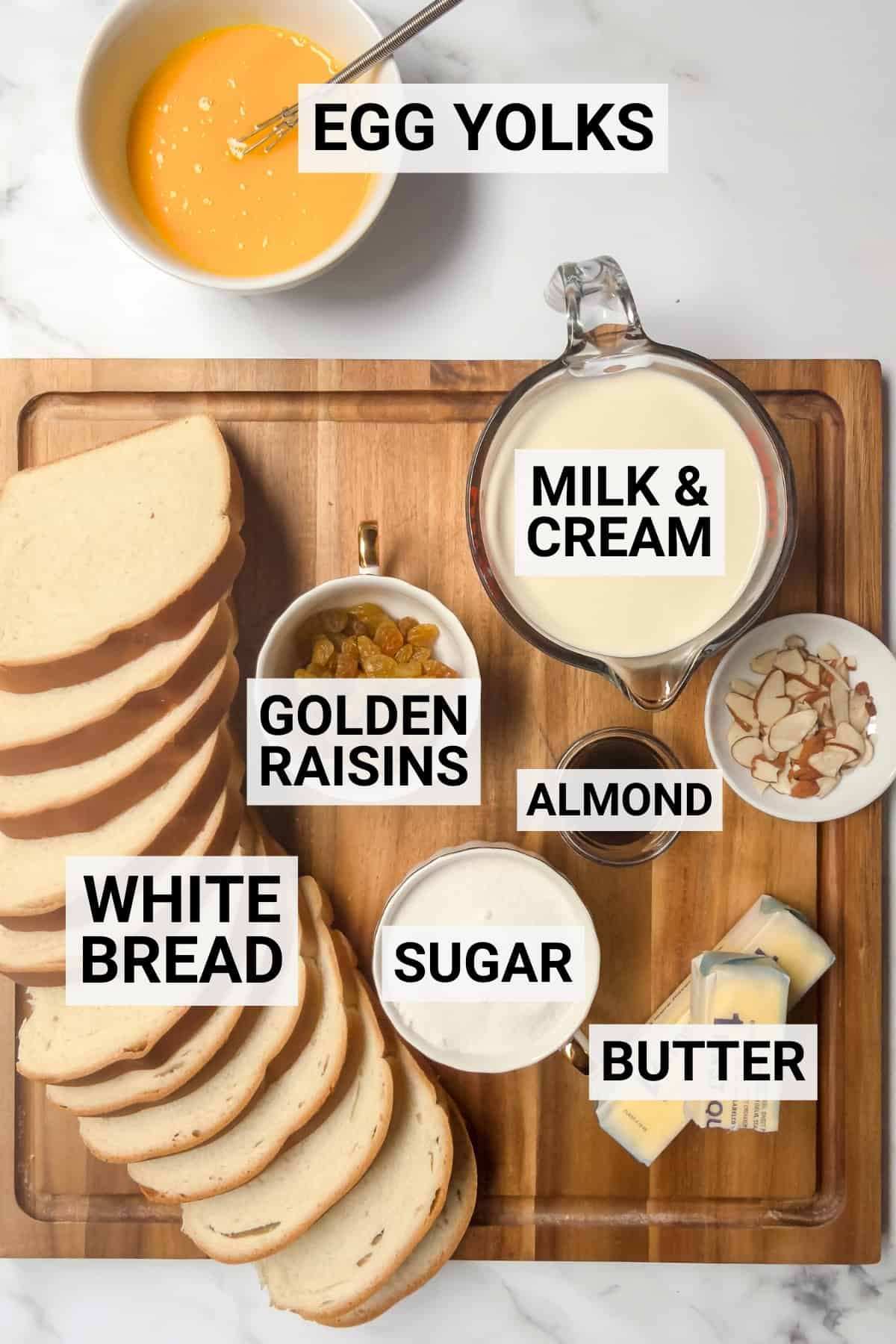
- Golden raisins: Plumper and milder than regular raisins, golden raisins absorb flavor beautifully and add gentle sweetness throughout the pudding.
- Almond extract: Used to recreate the classic almond note traditionally found in British bread and butter pudding, without the use of alcohol.
- White bread: Thick-sliced white bread works best here, as it absorbs the custard while still holding its shape. Brioche or enriched sandwich bread is a good alternative.
- Unsalted butter: Brushed and poured over the bread to create richness and a golden, lightly crisped top.
- Egg yolks: Egg yolks form the base of the custard, giving the pudding its silky texture and rich mouthfeel.
- Granulated sugar: Sweetens the custard without overpowering the delicate vanilla and almond flavors.
- Vanilla paste: Adds depth and warmth to the custard; vanilla extract may be substituted if needed.
- Whole milk: Provides structure to the custard while keeping it tender and light.
- Heavy cream: Adds richness and ensures a softly set, spoonable custard.
- Sliced almonds: Toasted and sprinkled on top for contrast in both texture and flavor.
- Powdered sugar: A light finishing touch that adds sweetness and a classic presentation.
Ingredient Note:
The original recipe uses an almond-flavored liqueur to soak the raisins. This version recreates that classic flavor using almond extract diluted with water, keeping the spirit of the recipe while remaining alcohol-free.
How to Make Bread and Butter Pudding
In a small bowl, combine the golden raisins with ¼ cup water and the almond extract. Cover and soak at room temperature for at least 1 hour, or up to overnight.
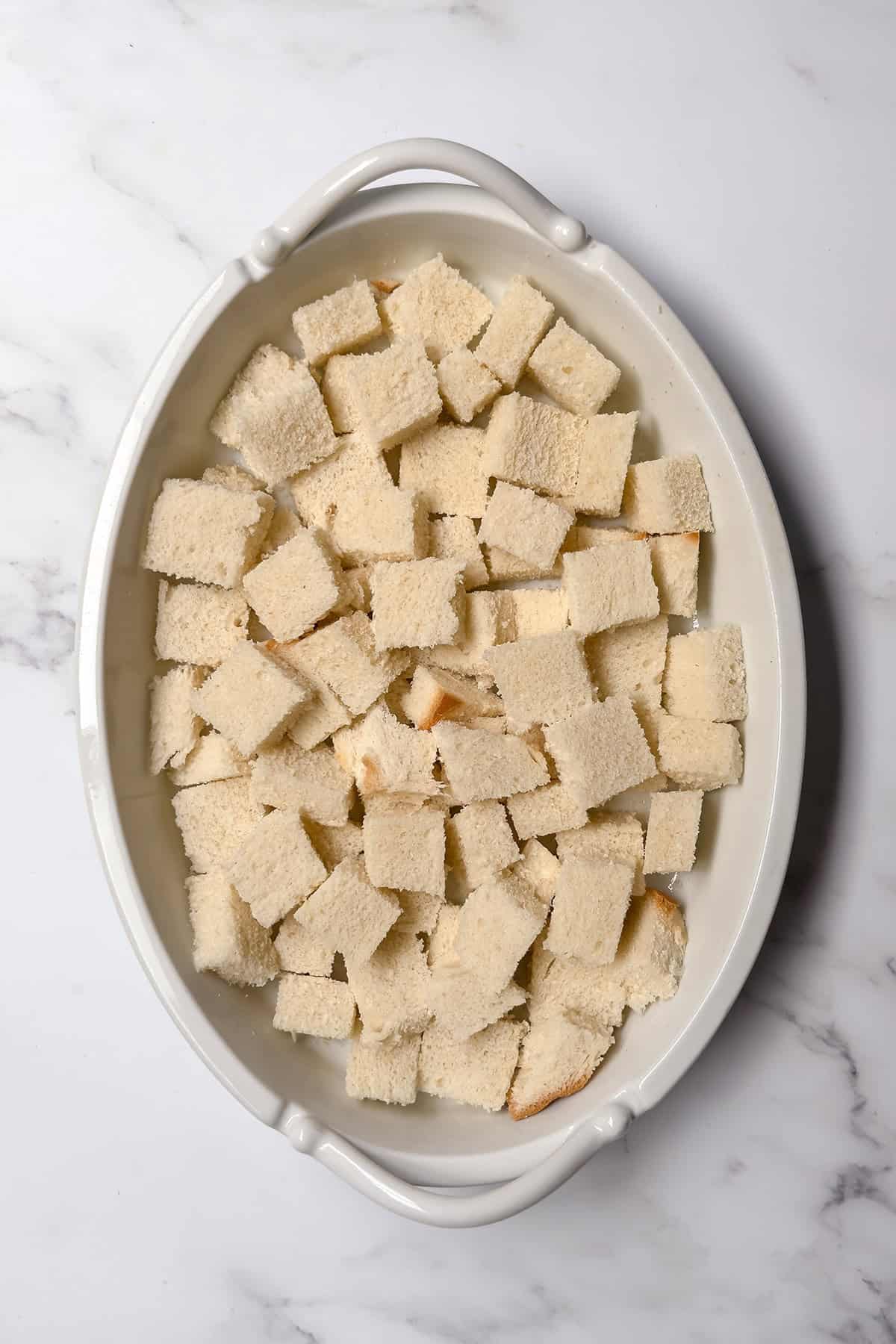
- Step 1: Prepare the Bread Base. Trim the crusts from the bread and cut several slices into ½-inch cubes. Arrange the bread cubes evenly in the bottom of a buttered baking dish.
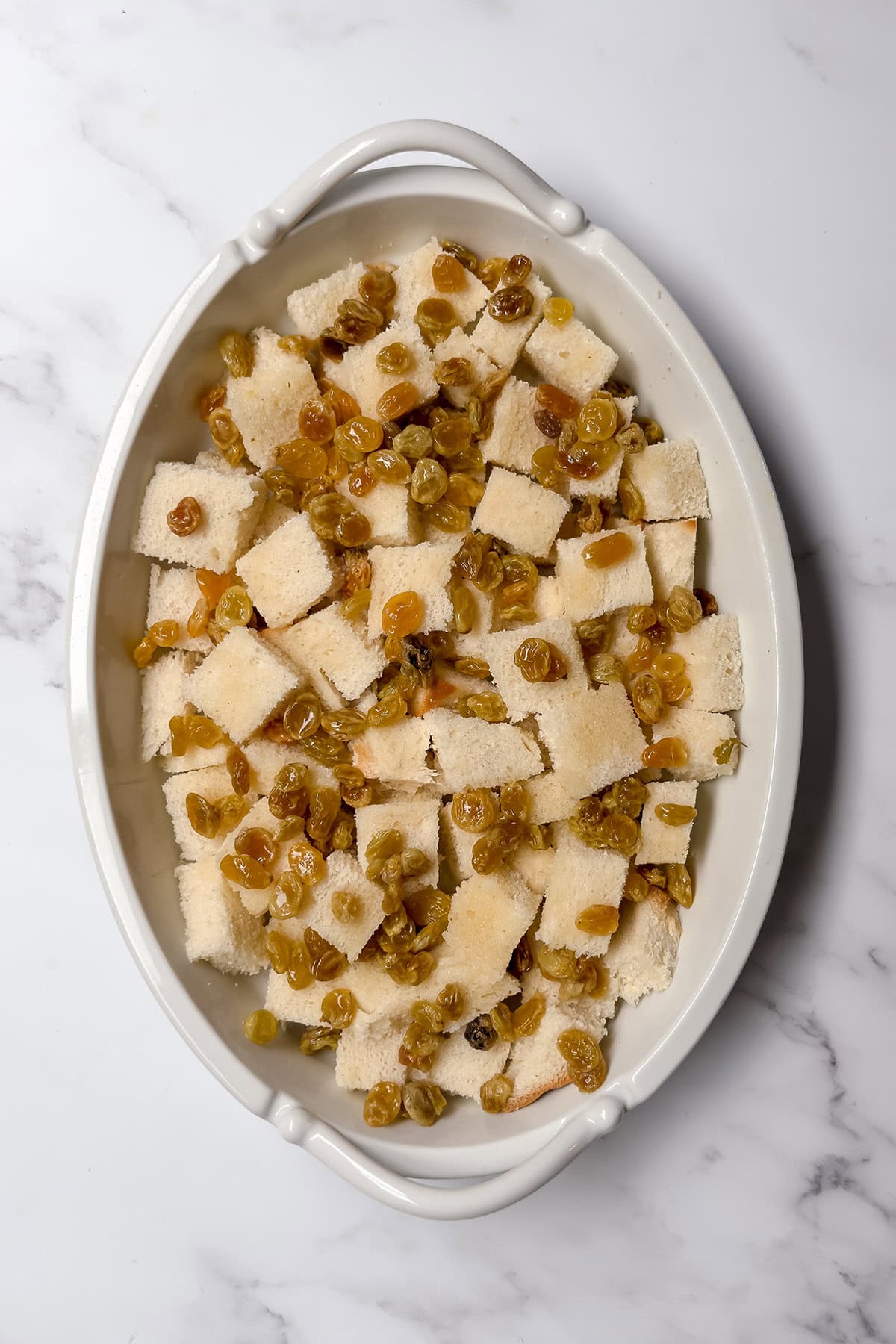
- Step 2: Add the Raisins. Sprinkle the soaked golden raisins evenly over the bread cubes. Pour any remaining soaking liquid over the bread to distribute flavor.
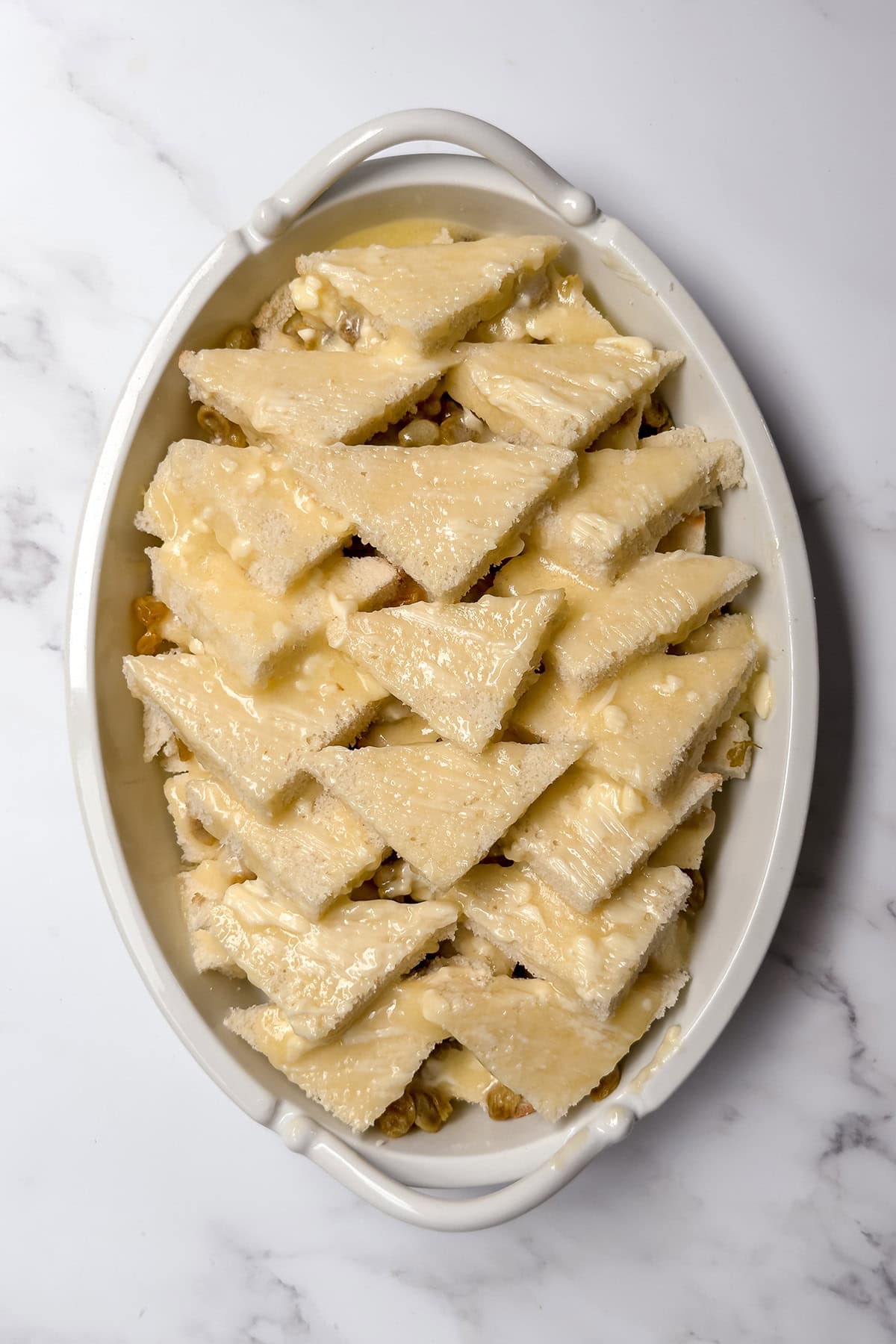
- Step 3: Layer the Buttered Bread. Cut the remaining bread into small triangles. Dip each piece into melted butter and arrange them on top in an overlapping pattern. Drizzle any remaining butter over the bread.
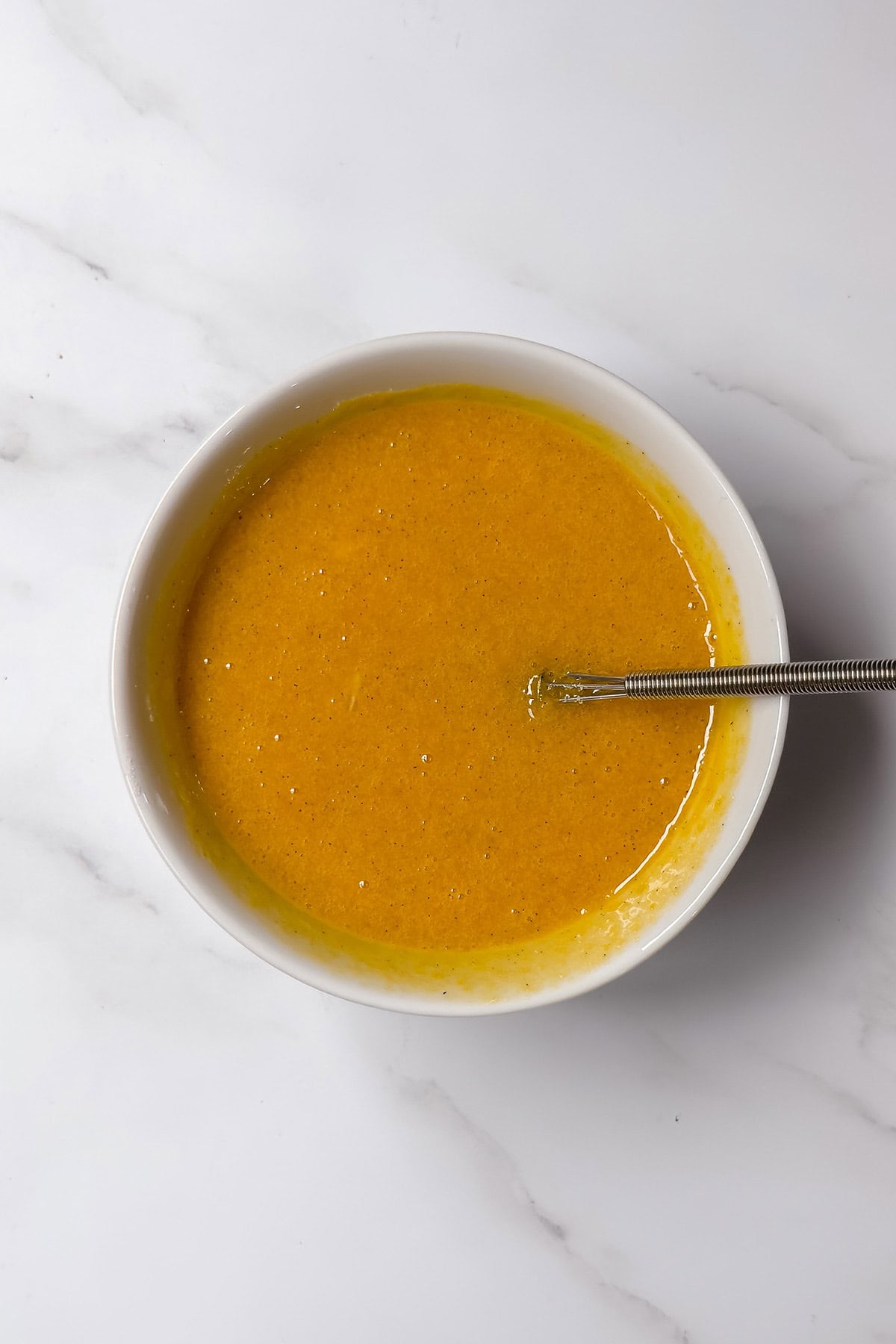
- Step 4: Whisk the Egg Mixture. Whisk the egg yolks, sugar, and vanilla until smooth and well combined. Set aside while heating the milk and cream.
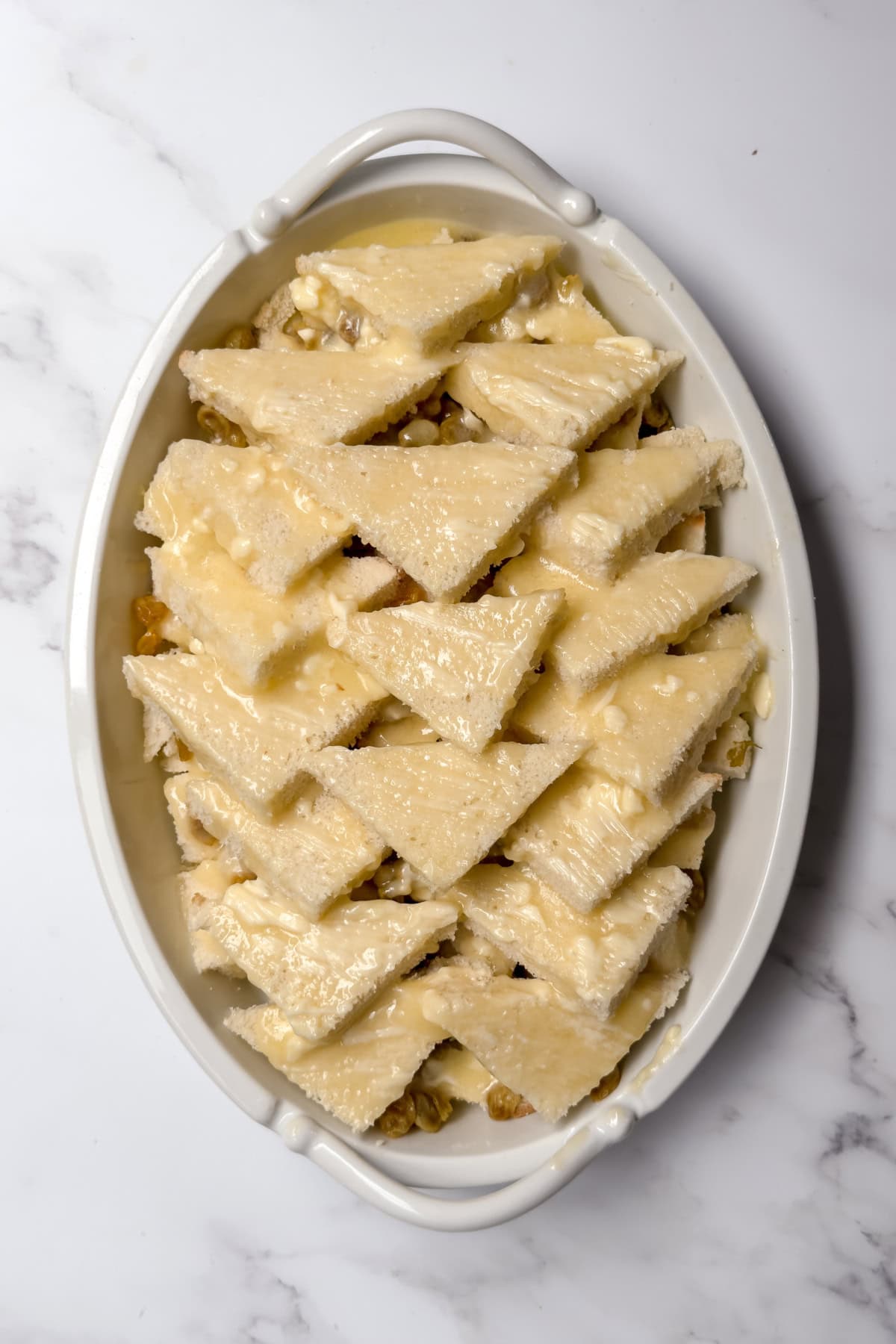
- Step 5: Add the Custard. Slowly whisk the hot milk and cream into the egg mixture to form a smooth custard. Pour the warm custard evenly over the bread, making sure all pieces are coated. Let the pudding rest for 20 minutes so the custard can fully absorb.
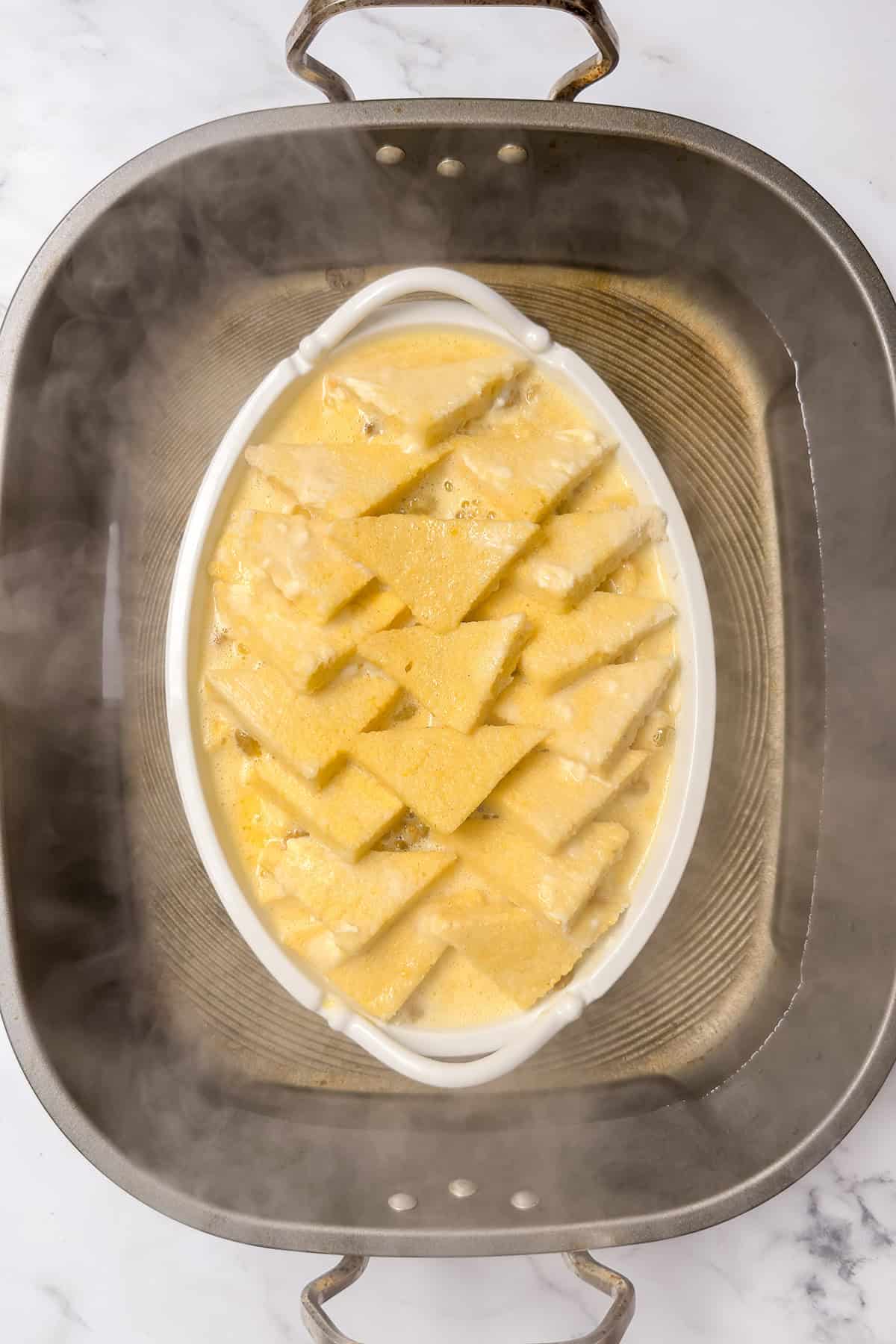
- Step 6: Prepare the Water Bath. Place the baking dish into a larger roasting pan. Carefully pour hot water into the pan until it reaches halfway up the sides of the dish. Bake until the pudding is just set and lightly golden on top.
Serving Notes
This bread and butter pudding is best enjoyed warm, when the custard is silky, and the center is still softly spoonable. Serve it simply with tea, or as a comforting dessert at the end of a winter meal.
Bread Pudding vs. Bread and Butter Pudding
While the names are often used interchangeably, bread pudding and bread and butter pudding are slightly different desserts-especially in texture and presentation.
Bread pudding, as it's commonly made in the U.S., tends to be more cake-like or scoopable, with bread cubes fully mixed into the custard. Recipes like my Brioche Bread Pudding or Bread Pudding in a Mug are designed to be rich, comforting, and often served as a single, unified pudding.
Bread and butter pudding, on the other hand, is traditionally British and more structured. Instead of mixing everything together, the bread is layered, often buttered, and baked gently in custard. The result is a dessert with distinct layers-soft custard underneath, tender bread throughout, and lightly golden edges on top.
This version leans fully into that classic British style: softly set, spoonable in the center, and intentionally a little saucy rather than firm.
Similar Custard Puddings
If you enjoy desserts with a silky custard texture, you may also recognize similarities between this pudding and other baked custard-style recipes on 31Daily.
My Baked Lemon Pudding-often associated with Irish cooking-and Mini Lemon Pudding Cakes both rely on the same gentle baking technique. As they bake, the custard separates slightly, creating a soft, spoonable layer beneath a delicate top. While the flavors are different, the texture and baking method share a common heritage.
For an Emerald Isle treat, try these Irish Custard Tarts, which are easy to make and popular in bakeries in Ireland.
Recipe FAQs
The pudding is ready when the edges are set, and the center still has a gentle jiggle. Overbaking will cause the custard to firm up too much.
Bread and butter pudding should be softly set and spoonable rather than firm. The custard should just hold its shape while remaining silky underneath the bread, often creating a natural sauce at the bottom of the dish.
Bread pudding and bread and butter pudding are closely related, but they differ in structure and texture. Bread pudding-especially in American baking-is typically mixed together and baked until scoopable or lightly cake-like.
Bread and butter pudding is traditionally British and more layered. The bread is buttered, arranged in layers, and baked gently in custard, creating a softly set center with tender bread and lightly golden edges.
The water bath ensures gentle, even heat, helping the custard bake smoothly without curdling.
You can soak the raisins and assemble the pudding several hours in advance. Cover and refrigerate, then bring to room temperature before baking.
More British-Inspired Recipes You May Also Love
Looking for other recipes like this? Try these:


If you try this recipe, I'd love to hear your comments and consider giving it a 5-star rating. Explore the recipe index for more easy, delicious ideas, and stay updated by subscribing to our newsletter and following us on Facebook, Pinterest, Instagram, and YouTube!
Want to save this recipe?
Enter your email, and we'll send it to your inbox. Plus, you'll get delicious new recipes from us every Friday!
Classic British Bread and Butter Pudding
Ingredients
- ⅓ cup golden raisins
- 2 teaspoons almond extract with ¼ cup water
- 12 slices white bread crusts removed
- ¾ cup unsalted butter melted (12 tablespoons,
- 9 large egg yolks
- ¾ cup sugar
- 2 teaspoons vanilla paste
- ½ cup whole milk
- 2 cups heavy cream
- ⅓ cup sliced almonds toasted
- 1 teaspoon powdered sugar

Instructions
Soaking the Raisins
- In a small bowl, combine the golden raisins with ¼ cup water and the almond extract. Cover and soak at room temperature for at least 1 hour, or up to overnight.
Preparing the Bread
- Preheat the oven to 350°F (175°C). Trim the crusts from the bread. Cut 4 slices into ½-inch cubes and place them in the bottom of a buttered casserole dish or square baking pan. Sprinkle the soaked raisins evenly over the bread cubes, then pour any remaining soaking liquid over the bread. Cut the remaining 8 slices of bread in half diagonally, then cut each half diagonally again to create four even triangles per slice.
Assemble the Pudding
- Dip each bread triangle into the melted butter and arrange them over the raisins in an overlapping pattern. Pour any remaining butter over the top.
Make the Custard
- In a large bowl, whisk together the egg yolks, sugar, and vanilla paste until well combined. In a heavy saucepan, bring the milk and cream to a high simmer. Slowly pour the hot cream mixture into the egg yolks, whisking constantly to temper the eggs. Pour the warm custard evenly over the bread, ensuring all pieces are coated. Let the pudding rest at room temperature for 20 minutes so the custard can fully soak into the bread.
Bake
- Place the casserole dish into a larger roasting pan. Carefully pour hot water into the roasting pan until it reaches halfway up the sides of the casserole dish. Bake on the middle rack for 30-45 minutes, or until the top is golden and the center is just set with a slight jiggle.
Serve
- Remove the pudding from the oven and water bath. Sprinkle with toasted sliced almonds and dust lightly with powdered sugar. Cool slightly and serve warm.
Notes
- Almond Flavor: Almond extract diluted with water recreates the classic almond note traditionally used in British versions of this pudding.
- Baking Time: Bake just until the center is softly set with a slight jiggle-this ensures a silky custard and natural sauce.
- Make Ahead: Raisins can be soaked overnight, and the pudding assembled several hours before baking.
Nutritional information is only an estimate. The accuracy of the nutritional information for any recipe on this site is not guaranteed.
This recipe has long been a favorite for me. It's classic, rich and indulgent, but historic and fun and easy to make. Every time I serve it, my guests always request the recipe. I hope you love it as much as we do.