
Spotted Dog: The Story of Ireland’s Traditional Railway Cake

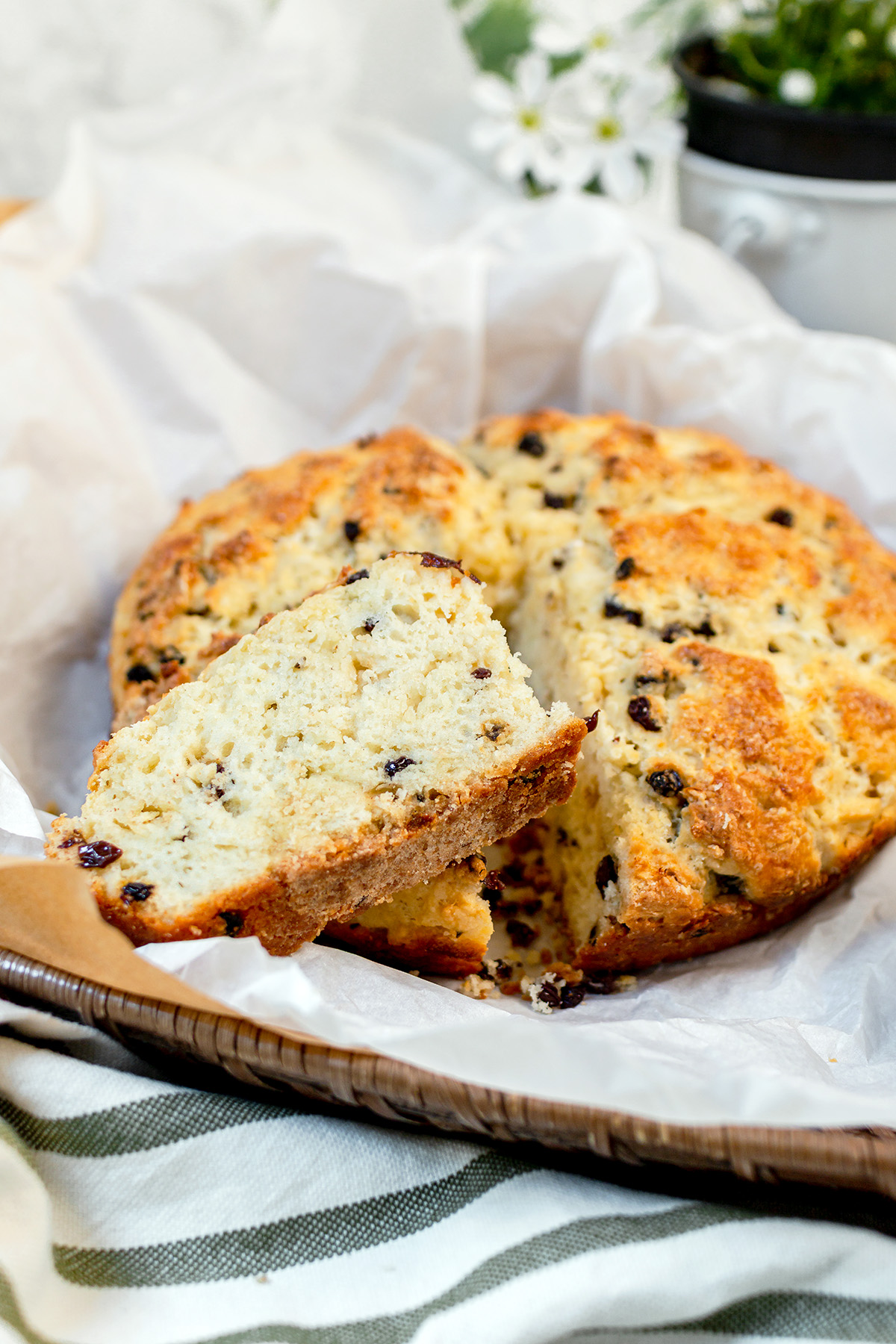
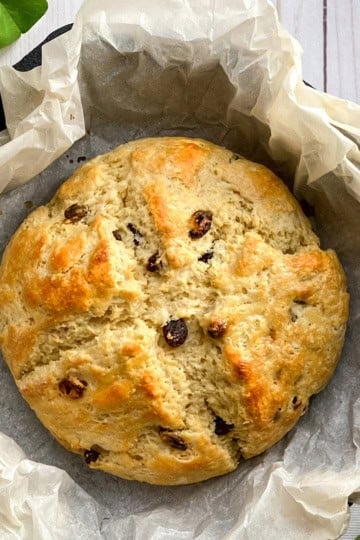
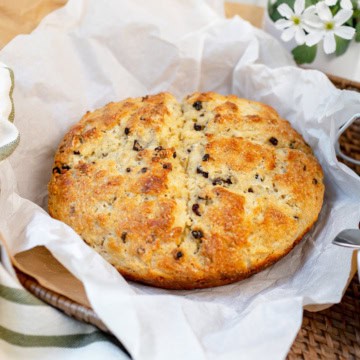
While traditional Irish Soda Bread was the humble cornerstone of the 19th-century hearth, there was a more celebrated version reserved for special occasions or the arrival of guests. Known affectionately as 'Spotted Dog'-so named for the 'spots' of dark fruit peeking through the golden crust-this enriched loaf was also called Railway Cake.
In an era when travel was a luxury, this bread was a traveler's treat: sturdier than a sponge cake but far more indulgent than the daily soda bread. It represents the transition from "bread as survival" to "bread as celebration."
This post may contain affiliate links. Please read our disclosure policy.
Want to save this recipe?
Enter your email, and we'll send it to your inbox. Plus, you'll get delicious new recipes from us every Friday!
Why This Soda Bread Recipe is Unique
If you have tried my Traditional Brown Soda Bread (the savory classic) or my Buttermilk Soda Bread (the Wilson family favorite), you will find the Spotted Dog to be a delightful departure. Unlike those loaves, the Spotted Dog is characterized by:
- The Finish: An egg wash and generous dusting of coarse sugar give this loaf a crisp, golden exterior.
- The Enrichment: The addition of a farm-fresh egg and a touch more butter creates a tender, "cake-like" crumb.
- The Texture: Using tiny, tart currants instead of larger raisins ensures a 'spot' of sweetness in every single bite.
Each of my soda bread recipes is unique and reminds me of my Irish grandmother and her love of baking.
Jump to:
Key Ingredients (Railway Staples)
A handful of traditional ingredients - plus egg, sugar, and currants - give this loaf its signature richness.
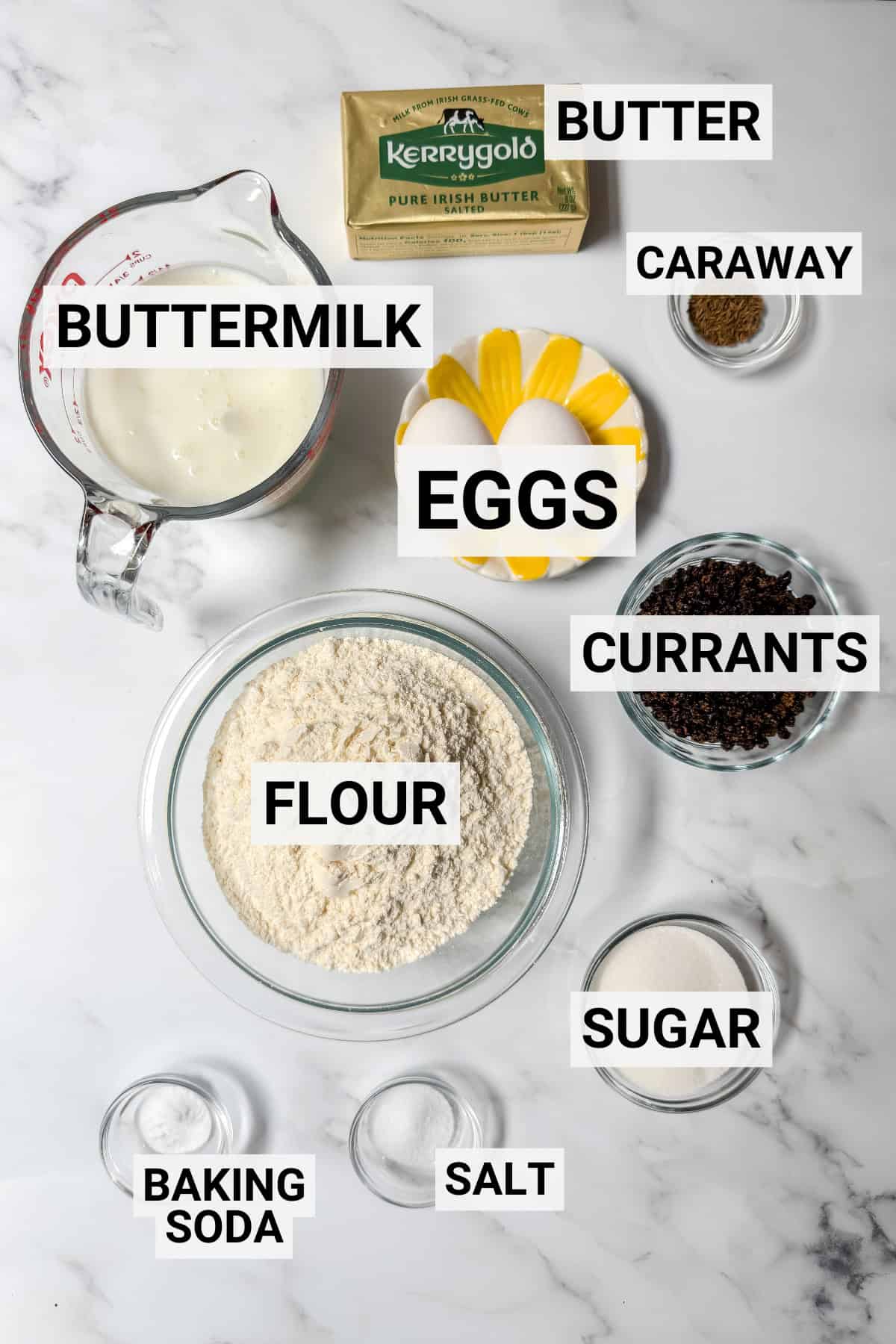
- The Egg: The egg acts as a binder and a tenderizer, making this loaf slice beautifully without crumbling-perfect for a travel tin or a tea tray.
- The Fruit: Currants create the tiny, distinctive "spots" throughout the loaf, but sultanas or raisins work beautifully too.
- The Sugar Crust: Use Demerara or turbinado sugar for that classic "bakery" and signature crunch.
How to Make Spotted Dog Irish Soda Bread
Like all soda breads, Spotted Dog comes together quickly - no yeast, no rising time, just a gentle hand and a hot oven.
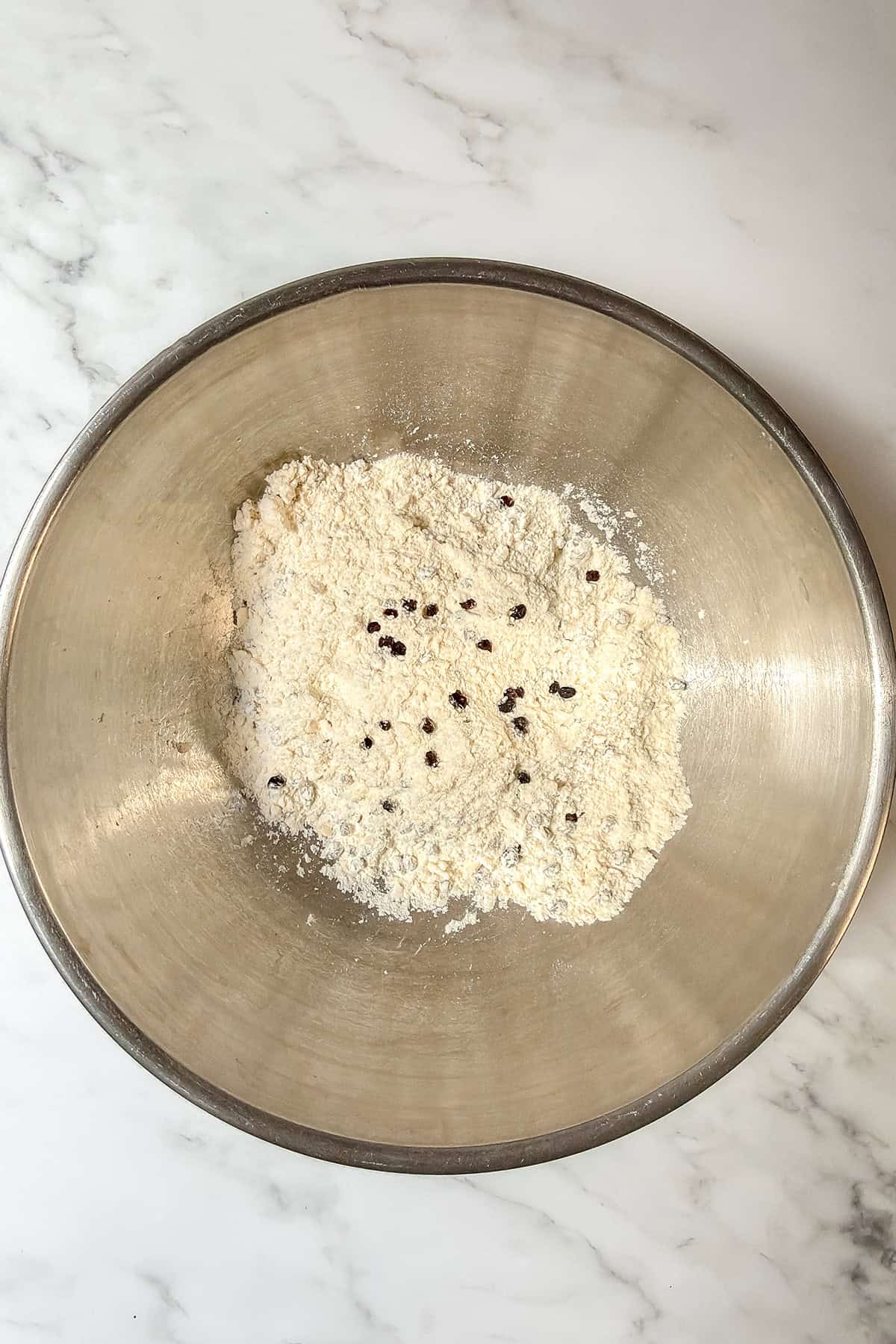
- Step 1: In a large bowl, whisk the flour, granulated sugar, salt, and baking soda together. Cut in the butter until the mixture resembles coarse crumbs. Stir in the caraway and currants, sultanas, or raisins; these are the "spots."
Technique Note: Tossing the currants with the dry ingredients prevents the fruit from sinking or clumping together.
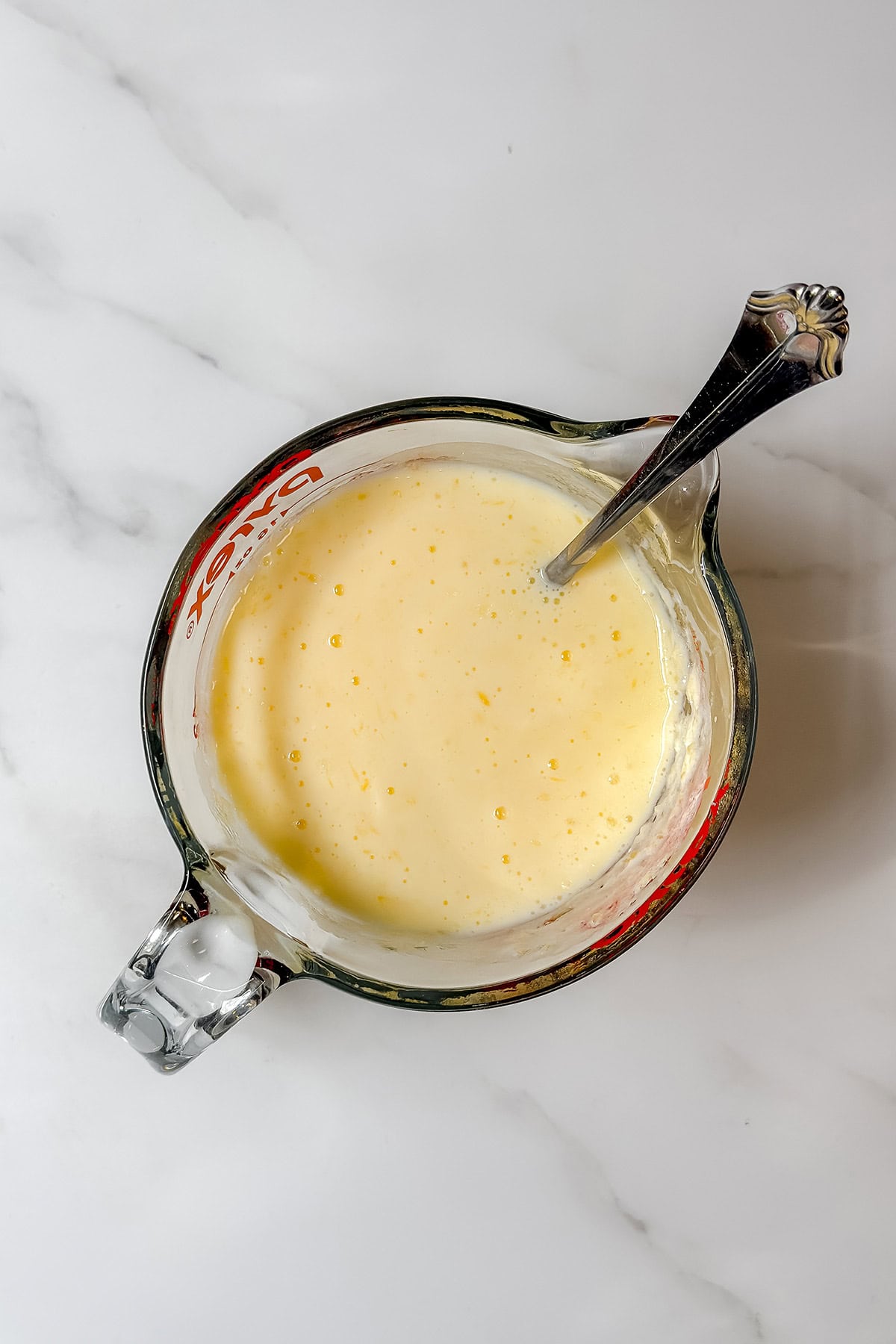
- Step 2: In a measuring cup, whisk the buttermilk and beaten egg together.
Technique Note: This ensures the fat and protein are evenly distributed for that cake-like crumb.
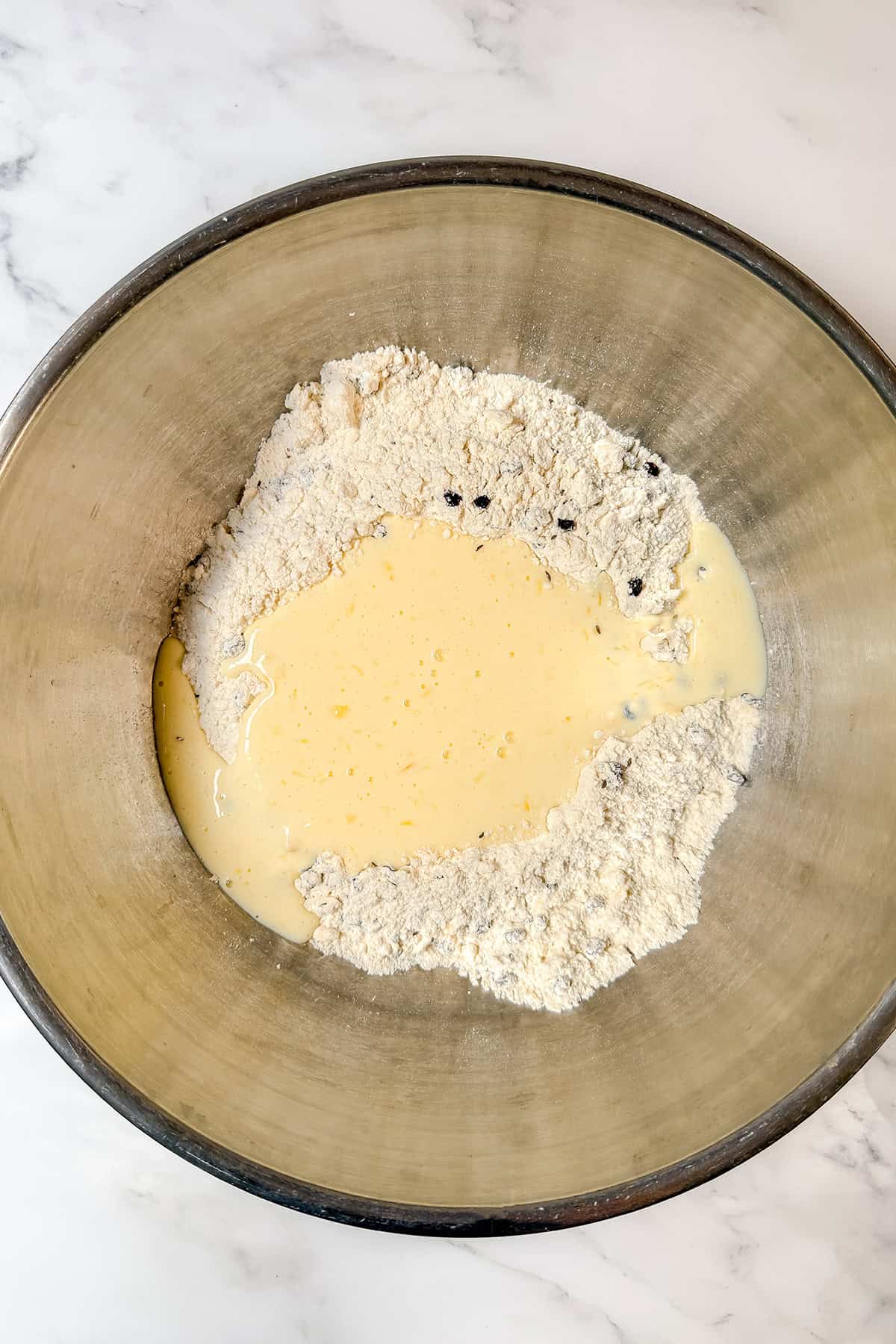
- Step 3: Make a well in the center of the flour mixture and pour the liquid into the middle. With circular motions and beginning in the center, incorporate the liquid into the flour until just blended.
Hint: Be careful not to overwork the dough, which can make the soda bread denser.
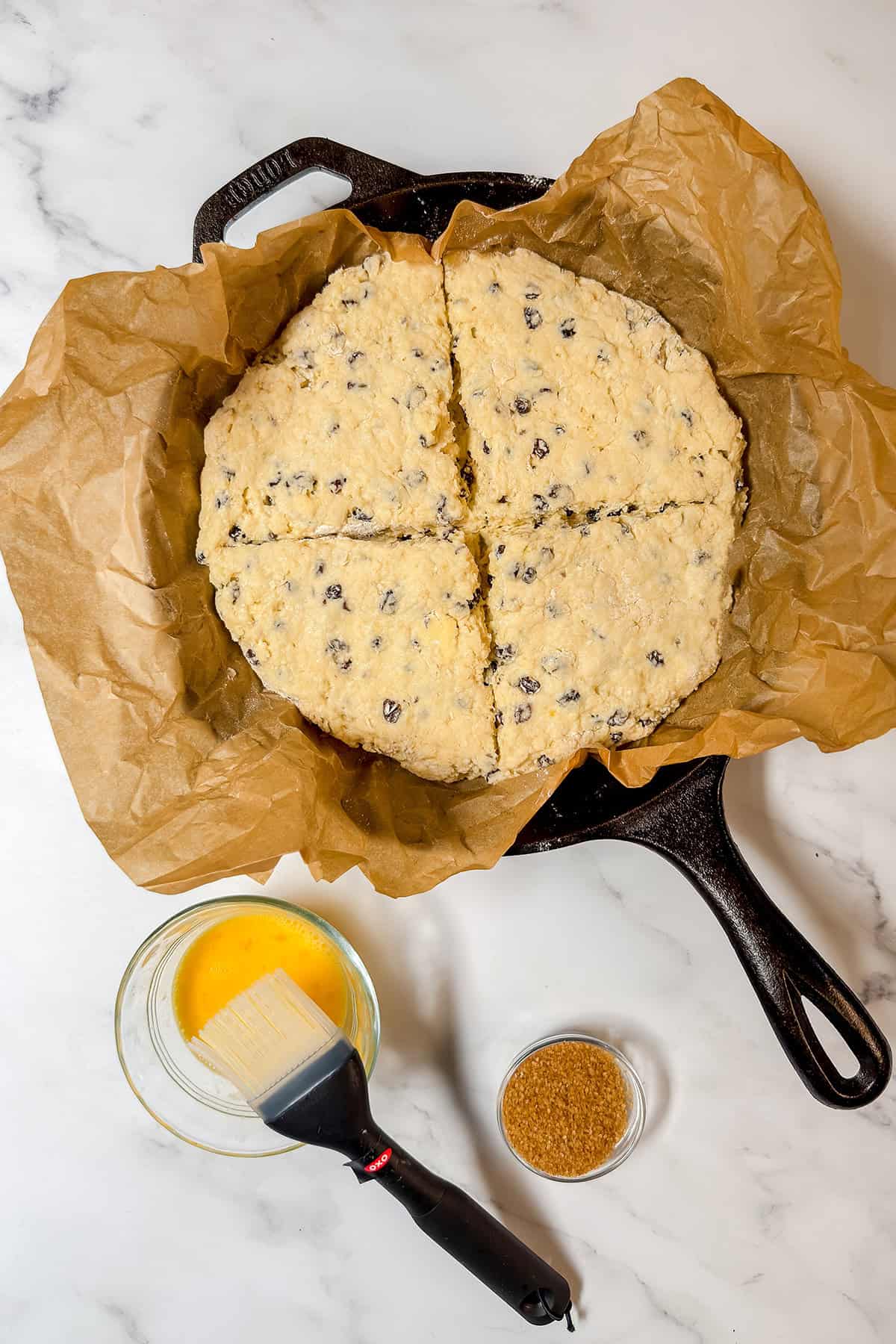
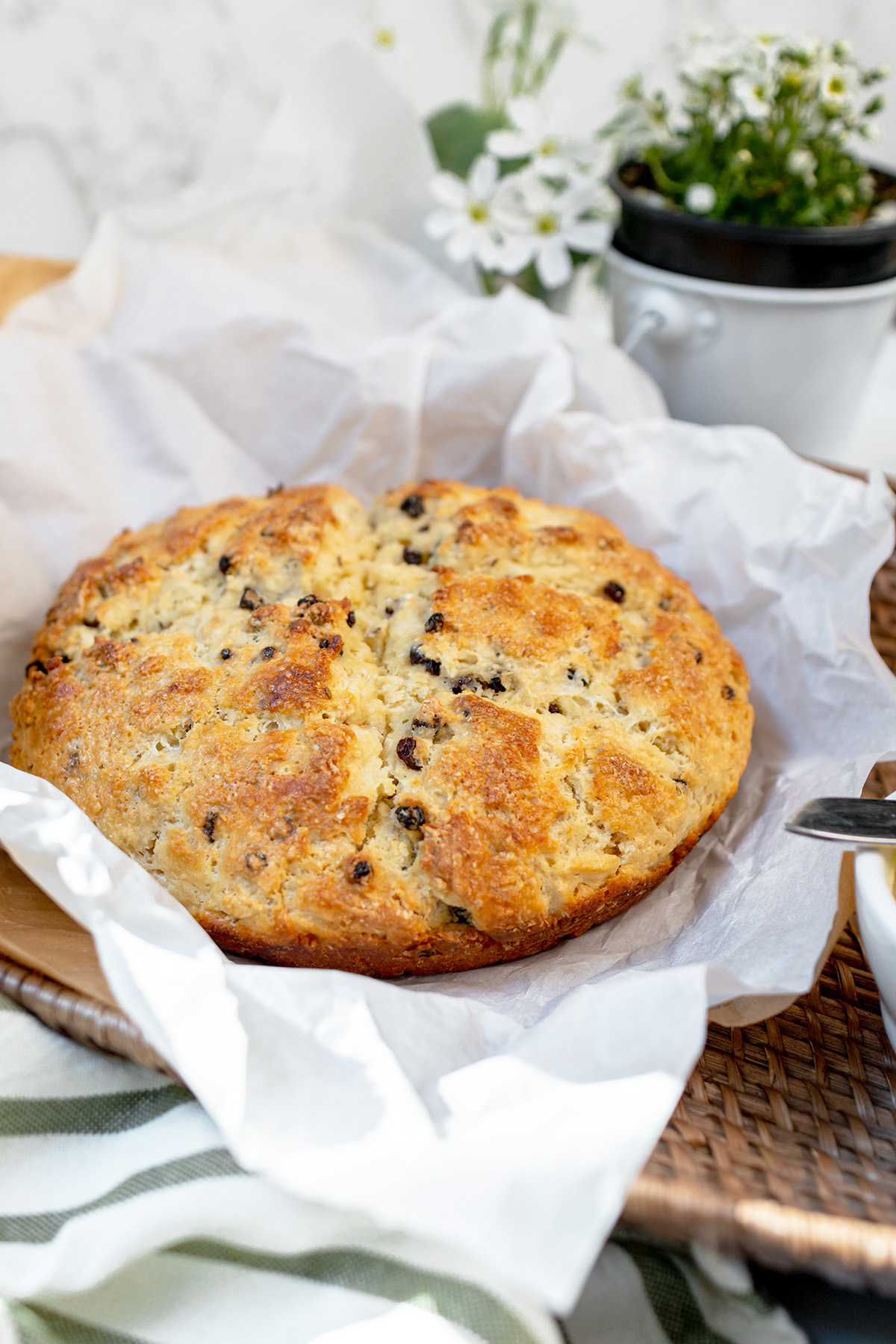
- Step 4: Shape the dough into a round, about 2 inches thick, on a generously floured surface. Transfer to the prepared pan, cut a deep cross in the top, and prick the corners. Brush the top with the beaten egg, then generously sprinkle with Demerara or turbinado sugar. Place the loaf in the oven and immediately reduce the temperature to 400°F. Bake for 10 minutes, then reduce to 375°F and bake for about 30 minutes more, or until golden brown.
Technique: The high-heat start is traditional for getting that "shaggy" Irish crust.
Why do you put an "x" on the soda bread?
Every Irish baker knows the 'X' on top of the loaf is there to let the steam out-but the folklore says it's to 'let the fairies out' so they don't curse the bread. For a Spotted Dog, some say the deeper the cut, the more room there is for the luck to get in!
The Story of Railway Cake
In the mid-to-late 19th century, Ireland's expanding railway system changed more than travel - it subtly changed the table.
As Ireland's railway network expanded during the 19th century, Railway Cake became another name associated with this richer style of soda bread. Sturdier than sponge cake and sweeter than everyday soda bread, it was well suited to carrying, sharing, and serving for special occasions.
Sturdier than sponge cake yet richer than everyday soda bread, this egg-enriched loaf traveled beautifully in tins and parcels. It sliced cleanly, resisted staling, and offered just enough sweetness to feel celebratory.
What had once been a humble survival bread evolved into something meant for company, holidays, and journeys - bread no longer just for sustenance, but for pleasure.
And so Spotted Dog became both hearth bread and traveler's treat - a quiet symbol of Ireland stepping into a more connected world.
Serving
Because this loaf is richer, it doesn't require a hearty stew. It shines best when:
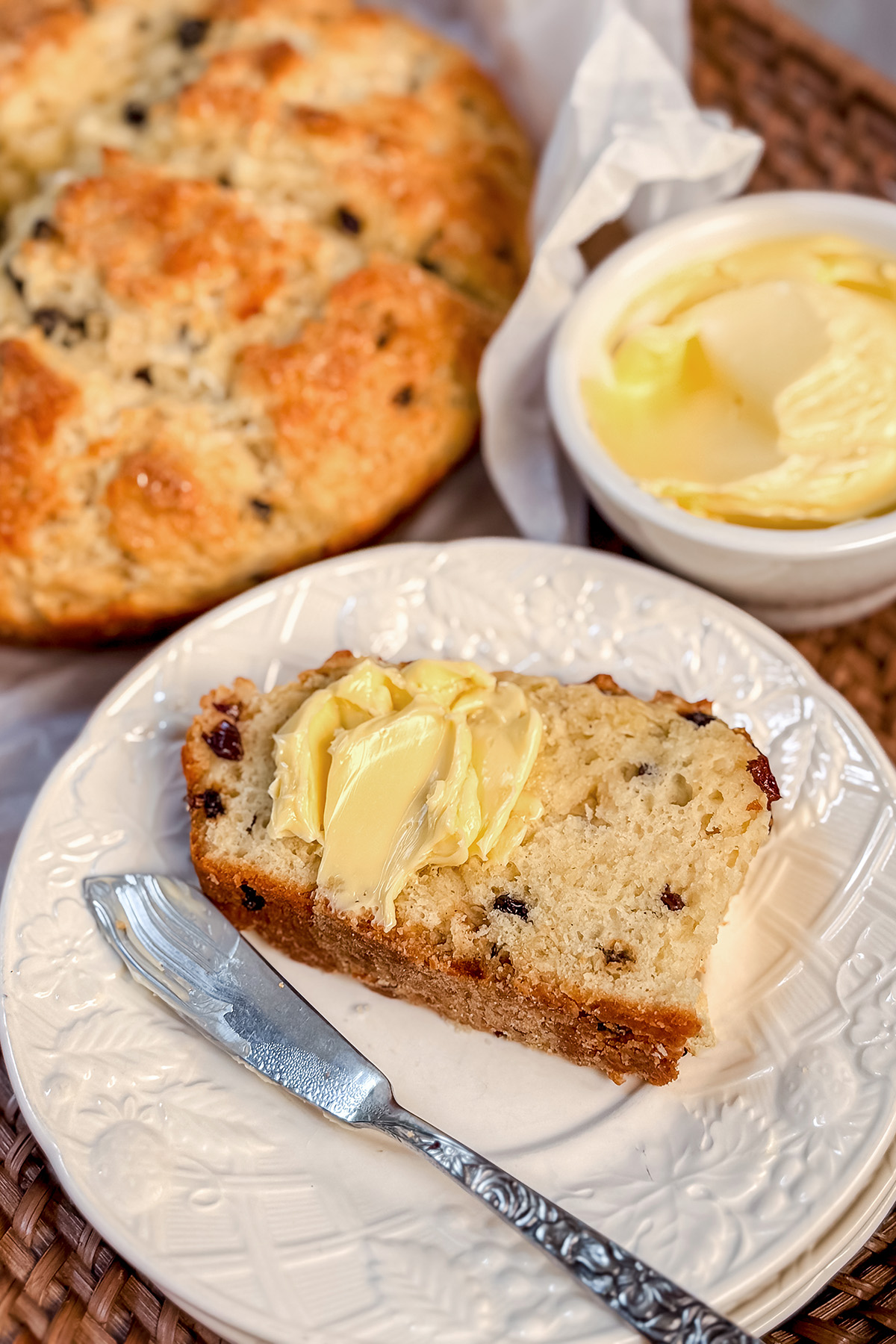
- Sliced thick and served with salted Irish butter.
- Paired with a sharp Dubliner cheese for a sweet-and-savory snack.
- Served alongside a pot of strong Irish Breakfast tea.
Stephanie's Note: While Spotted Dog was the traveler's choice for a long journey, Irish Scones were the quintessential choice for an Irish afternoon tea table.
Storage
Spotted Dog is best enjoyed the day it is baked, when the crust is crisp, and the crumb is tender.
To store:
- Wrap tightly in parchment or foil once completely cooled.
- Keep at room temperature for up to 2 days.
- For longer storage, slice and freeze in an airtight container for up to 2 months.
To refresh, warm slices gently in a 300°F oven for 5-7 minutes. A smear of salted butter brings it beautifully back to life.
Top Tip
Do not overwork the dough. Soda bread relies on a gentle hand - not kneading. Stir only until the flour is incorporated. Overmixing develops gluten, which makes the loaf tough instead of tender. Think "bring together," not "work until smooth."
Recipe FAQs
Spotted Dog (Railway Cake) is enriched with egg, sugar, and currants, giving it a more tender, slightly sweet crumb and a crunchy sugar crust. Traditional soda bread is simpler and more rustic, with no egg or added sugar.
In the 19th century, Ireland's expanding railways made longer travel more common. This richer soda bread kept well and sliced cleanly, so travelers packed it on journeys. People began calling it "Railway Cake" because it was a bread made for the rails.
Yes - while currants are traditional and give the distinctive small "spots," raisins or sultanas work well. Chop larger raisins slightly to distribute the dried fruit throughout the loaf.
The crust should be deep golden brown, and the loaf should sound hollow when tapped on the bottom. An internal temperature of around 200-205°F is a reliable indicator.
The cross helps heat reach the center more evenly during baking. Folk tradition also says the cross "lets the fairies out," a charming cultural bit that lives on in Irish homes.
More Soda Bread Recipes
If you enjoy homemade soda bread for St. Patrick's Day or any day of the year, try these too:
- Classic Irish Soda Bread with Golden Raisins
- Brown Irish Soda Bread with Molasses
- Irish Soda Bread with Buttermilk and Raisins
- Easy Mini Irish Soda Bread



Pairing
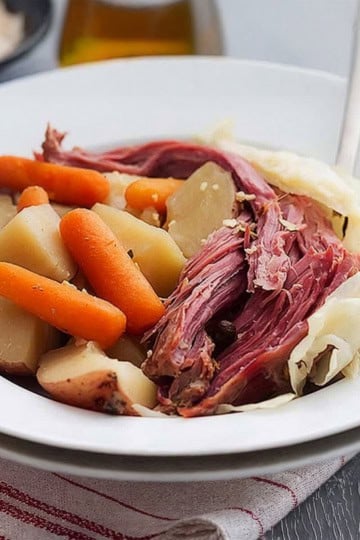
These are my favorite dishes to serve with Railway Cake:



Spotted Dog Soda Bread
Ingredients
- 4 cups all-purpose flour
- 3 tablespoons granulated sugar
- 1 teaspoon salt
- 1 teaspoon baking soda
- 1 teaspoon caraway seed or lemon zest
- 1 cup currants (sultanas or raisins)
- ½ cup Irish or European butter cold and cubed
- 1 ½ cups buttermilk or more if needed
- 1 large egg beaten
For Topping
- 1 large egg beaten
- 2 tablespoons Demerara or turbinado sugar for topping
Instructions
- Preheat oven to 425℉ and line a baking sheet with parchment paper; grease a cast-iron skillet, or line it with parchment paper. You can also sprinkle some of the bench flour on the bottom of the skillet.
- In a large bowl, whisk the flour, granulated sugar, salt, and baking soda together. Cut the cold butter into the flour until coarse crumbs form. Then mix in the caraway and currants (sultanas or raisins); these are the "spots." Tossing the currants with the dry ingredients prevents the fruit from sinking or clumping together.
- In a measuring cup, whisk the buttermilk and beaten egg together. Technique Note: This ensures the fat and protein are evenly distributed for that cake-like crumb.
- Make a well in the center of the flour mixture and pour the liquid into the middle. With circular motions and beginning in the center, incorporate the liquid into the flour until just blended. The dough will be wet. If needed, add a sprinkling more flour. It's important not to overwork the dough, which would lead to a denser loaf.
- Transfer the dough to a generously floured surface and quickly shape it into a round about 1½ to 2 inches thick, without overworking the dough. Then transfer to the prepared baking sheet or skillet. Cut a deep cross in the top with a sharp knife, almost to the bottom of the loaf and then prick all four corners.
- Brush the top with the beaten egg, then generously sprinkle with Demerara or turbinado sugar. This creates the signature "Railway Cake" crunch.
- Place the loaf in the oven and immediately reduce the temperature to 400°F. Bake for 10 minutes, then reduce the oven temperature to 375°F and bake for about 30 minutes more, or until golden brown. The loaf should sound hollow when tapped on the bottom.
- Like all soda bread, this Railway Cake is best enjoyed the day it's baked, with a smear of Irish butter. Store leftovers well wrapped at room temperature. You can also freeze baked soda bread: allow it to cool completely, then store it in an airtight container.
Nutritional information is only an estimate. The accuracy of the nutritional information for any recipe on this site is not guaranteed.
A Note from Stephanie: Baking these traditional Irish recipes always brings me back to the heart of my own family's kitchen. Whether it's the 'Railway Cake' history of the Spotted Dog or the specific way my grandmother insisted on finishing a loaf, these recipes are more than just food-they are stories passed down through generations. I hope they bring a bit of that Emerald Isle magic to your table this season.
More Irish



Popular Right Now



Love seasonal recipes and easy ideas for everyday cooking? Join 36,000+ readers and receive our newest recipes each week.
Subscribe to the Newsletter
theres no salt in ingred.- sugar is listed twice-says egg wash for top of dough,but recipe states put egg in with buttermilk then into dry ingred. , does that mean i need two eggs-recipe very confusing
Thank you so much for catching this! You were right—the recipe card was missing the salt and the second egg, and the two sugars weren’t clearly identified. I’ve gone back through the recipe and corrected everything. There are two eggs: one is mixed with the buttermilk for the dough, and the second is used to brush the top before adding the coarse sugar. I’m so grateful you took the time to let me know!
This is such a delicious, tender, mildly sweet loaf. The currents are delicious, and the crumb is soft and buttery. I love the railway history behind this recipe. It's such a treat to make!
What is the half cup of butter used for?
Hi Char, the butter is cut into the flour, much like scones or biscuits. The butter gives the soda bread a little lighter with a fluffier crumb.