
Irish Baked Salmon and Cream Sauce
This post may contain affiliate links. Please read our disclosure policy.

This Irish Baked Salmon recipe is deliciously fresh, easy to make, and infused with Irish flavorings, and it's baked in a foil packet on a sheet pan. The drizzle of Dill Cream Sauce, which almost makes itself, is utterly divine and easy.
For a quick salmon weeknight dinner, you may also love this salmon and greens recipe too!
What I Love About This Recipe
With an extensive coastline and abundant rivers, Ireland is known for its delicious sea trout and salmon. This easy salmon recipe takes its cue from Irish flavorings and ingredients.
And makes it a perfect candidate for St. Patrick's Day. While we'll always love Easy One Pot Corned Beef and Cabbage or even Irish Pub Skillet Dublin Coddle, it's nice to change it up once in a while.
Long a fan of Irish comfort food, and from a long line of Irish ancestors, every year as we inch toward March, my thoughts and culinary cravings always lean toward the green, grassy hills of Ireland.
For me, March is about digging deep into our Emerald Isle ancestral lines, brewing Irish Breakfast Tea, and baking Irish Soda Bread. All the while, loving the season as our own grass begins to green and tiny bulbs emerge from winter's soil.
If you love Irish Pub Food, this easy-to-make salmon dish is one you'll most definitely want to try!
Jump to:
- What I Love About This Recipe
- Three Reasons You'll Love Baked Salmon in Foil
- Ingredients
- How to Make Irish Salmon and Cream Sauce
- How Long Does a Baked Salmon in Foil Take?
- How to tell when Baked Salmon is done
- Tips for Baking Salmon in Foil
- How to Serve and Garnish Irish Salmon
- Which Sides Are Best with Irish Salmon
- Ways to use Leftover Salmon
- More Recipes You May Also Enjoy
- Irish Salmon and Dill Cream Sauce
- 💬 Comments
Three Reasons You'll Love Baked Salmon in Foil
- It's the easiest, softest, juiciest, most delicious salmon recipe... ever.
- Pretty and fancy... with practically no work at all!
- Maybe 5 minutes to prep this recipe.
Ingredients
These simple ingredients make the most delicious, moist, and tender Irish Salmon you've ever had. The exact measurements are in the recipe card at the bottom of this post.
- Salmon fillet - Use a center-cut fillet if possible for even cooking. Fresh Atlantic or King salmon works beautifully here; look for firm flesh and good marbling.
- Fresh parsley - Adds a clean, herbal note that brightens the sauce without overpowering the salmon.
- Leek - Mild and slightly sweet, leeks soften beautifully and give the dish its signature Irish character. Be sure to rinse well between the layers.
- Lemons - Fresh lemon juice lifts the richness of the butter and cream and balances the dish.
- Irish butter (or lightly salted butter) - Rich, creamy butter creates the luxurious base of the sauce. Irish butter adds depth, but any good-quality butter works.
- Vegetable broth - Keeps the sauce light while adding savory depth. Choose a mild broth so it doesn't compete with the salmon.
- Light cream - Just enough to create a silky, gently creamy sauce without heaviness.
- Fresh dill - A classic pairing with salmon, dill adds a fresh, delicate finish that ties everything together.
How to Make Irish Salmon and Cream Sauce
Preheat the oven to 375F and line a baking sheet with foil, large enough to encase the salmon in a packet.
Step 1: Season the Salmon
Remove any visible bones and season the salmon filet with sea salt and pepper. Arrange slices of leek and lemon over the fillets, then top with fresh chopped parsley. Dot the filet with butter, pour the vegetable broth over the top, and seal in a foil packet.

Step 2: Bake the Salmon
Place the fish packet on the baking sheet and bake for 15 to 20 minutes, or until the thickest part of the salmon looks opaque when flaked with a fork. The size and thickness of your salmon fillet will determine this. Discard the parsley, lemon, and leek slices.
Step 3: Make the Cream Sauce
Transfer any juices from the foil packet into a large skillet. Heat over medium-high and stir in the cream and fresh dill. Bring to a simmer and cook for 10 to 15 minutes or until slightly thickened-taste for seasoning.
How Long Does a Baked Salmon in Foil Take?
Baking time varies depending on the weight and thickness of the salmon fillets. The Chinook fillet I'm using is 2 pounds.
- The 2-pound salmon I used bakes in a foil packet at 375F for 15 to 20 minutes.
- Cooking times will vary depending on the thickness of the salmon.
How to tell when Baked Salmon is done
Here are some tips for telling when baked salmon is done.
Use a sharp knife or fork to insert it into the thickest part of the baked salmon. If it is beginning to flake but still has translucency in the middle, it's done.
The FDA recommends using an instant read thermometer to reach an internal temperature of 145 degrees F.
Salmon baked in foil tends to continue cooking after being removed from the oven. I like to let it rest, covered with foil, for 5 minutes before serving.
Tips for Baking Salmon in Foil

When baking salmon in foil, it's important not to overcook the fish.
- Remove additional bones in the salmon by running your finger over the flesh. A fish bone tweezer makes this job quick and easy.
- Foil locks in moisture, which is great news, but still watch the salmon carefully. I like to begin checking a 2-pound salmon at 15 minutes in the thickest part.
- If it's not quite cooked, I remove the top of the foil and broil it for a minute or two.
- Let the salmon rest in the foil for 5 minutes before serving. Which gives you time to make the Dill Cream Sauce.
How to Serve and Garnish Irish Salmon
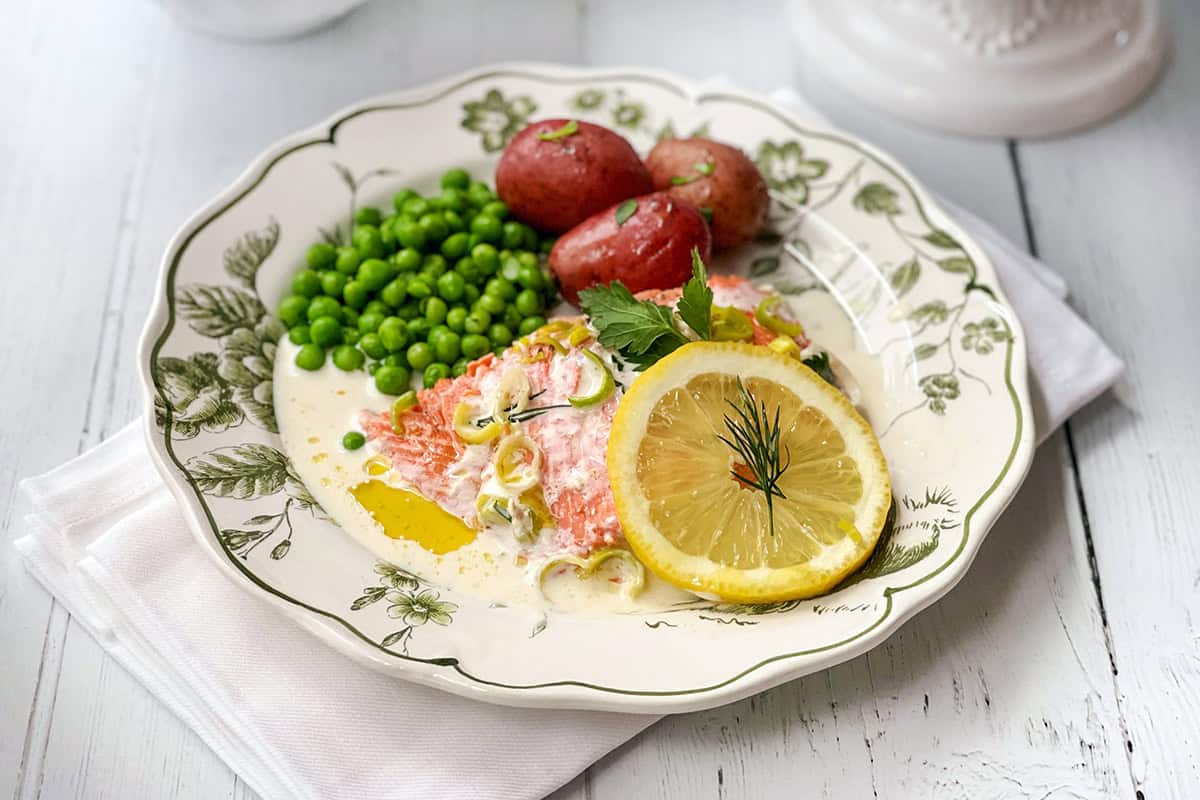
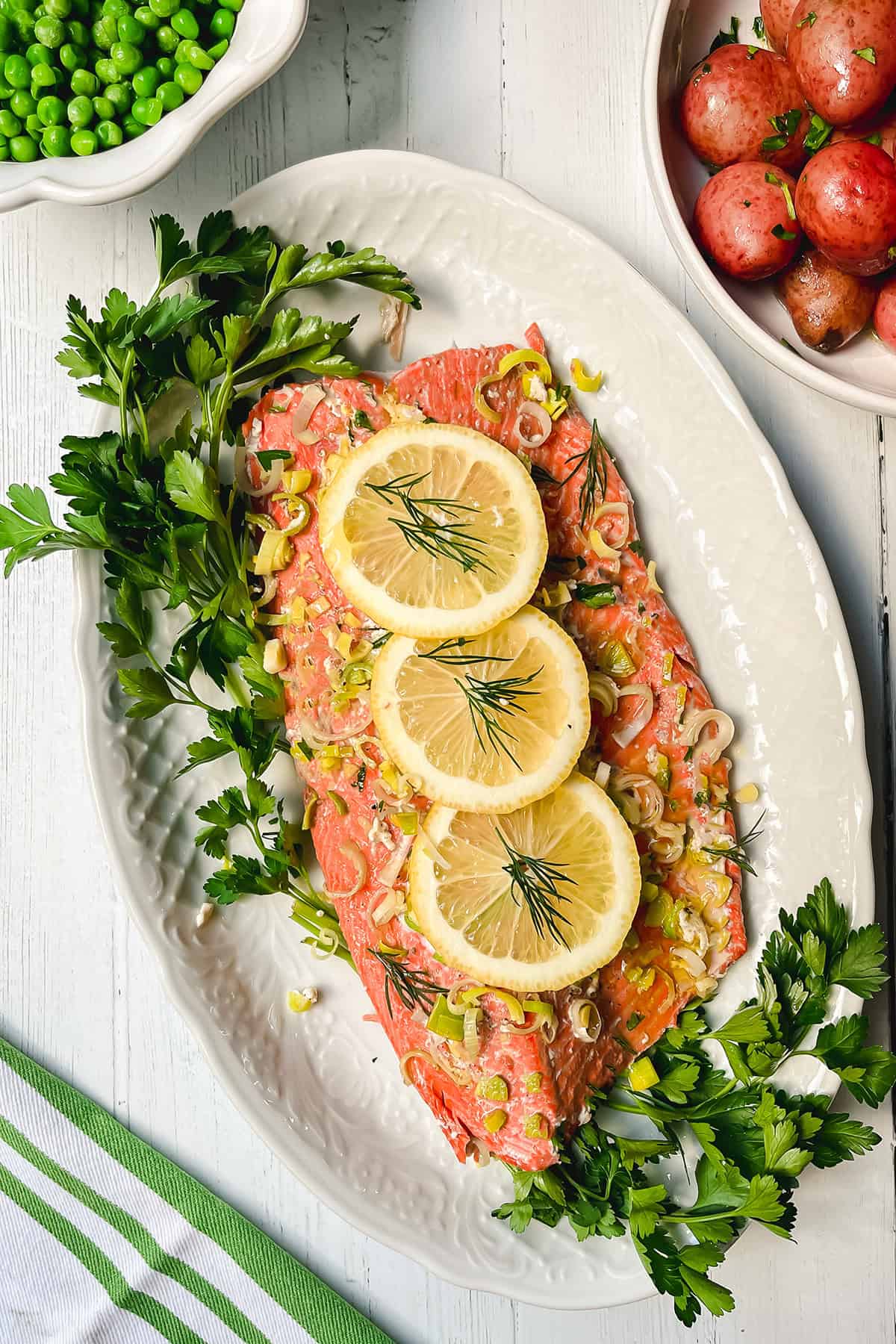
Salmon is beautiful on all its own, but if you want to make it even more special, garnish it with additional lemon slices, parsley, and dill sprigs over the top. Serve each piece over a spoonful of cream sauce.

Which Sides Are Best with Irish Salmon
I love to serve this dish with fresh peas and boiled new potatoes drizzled with butter and topped with fresh chopped parsley. It's also delicious with creamy mashed potatoes or crispy potatoes.
Ways to use Leftover Salmon
If you're fortunate to have salmon leftovers, here are some of my favorite recipes using cooked salmon.
- Creamy Salmon Pasta with Peas, Dill and Creme Fraîche
- Salmon Burgers in 15 Minutes or Less
- Quick Fix Salmon Chowder
- Salmon Quiche with Spinach, Dill, and Mozzarella
If you're in the mood for another cozy salmon dinner, try this creamy Finnish Salmon Soup (Lohikeitto) - a simple, comforting Nordic soup that comes together in about 30 minutes.
More Recipes You May Also Enjoy
If you try this recipe, I'd love to hear your comments and consider giving it a 5-star rating. Explore the recipe index for more easy, delicious ideas, and stay updated by subscribing to our newsletter and following us on Facebook, Pinterest, Instagram, and YouTube!
Want to save this recipe?
Enter your email, and we'll send it to your inbox. Plus, you'll get delicious new recipes from us every Friday!
Irish Salmon and Dill Cream Sauce
Ingredients
- 2- pound salmon fillet
- 1 bunch fresh parsley
- Sea salt and fresh black pepper to taste
- 1 leek halved lengthwise and sliced
- 2 lemons thinly sliced
- 3 ½ tablespoons Irish butter or lightly salted butter
- 1 cup vegetable broth
- 1 cup light cream
- 3 tablespoons chopped fresh dill

Instructions
- Preheat the oven to 375 degrees F and line a baking sheet with foil, large enough to encase the salmon.
- Remove any visible bones and season the salmon filet with sea salt and pepper. Arrange slices of leek and lemon over the fillets, then top with fresh chopped parsley. Dot the filet with butter, pour the vegetable broth over the top, and seal in a foil packet.
- Place the fish packet on the baking sheet and bake for 15 to 20 minutes, or until the thickest part of the salmon looks opaque when flaked with a fork. This time will vary depending on the size and thickness of the salmon. Discard the parsley and lemon. I like to leave the leek slices on the fish, but that's a personal preference.
- Transfer any juices from the foil packet into a large skillet. Heat over medium-high and stir in the cream and fresh dill. Bring to a simmer and cook for 10 to 15 minutes, or until slightly thickened. Taste for seasoning.
Nutritional information is only an estimate. The accuracy of the nutritional information for any recipe on this site is not guaranteed.
Comments
No Comments