
Cold Sesame Noodles with Peanut Sauce

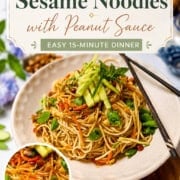
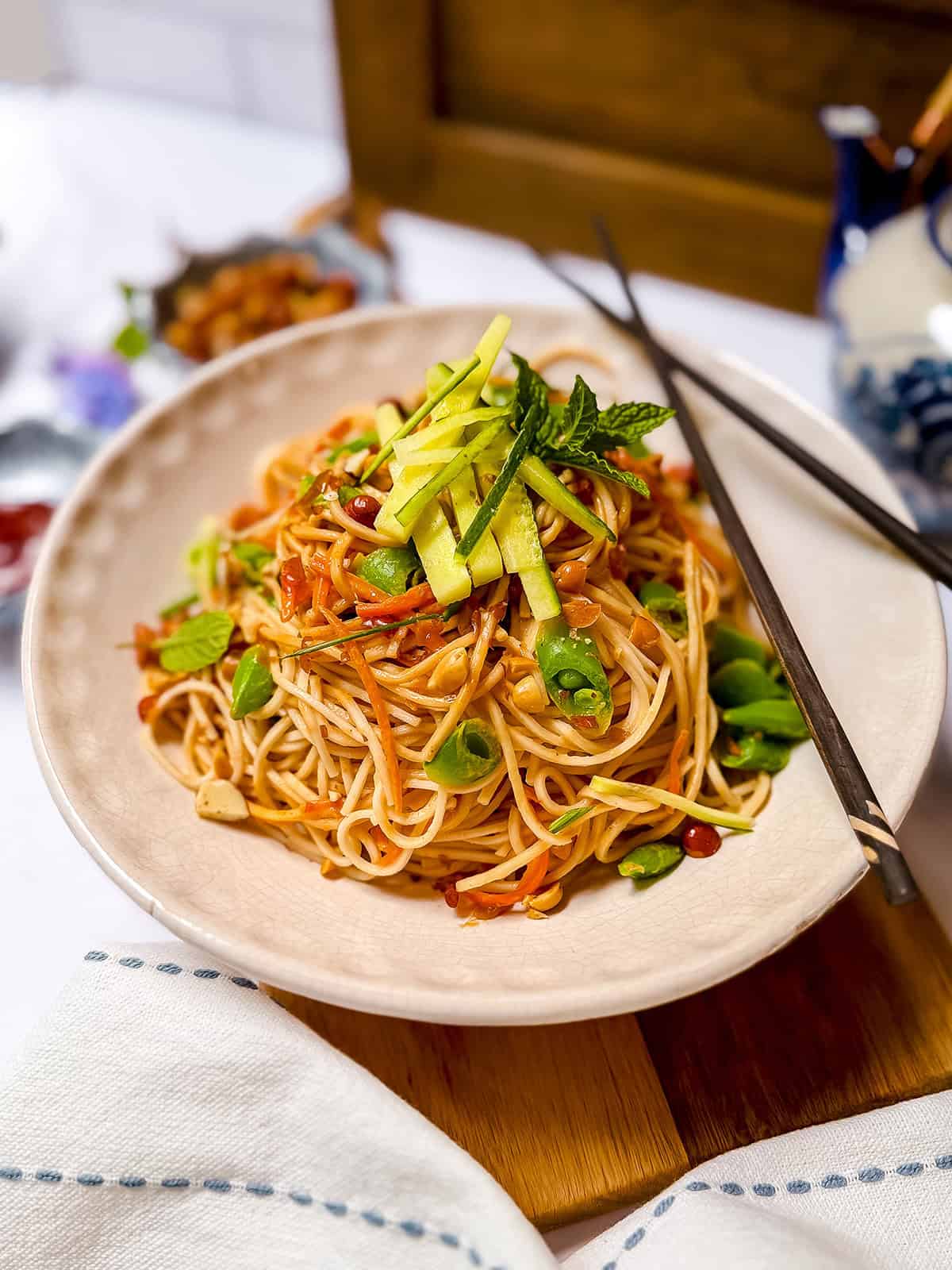
These Cold Sesame Noodles with Peanut Sauce are a quick and flavorful warm-weather dinner made with tender noodles, crisp vegetables, and a creamy, savory peanut sauce. Carrots, sugar snap peas, and scallions add plenty of color and crunch, while garlic, ginger, sesame oil, and chili-garlic paste give the sauce bold flavor.
Serve these cold peanut noodles chilled or at room temperature for an easy summer meal. They're delicious on their own, or you can add cooked chicken, tofu, shrimp, or extra vegetables for a more substantial dinner.
For another cool and colorful meal made for warm evenings, try this Asian Coleslaw with Chicken.
This post may contain affiliate links. Please read our disclosure policy.
Want to save this recipe?
Enter your email, and we'll send it to your inbox. Plus, you'll get delicious new recipes from us every Friday!
Why You'll Love This Recipe
- Made for warm weather: These noodles are served cold or at room temperature, making them especially welcome on hot days.
- Quick and easy: The sauce comes together while the noodles cook.
- Full of texture: Tender noodles, crisp snap peas, carrots, scallions, and roasted peanuts make every bite interesting.
- Easy to customize: Add protein, change the vegetables, or adjust the chili-garlic sauce to suit your taste.
- Great for making ahead: The noodles can be prepared in advance for lunches, picnics, or easy summer dinners.
About Cold Sesame Noodles
Cold sesame noodles have long been a favorite in New York Chinese restaurants. Chef Shorty Tang is often credited with helping popularize the dish through Hwa Yuan, his Chinatown restaurant, where his version paired tender noodles with a richly flavored sesame sauce.
This easy homemade version adds peanut butter, fresh vegetables, ginger, and chili-garlic sauce for a creamy, savory-sweet noodle dish with a little heat.
Cold Sesame Noodle Ingredients
Here is what you'll need to make these cold peanut noodles. Exact measurements are included in the recipe card below.
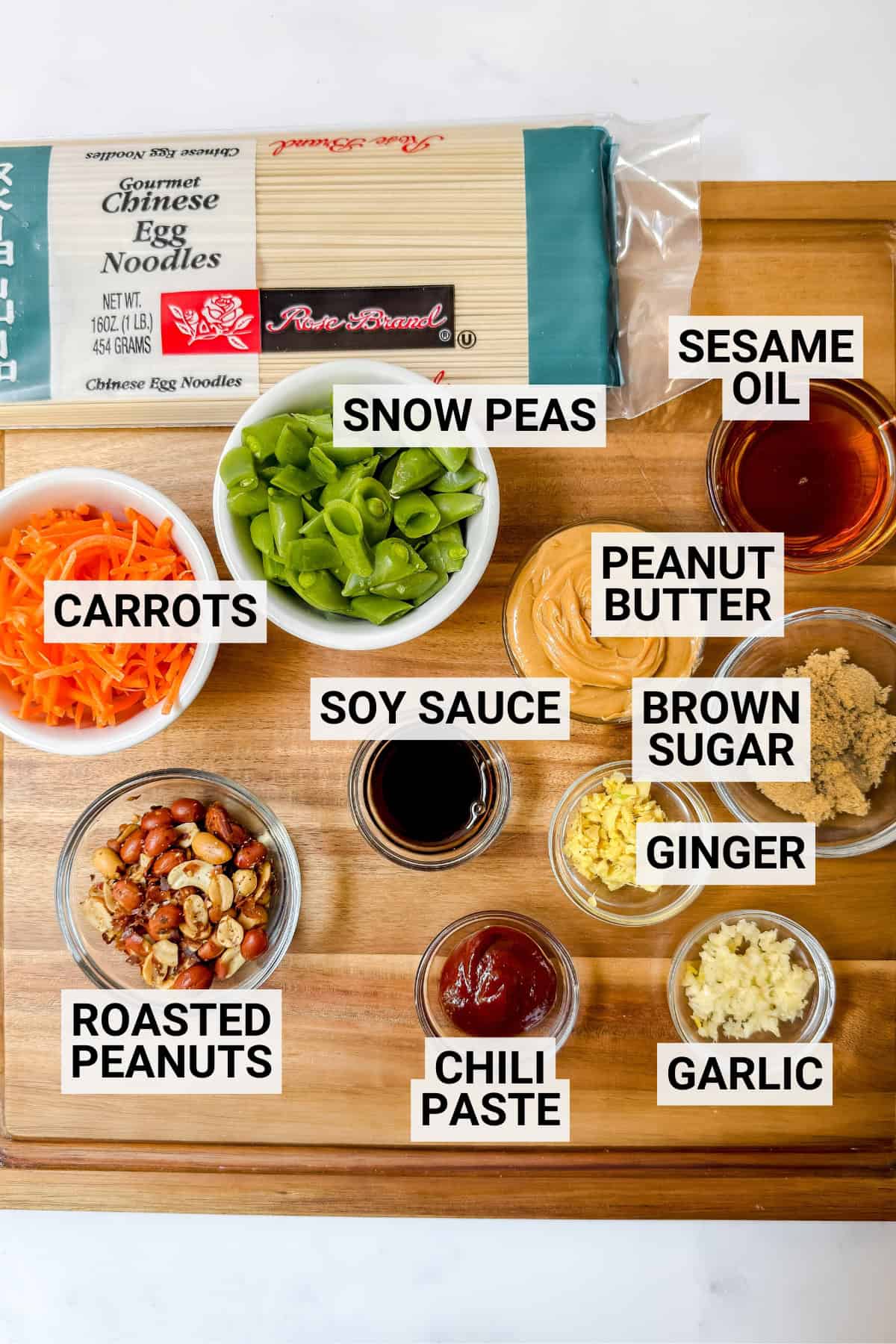
- Noodles: Fresh Chinese egg noodles are an excellent choice because their springy texture holds the creamy peanut sauce well. Fresh linguine also works beautifully. When fresh noodles aren't available, dried linguine or spaghetti can be substituted. Cook them only until al dente so they remain pleasantly firm after being rinsed and chilled.
- Dark Sesame Oil: Toasted dark sesame oil gives the sauce its distinctive nutty flavor. In this recipe, it is briefly heated with the scallions, garlic, ginger, and brown sugar before the remaining sauce ingredients are stirred in.
- Scallions: Sliced scallions add fresh onion flavor and a pop of green. Reserve a few for garnishing the finished bowls.
- Carrots: Shoestring carrots are quick and convenient, but freshly grated or thinly julienned carrots work just as well.
- Sugar Snap Peas: Thinly sliced sugar snap peas add sweetness and crisp texture. Snow peas can be substituted if needed.
- Roasted Peanuts: Chopped roasted peanuts add crunch and reinforce the peanut flavor in the sauce. Sprinkle them over the noodles just before serving.
For the Peanut Sauce
- Peanut Butter: Creamy peanut butter forms the sauce's base. A smooth, conventional peanut butter will generally produce the most consistent texture.
- Soy Sauce: Soy sauce seasons the sauce and adds savory depth. Reduced-sodium soy sauce may be used if preferred.
- Brown Sugar: A small amount of brown sugar balances the salty soy sauce and spicy chili-garlic paste.
- Garlic and Fresh Ginger: Fresh garlic and ginger bring warmth and brightness to the peanut sauce.
- Chili-Garlic Paste: Chili-garlic paste (like Sambal Oelak or Sriracha) adds both heat and flavor. Begin with less for a mild sauce, or add more if you enjoy spicier noodles.
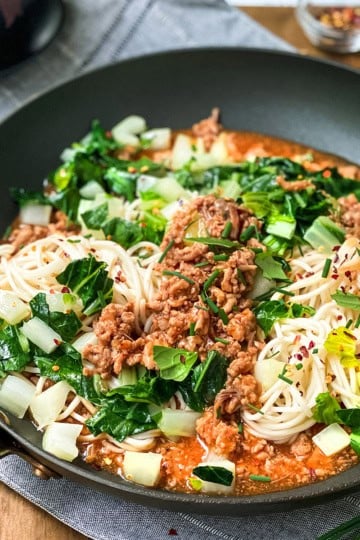
Once you have a jar on hand, you can also use it to make these Spicy Ginger Pork Noodles with Bok Choy.
What Are the Best Noodles for Cold Sesame Noodles?
Fresh Chinese wheat or egg noodles are the traditional-style choice for cold sesame noodles. Their slightly chewy texture holds up well beneath the creamy sauce without becoming overly soft.
Fresh lo mein noodles or fresh linguine are also good options. For an easy pantry substitution, use dried spaghetti or linguine and cook it just until al dente.
Whatever noodles you choose, avoid overcooking them. Once drained, rinse the noodles under cold running water to stop the cooking process and remove excess surface starch. Drain them thoroughly before adding the sauce so it does not become diluted.
How to Make Cold Sesame Noodles
These noodles come together quickly, so it helps to prepare the vegetables and sauce ingredients while the water comes to a boil.
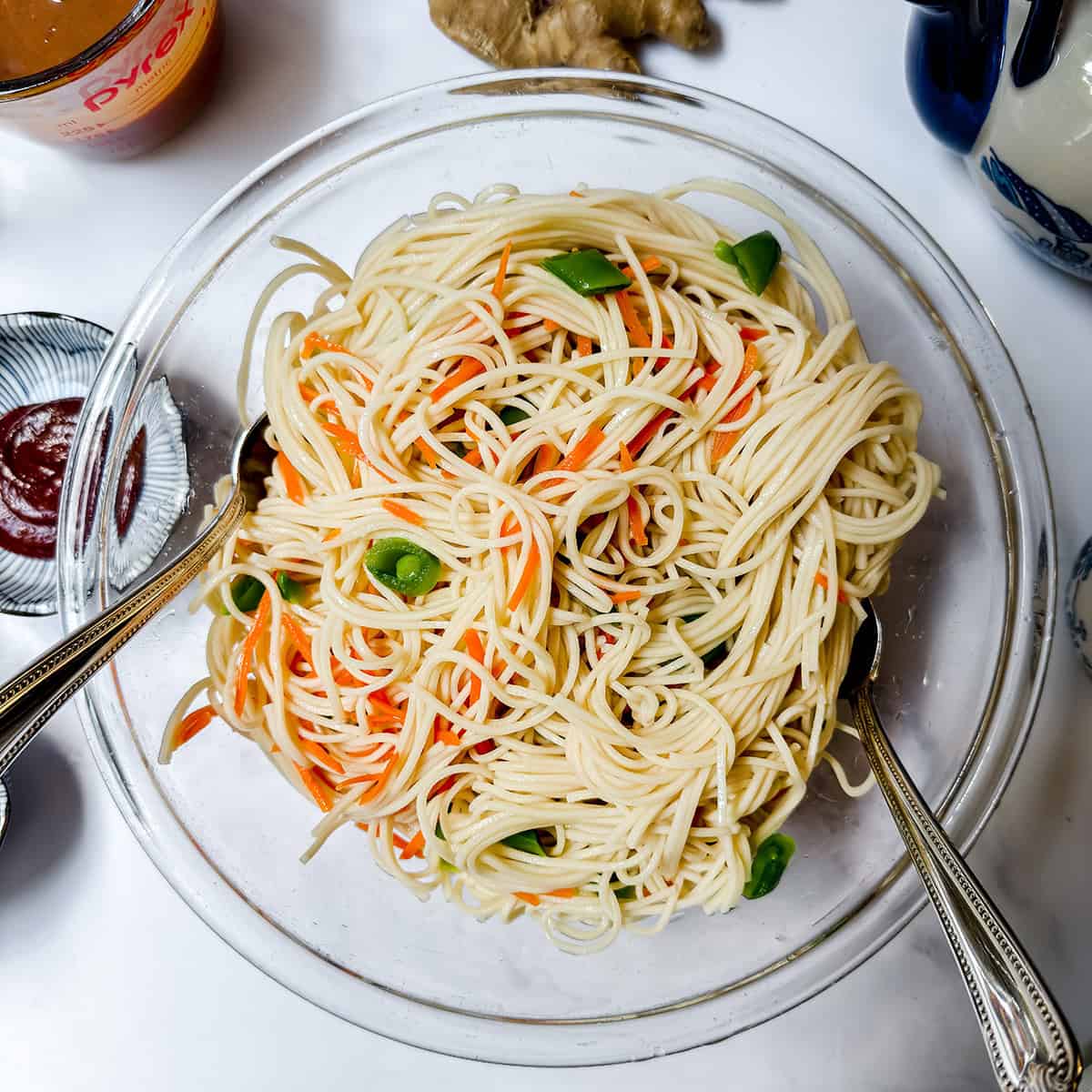
- Step 1: Cook and Cool the Noodles
Cook the noodles according to the package directions. During the final minute of cooking, add the carrots and sugar snap peas to the pasta water.
Reserve ⅔ cup of the pasta water, and drain the noodles and vegetables together. Rinse under cold running water until completely cooled. Drain well.
- Step 2: Make the Peanut Sauce
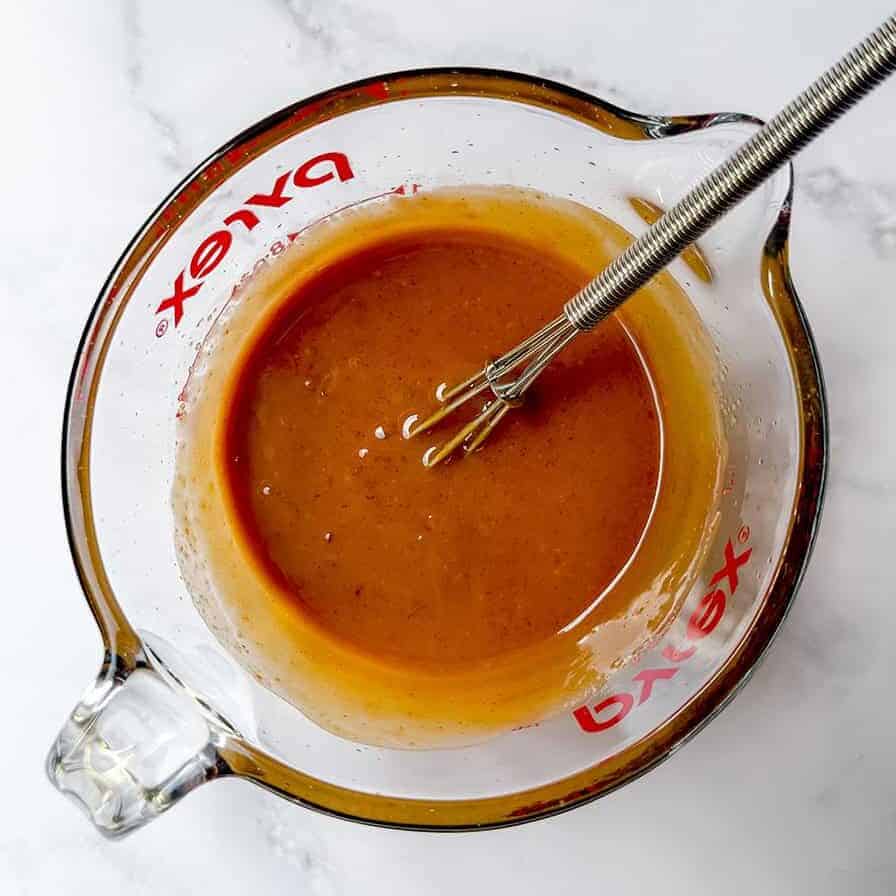
While the pasta cooks, combine the peanut butter, sesame oil, soy sauce, scallions (reserving a small amount for serving), garlic, ginger, brown sugar, and chili paste. Whisk in enough reserved pasta water to make a loose, smooth peanut dressing.
- Step 3: Toss the Noodles with the Sauce
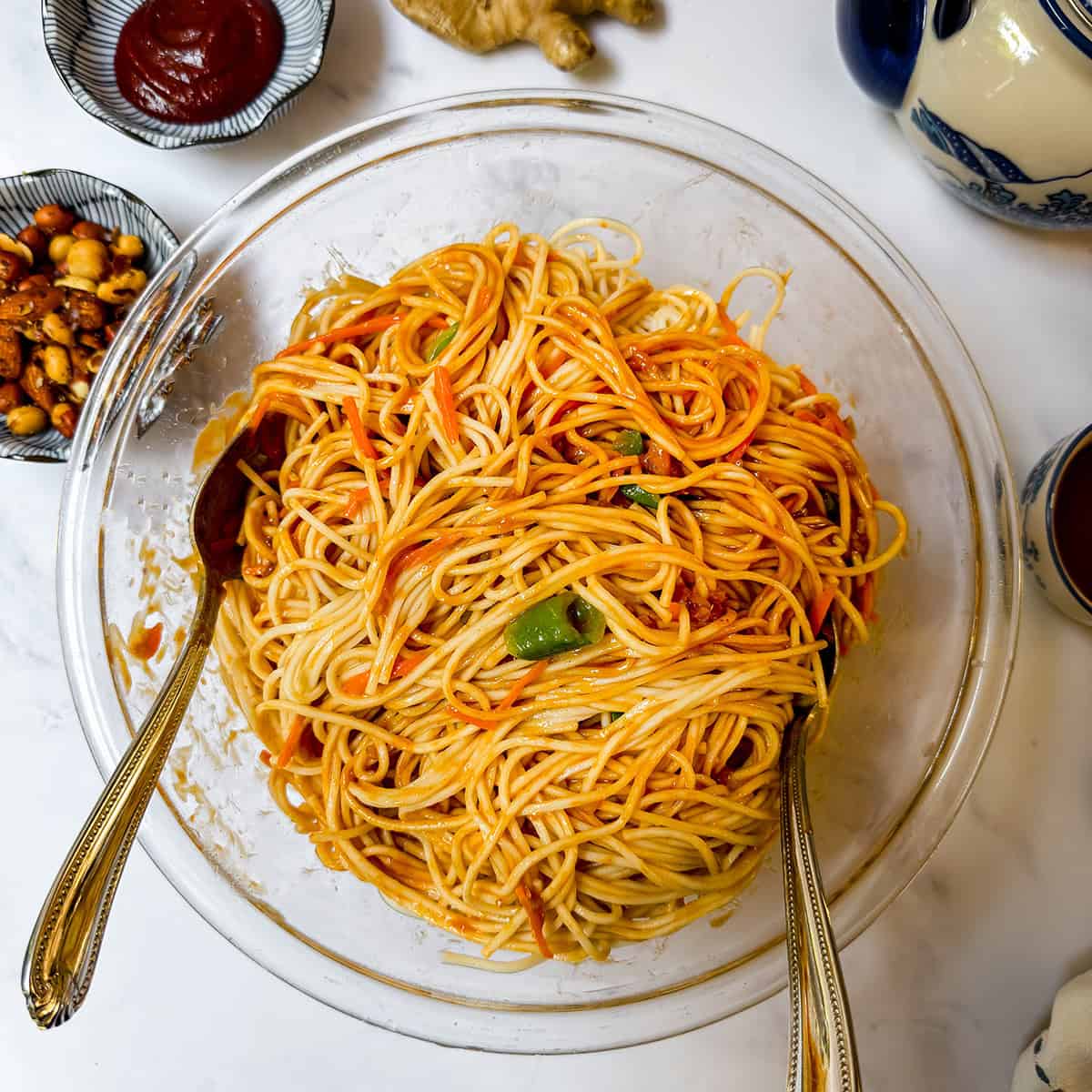
Pour the sauce over the cooled noodles and vegetables and toss until evenly coated. Garnish with chopped peanuts.
4. Step 4: Garnish and Serve
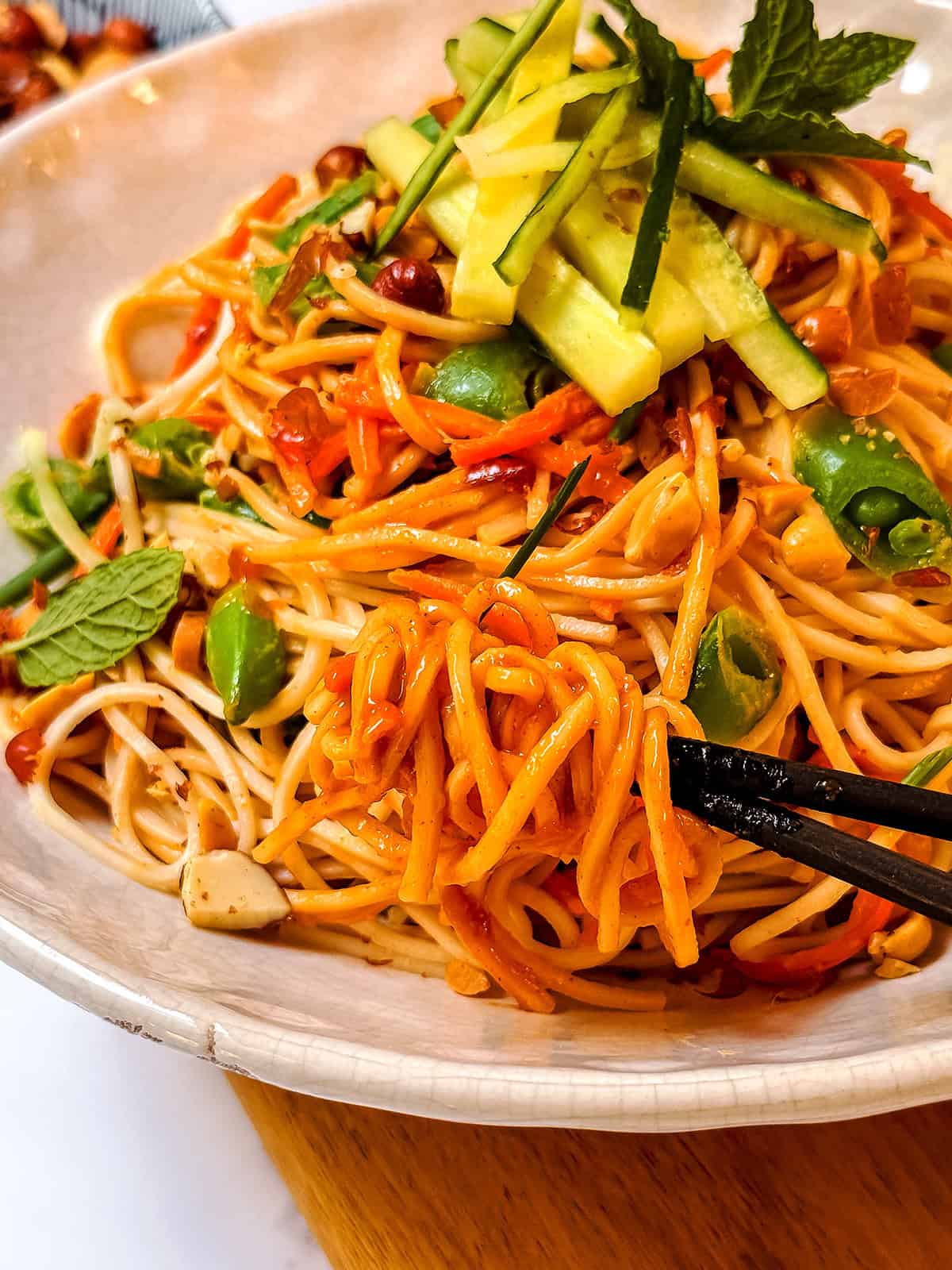
Transfer the noodles to a serving bowl and finish with the reserved scallions and chopped roasted peanuts. Add thinly sliced or julienned cucumber, if desired. Serve immediately or refrigerate until chilled.
Tips for the Best Cold Peanut Noodles
- Don't Overcook the Noodles: The noodles should remain slightly firm so they hold their texture once cooled and dressed.
- Drain Them Thoroughly: Excess water can dilute the peanut sauce. After rinsing the noodles, allow them to drain thoroughly before tossing them with the peanut sauce.
- Adjust the Sauce After Chilling: Peanut sauce naturally thickens as it rests. Before serving refrigerated noodles, toss them with a splash of warm water to loosen the sauce.
- Prepare the Garnishes Separately: For the freshest texture, wait to add the roasted peanuts and final scallions until just before serving.
Vegetable and Protein Variations
These noodles are easy to adapt according to what you have on hand.
For extra vegetables, try adding:
- Thinly sliced cucumber
- Shredded red or green cabbage
- Sliced red bell pepper
- Edamame
- Snow peas
- Daikon radish
- Fresh cilantro
To make the noodles more substantial, add cooked shredded chicken, grilled shrimp, sliced pork, or crispy tofu.
What to Serve with Cold Peanut Noodles
These noodles are satisfying enough to serve as a light meatless dinner, especially with plenty of vegetables. They also pair well with:
- Sliced cucumber salad
- Asian-style slaw
- Steamed or sautéed edamame
- Grilled chicken or shrimp
- Crispy tofu
- Fresh fruit
For another fast noodle dinner with vegetables and bold flavor, try these Curried Singapore Noodles. Or, for a lighter pasta built around seasonal produce, see this Easy Garden Pasta with Summer Vegetables.
How to Store Leftovers
Store leftover noodles in a covered container in the refrigerator. The peanut sauce will thicken as it chills, so toss the noodles with a small splash of warm water before serving again.
Keep extra chopped peanuts and scallions separate so they retain their texture.
Recipe FAQs
The heat comes primarily from the chili-garlic paste, so it is easy to adjust. Use a small amount for mild noodles or increase it for a more noticeable kick. You can also serve extra chili-garlic paste on the side so everyone can season their own bowl.
Yes. In fact, these noodles are an excellent make-ahead meal because the flavors have time to blend as they rest.
Prepare and refrigerate the dressed noodles in a covered container. Before serving, let them sit briefly at room temperature and toss them well. Add a splash of warm water if the sauce has become too thick, then finish with fresh scallions and roasted peanuts.
For the crispest vegetables, you can eliminate the blanching step, store them separately from the noodles, and fold the raw veggies into the noodles shortly before serving.
Cold sesame noodles can be served chilled or at room temperature. Straight from the refrigerator, the sauce will be thicker and the peanut flavor especially pronounced. At room temperature, the sauce softens and coats the noodles more loosely. I generally prefer to let refrigerated noodles rest on the counter briefly before serving.
Cold Sesame Noodles with Peanut Sauce
Ingredients
For the Peanut Sauce
- ½ cup peanut butter
- 3 tablespoons dark sesame oil
- 3 tablespoons soy sauce
- 3 scallions minced
- 1 tablespoon garlic minced
- 1 tablespoon fresh ginger minced
- 2 teaspoons brown sugar
- 2 teaspoons chili garlic paste
For the Noodles
- 8 ounces fresh linguine or 1 lb Chinese egg noodles
- 1 cup shoestring carrots or grated carrots
- 1 cup sugar snap peas thinly sliced
- ¼ cup roasted peanuts for serving
Instructions
- Cook the noodles according to the package directions until al dente. During the final minute of cooking, add the carrots and sugar snap peas to the pasta water.
- Reserve ⅔ cup of the pasta water, then drain the noodles and vegetables together and rinse under cold running water until completely cooled. Drain well.
For the Sauce
- While the pasta cooks, combine the peanut butter, sesame oil, soy sauce, scallions (reserving a small amount for serving), garlic, ginger, brown sugar, and chili paste. Whisk in enough reserved pasta water to make a loose, smooth peanut dressing.
Assembling the Noodles
- Pour the peanut sauce over the cooled noodles and vegetables and toss until evenly coated. Transfer to a serving bowl and garnish with the reserved scallions and chopped roasted peanuts. Add thinly sliced or julienned cucumber, if desired.
- Serve immediately at room temperature or refrigerate until chilled to allow the flavors to blend.
Notes
- Add Protein: For a more substantial meal, add cooked shredded chicken, shrimp, pork, or crispy tofu.
- Garnishing Ideas: Reserve some of the sliced scallions and chopped peanuts for garnishing just before serving. Thinly sliced or julienned cucumber adds a cool, crisp contrast. Add it shortly before serving for the freshest texture.
- Noodles: Fresh Chinese egg noodles, lo mein noodles, or fresh linguine work especially well. Dried linguine or spaghetti can also be used.
- Sauce Consistency: The peanut sauce will thicken after refrigeration. Let the noodles rest briefly at room temperature and toss well before serving. Add a small splash of warm water if needed to loosen the sauce.
Nutritional information is only an estimate. The accuracy of the nutritional information for any recipe on this site is not guaranteed.
More Easy Noodle Recipes
Instead of the current automatic list, I would use a smaller, hand-selected group that supports the post's search intent:
- Curried Singapore Noodles
- Spicy Ginger Pork Noodles with Bok Choy
- Healthy Homemade Instant Noodle Cups
- Asian Coleslaw with Chicken
- 23 Noodle Dishes to Celebrate Lunar New Year
- Curried Singapore Noodles
- Ginger Pork Noodles with Bok Choy
- Quick and Easy Lo Mein


If you try this recipe, I'd love to hear your comments and consider giving it a 5-star rating. Explore the recipe index for more easy, delicious ideas, and stay updated by subscribing to our newsletter and following us on Facebook, Pinterest, Instagram, and YouTube!
More Easy Dinner Recipes
Popular Right Now

Love seasonal recipes and easy ideas for everyday cooking? Join 36,000+ readers and receive our newest recipes each week.
Subscribe to the Newsletter
Love this site.