
Homemade Mock Clotted Cream (5 Minutes, 3 Ingredients)
This post may contain affiliate links. Please read our disclosure policy.



Homemade mock clotted cream is the essential companion to scones at afternoon tea. While the traditional version takes hours, this easy recipe comes together in just 5 minutes with 3 simple ingredients.
If you love teatime, be sure to browse my Afternoon Tea Recipes for more recipes & inspiration.
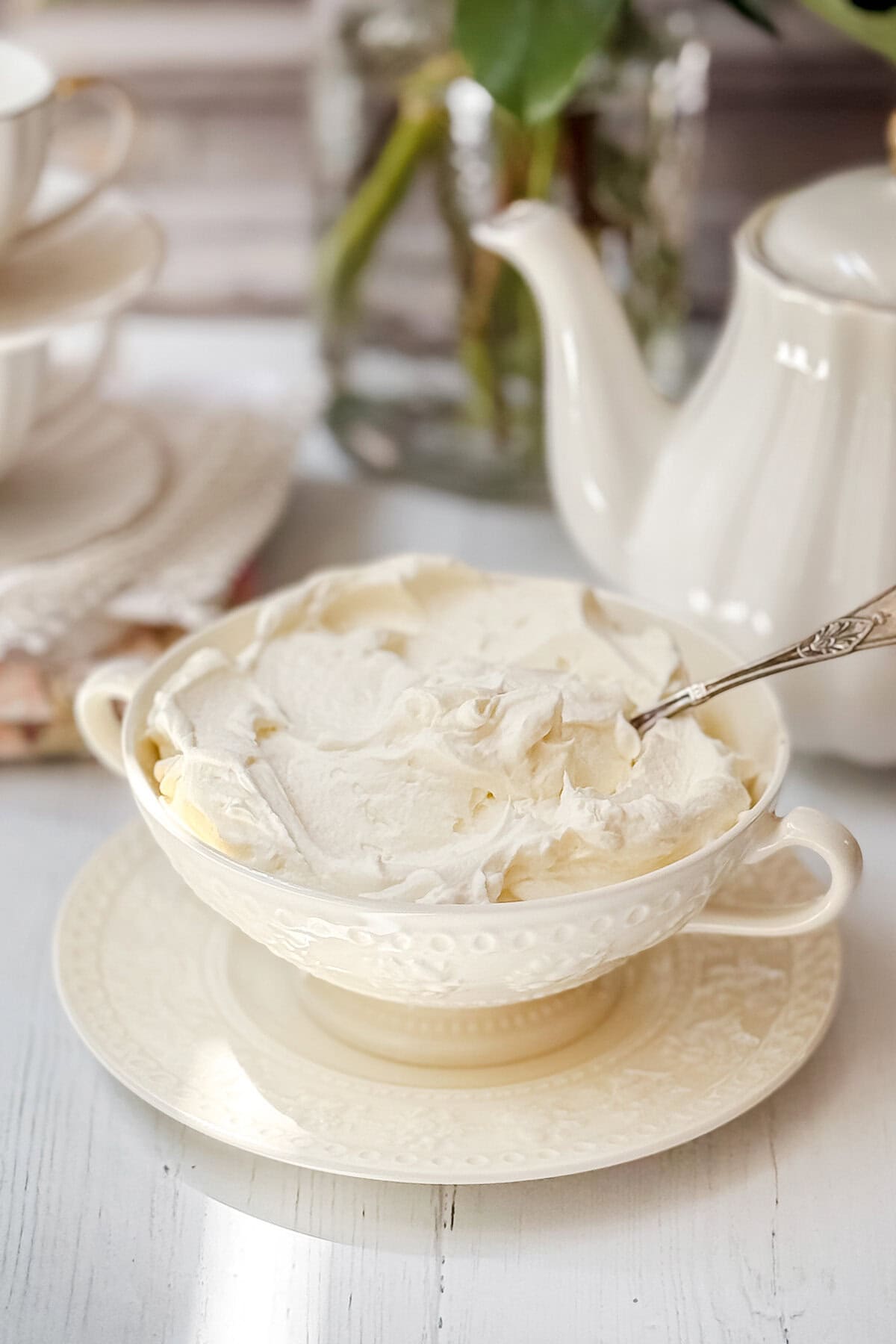
Recipe Overview
- Taste & Texture: Smooth, rich, creamy, and slightly sweet-similar to authentic clotted cream.
- Time: 5 minutes
- Ingredients: Heavy cream, mascarpone, powdered sugar
- Perfect Pairing: Fresh scones, jam, and a pot of tea
Why I Love This Recipe
I began making this homemade clotted cream because it was often hard to find in my local markets, and when I did, the tiny imported jars never stretched far enough to serve guests at tea. This quick version solves that beautifully, with a texture and flavor so close to the original that it's become a staple at my table.
If you've ever enjoyed afternoon tea in England, you know that scones are rarely served without clotted cream. Traditionally, it's a thick, luxurious cream made by slowly heating heavy cream until it develops a rich, almost buttery texture. But for those of us outside the U.K., finding authentic clotted cream in local markets can be tricky. If you have 5 minutes, this is mock clotted cream, a delightful substitute!
Jump to:
What is Clotted Cream?
Clotted cream is a thick, spreadable cream traditionally produced in England, especially in Devon and Cornwall. It's made by gently heating full-fat cream for hours, then skimming off the rich, thick layer that forms on top. The result is smooth, slightly nutty, and indulgent-something between whipped cream and butter.
How It's Served
- At afternoon tea: Almost always with scones, jam, and tea.
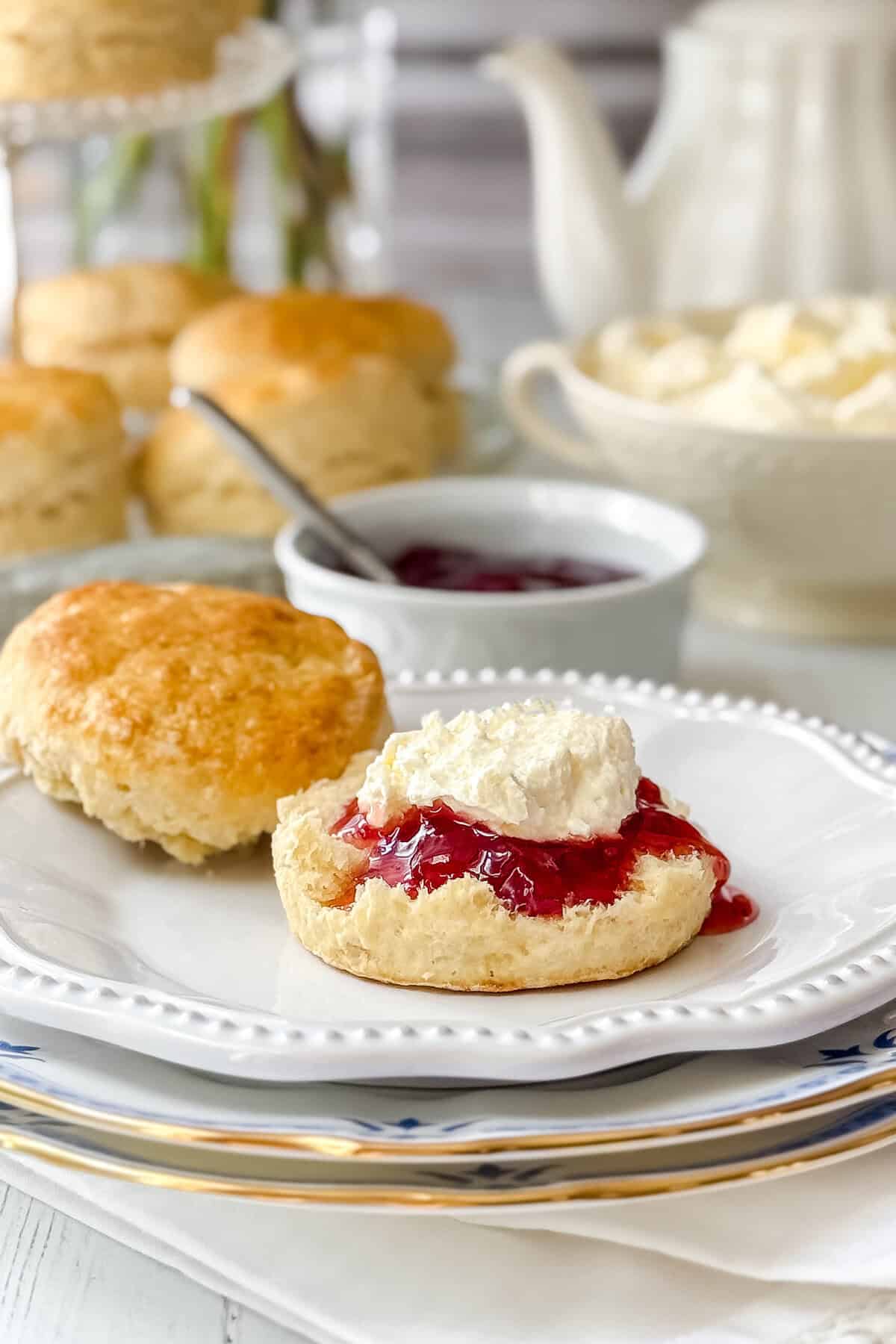
- On scones: Traditionally spread with either jam first or cream first (a long-standing, good-natured debate). Even Queen Elizabeth had her preference-she spread jam first, then cream. Here's how she enjoyed her scones.
- Occasions: You'll most often find clotted cream at cream teas (they are delicious with cream scones) and afternoon teas, alongside jam, sandwiches, and sweets.
Devon vs. Cornish Cream
- Devonshire method: Cream first, then jam.
- Cornish method: Jam first, then cream.
Both regions take pride in their tradition, and both produce wonderfully rich clotted cream.
This homemade version is quick and easy-it won't have the same thick crust as true clotted cream, but it's smooth, creamy, and perfect for serving with scones.
Key Ingredients
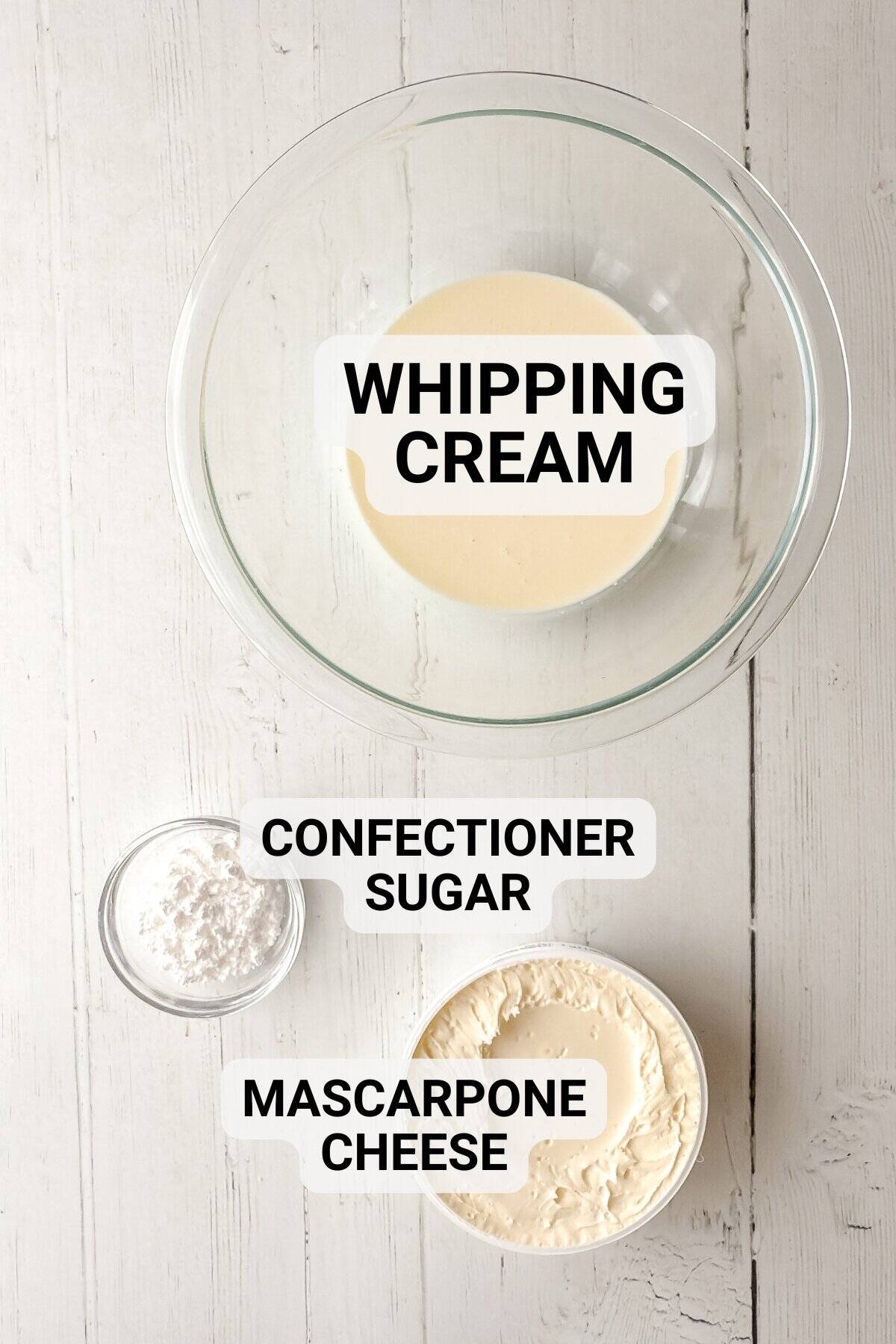
- Heavy cream (or whipping cream): The base for richness.
- Mascarpone cheese: Adds body and a slight tang.
- Powdered sugar (optional): Sweetens and balances.
Tips
- Use the highest-quality cream (at least 36% fat) for the best flavor.
- Mascarpone gives this recipe its rich texture; although in a pinch, softened cream cheese can also work.
- Serve at room temperature for the most authentic feel.
How to Make Mock Clotted Cream
This recipe comes together in 5 minutes:
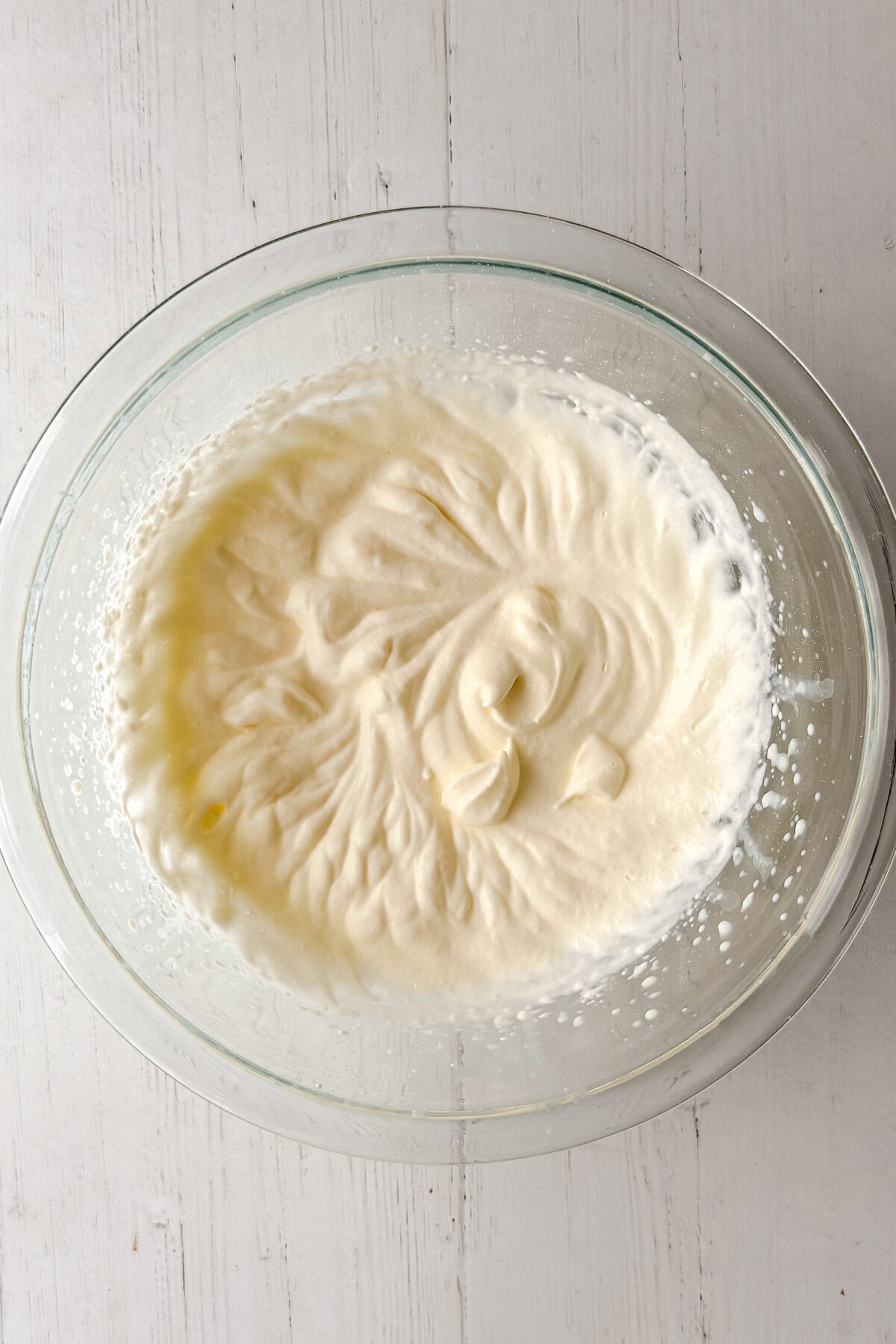
Step 1: Whip cream and confectioner's sugar until medium to stiff peaks form.
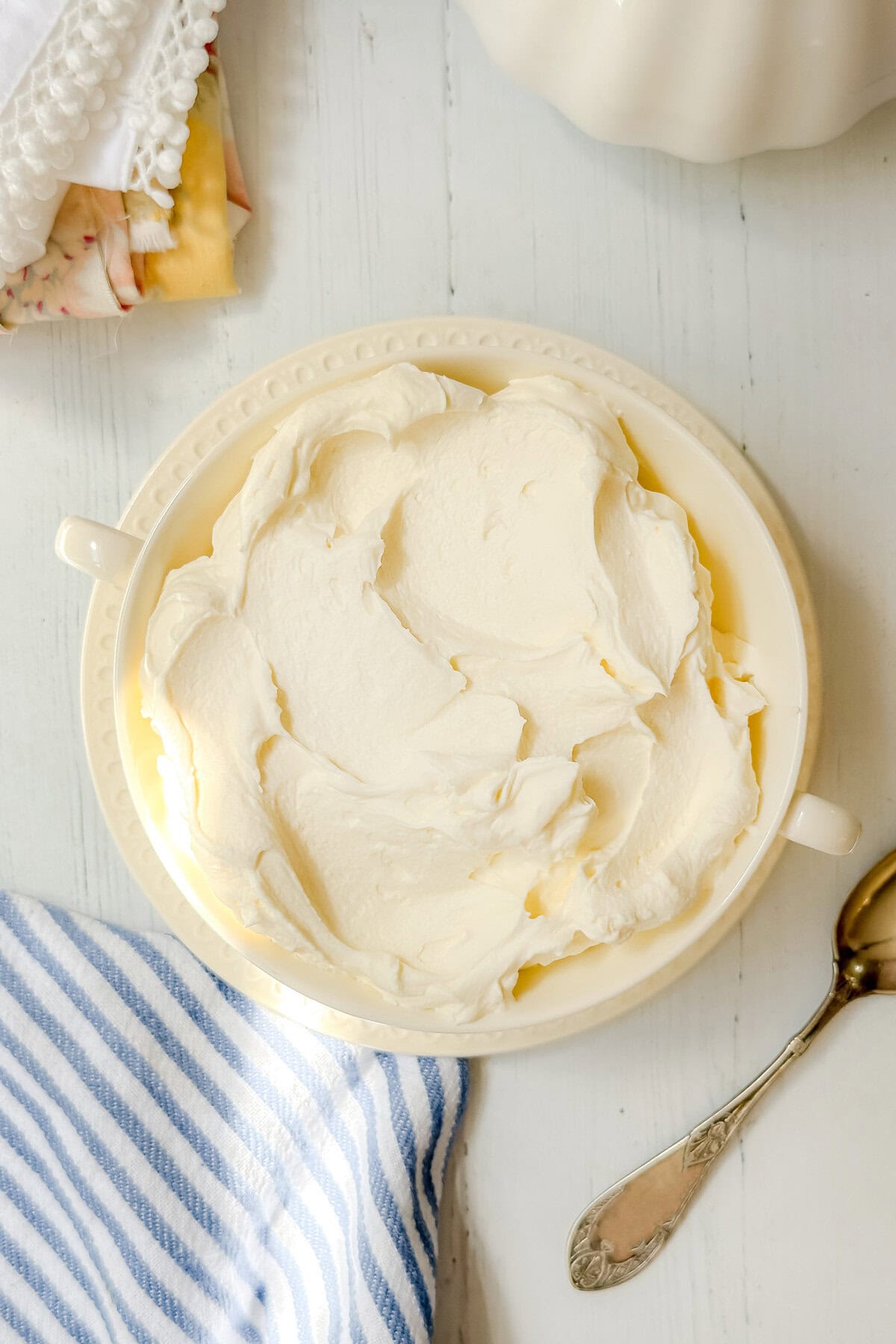
Step 2: Gently fold in mascarpone cheese until just incorporated.
How to Serve Clotted Cream
Clotted cream has long been the crown jewel of a British cream tea. It's most often spread on warm scones, paired with strawberry or raspberry jam, and enjoyed with a pot of tea. Some insist the cream goes first (the Devon way), while others claim jam first (the Cornish way). Either way, it's a delightful tradition. Even Queen Elizabeth preferred jam before cream.
At home, I love serving clotted cream during afternoon tea gatherings-alongside finger sandwiches, afternoon tea savory bites, and a tray of tea party desserts perfectly portioned for tea parties. It's also a lovely addition to seasonal teas, like Christmas Afternoon Tea, when warm scones are always welcome at the table.
Recipe FAQs
For authentic clotted cream, traditional English recipes use unpasteurized full-fat double cream (about 48% fat). Since that's not widely available in the U.S., the best substitute is heavy cream with the highest fat content you can find (at least 36%). Avoid ultra-pasteurized cream if possible-it doesn't thicken as well and won't give the same rich texture.
Yes-store it in the refrigerator for up to 3-4 days. Bring it to room temperature before serving.
Not exactly. Traditional clotted cream requires hours of gentle heating. This version is a faster, easier substitute that gives you a very similar taste and texture.
It's best with scones, of course, but you can also serve it on tea cakes, muffins, or sweet breads.
More Teatime Recipes

Scone Recipes to Pair with Clotted Cream
- Best Scones Recipe (with Tips for Light, Flaky Perfection)
- Orange Scones
- Fall Scones with a Dash of Cinnamon
- Lemon Lavender Scones Recipe



If you try this recipe, I'd love to hear your comments and consider giving it a 5-star rating. Explore the recipe index for more easy, delicious ideas, and stay updated by subscribing to our newsletter and following us on Facebook, Pinterest, Instagram, and YouTube!
Want to save this recipe?
Enter your email, and we'll send it to your inbox. Plus, you'll get delicious new recipes from us every Friday!
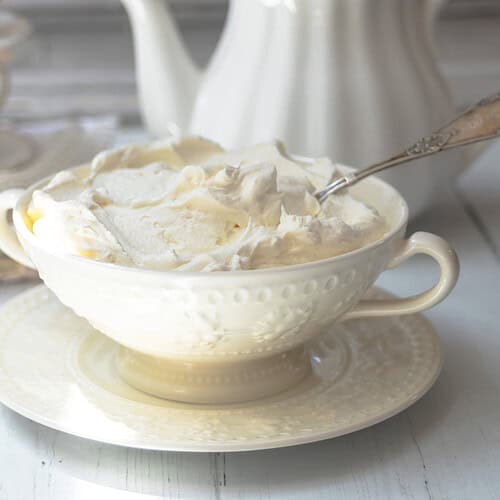
Homemade Clotted Cream
Equipment
Ingredients
- ½ cup heavy whipping cream or heavy cream, double cream
- 1 tablespoon confectioner's sugar (powdered sugar)
- 8 ounces Mascarpone Cheese or cream cheese at room temperature

Instructions
- In the bowl of a stand mixer or with a hand mixer, whip the cream and confectioner's sugar until medium soft to stiff peaks form, depending on your preferences.
- Gently fold in the softened, room-temperature mascarpone cheese until just combined. You don't want to deflate the cream you've whipped! The mascarpone must be at room temperature, or it will not incorporate smoothly.
- Store in an airtight container for up to 4 days in the refrigerator.
Notes
- Whipping Cream: Use the highest-fat cream available (36%+). Avoid ultra-pasteurized if possible.
- Storage: Best made the day of serving, but keeps up to 3 days in the fridge. Bring to room temperature before serving.
- Serving: Traditionally served with scones and jam at afternoon tea. Spread jam first (Cornish style) or cream first (Devon style).
- How it differs from the traditional: Texture is smoother than authentic clotted cream, but very similar in taste.
Nutritional information is only an estimate. The accuracy of the nutritional information for any recipe on this site is not guaranteed.
Hi Stephanie, Mascarpone cheese is so expensive where I live, can you use cream cheese instead? Thanks Sherry
Hi Sherry! I noticed over the weekend that mascarpone cheese had gone up in my markets too. Yes, you can definitely substitute cream cheese, although the texture and flavor will be slightly different. Mascarpone is more mild in flavor and the texture more closely resembles clotted cream. The difference when using cream cheese is the cream will be slightly more tangy in flavor with a silkier texture.
This is my favorite way to substitute mascarpone:
1/2 cup whipping cream
1/2 cup sour cream (full fat)
3 tablespoons softened cream cheese
1 tablespoon powdered sugar (add more if needed)
The clotted cream with warm scones and homemade jam was decadent and so easy to make!
Hi Jennifer! Thank you for trying the clotted cream recipe. I completely agree -- it's decadently delicious with warm scones!
I love warm scones and I will enjoy them any way, on any day. But when you add clotted cream to warm scones, it’s a delight all on its own. I love this recipe and have been using it for years, especially when serving guests at teatime. It’s incredibly easy and very close to clotted cream found in the tea rooms I love to visit in the U.K.