
Lemon Easter Lamb Cake (German Osterlamm)
This post may contain affiliate links. Please read our disclosure policy.


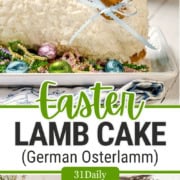
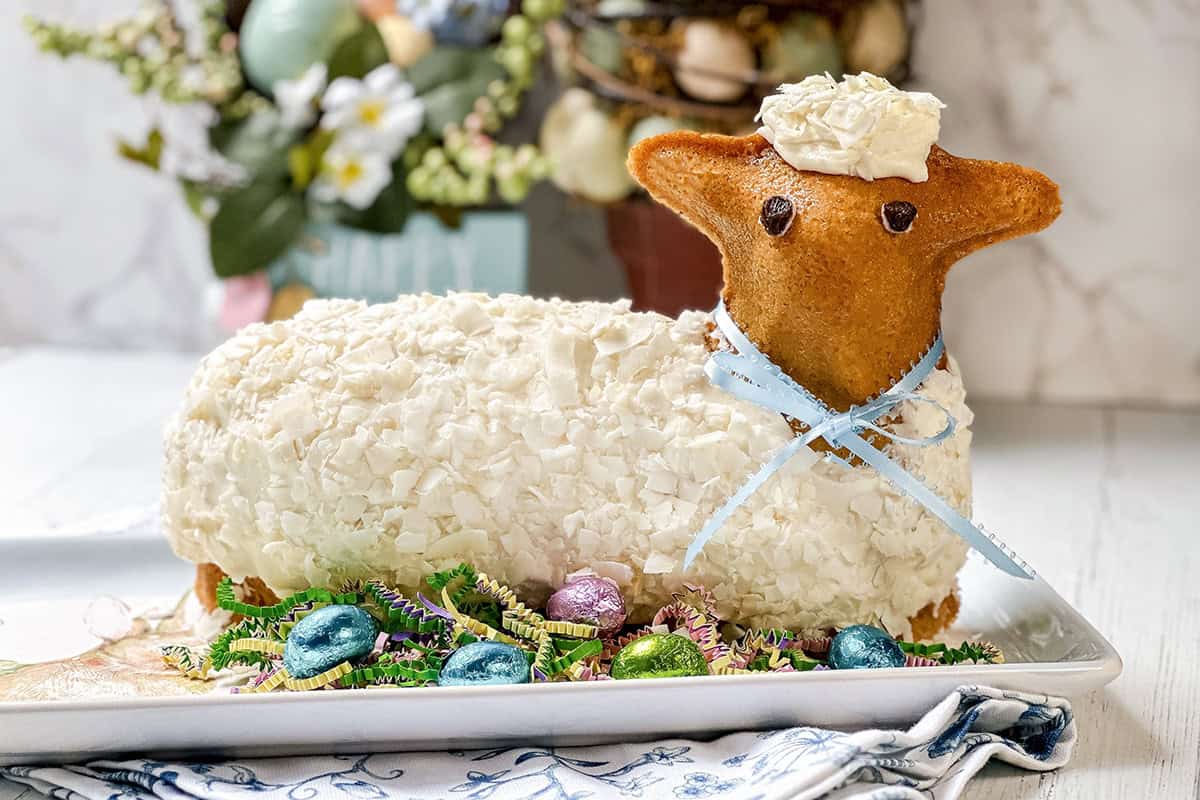
This Lemon Easter Lamb Cake, also known as Osterlamm, is a traditional German Easter dessert baked in a lamb-shaped mold. Moist, buttery, and bright with lemon, it's a beautiful centerpiece for Easter brunch or spring celebrations.
Osterlamm has long been part of Easter traditions across Europe, symbolizing spring, renewal, and the joy of the season.
Want to save this recipe?
Enter your email, and we'll send it to your inbox. Plus, you'll get delicious new recipes from us every Friday!
Lemon Easter Lamb Cake Recipe Overview
A simple-to-make lemon pound cake recipe that's so incredibly moist and tender yet effortless to make.
- Recipe Time: 10 minutes of prep, 45 minutes of baking
- Kitchen Tools: Baking tools plus a lamb cake mold
- Servings: About 8 servings
Tips for Baking a Lamb Cake Successfully
Baking a lamb cake in a shaped mold is easier than it looks, but a few simple tips will help ensure success.
- Grease the mold thoroughly, getting into every detail to prevent sticking
- Fill the mold about ¾ full so the batter doesn't overflow
- Use a sturdy batter like pound cake for the best structure
- Let the cake cool slightly before removing it from the mold
If you're planning your Easter table, you might also enjoy my collection of Easter cake recipes and easy Easter desserts for the holiday.
What I Love About This Easter Lamb Cake
Easter always feels like a turning point-toward warmer days and longer light-but also a season of new life, hope, and renewal.
I still think of early Easter mornings with my mom… and my bunny cake.

Since I was little, Easter cakes, baskets, and Sunday dresses have been some of the most meaningful parts of the holiday.
That childhood bunny cake has gradually given way to traditions that reflect our German roots-Easter Kugelhopf, and now Osterlamm.
This Easter Lamb Cake is easy and nearly foolproof to make, and just as fun to decorate.
If frosting isn't your thing, simply dust the cake with powdered sugar-as is traditional for Osterlamm-add a few Easter eggs and a pretty cake stand, and you have a centerpiece worthy of the holiday.
And the cake itself? Moist, tender, and bright with lemon-it truly tastes like Easter in every bite.
Happy Easter, my friend!

Jump to:
- Lemon Easter Lamb Cake Recipe Overview
- Tips for Baking a Lamb Cake Successfully
- What I Love About This Easter Lamb Cake
- What is Osterlamm?
- Why Is Lamb Cake Served at Easter?
- What Does an Easter Lamb Cake Symbolize?
- Do You Need a Lamb Cake Mold?
- Where to Buy an Easter Lamb Cake Mold
- Ingredients
- Lamb Cake Frosting and Decorations
- How to Make an Easter Lamb Cake
- Recipe FAQs
- Easter Lamb Cake (Osterlamm)
- More Festive Easter Recipes
- Easter Cake Recipes
- 💬 Comments
What is Osterlamm?
A traditional German Osterlamm is a vanilla- or almond-flavored cake (or kuchen) often found on German Easter breakfast or tea tables, and is baked in a three-dimensional lamb-shaped cake mold or pottery mold.

Why Is Lamb Cake Served at Easter?
In Germany, lamb cakes are baked on Holy Saturday, and, like Paska and Kulich, they are brought to church for blessing before arriving at the Easter table.
Once baked, lamb cakes are traditionally dusted with powdered sugar or drizzled with a light glaze, much like a Lemon Drizzle Cake. Some are covered with white frosting, often garnished with shredded coconut (as I've done) or even shredded almonds.
The lamb's eyes can be made from raisins, whole cloves (or even coffee beans), and many have a small ribbon tied around their necks, often in red to symbolize the blood of Christ shed on the cross. A sprig of fresh rosemary (symbolizing remembrance) is also used.
What Does an Easter Lamb Cake Symbolize?
A lamb cake is significant in Easter traditions. In Christian symbolism, the lamb symbolizes Jesus Christ, also called the "Lamb of God" in the New Testament.
It stems from the sacrificial lamb offered in Jewish Passover rituals, foreshadowing Jesus' sacrifice for the redemption of sins.
The lamb cake then poignantly reminds us of Jesus' sacrifice and resurrection, the central themes of Easter celebrations. Additionally, the lamb symbolizes innocence, purity, and renewal, reflecting the spiritual rebirth and forgiveness that Easter represents.
Do You Need a Lamb Cake Mold?
Yes - a lamb-shaped cake mold is essential for creating a traditional Easter lamb cake. These molds typically come in two pieces that fit together, allowing the cake to bake into its signature three-dimensional shape.
Most molds hold about 3 cups of batter and can be used year after year for Easter baking.
If you love coconut cakes for Easter and can't get a lamb cake mold, you might try one of my favorite alternatives, this moist coconut cake recipe.
Where to Buy an Easter Lamb Cake Mold
While I'm still looking for an antique lamb mold, I purchased this one on Amazon. It's simple to use, holds about 3 cups of batter, and I've not had any trouble with the cake releasing from the mold.

Here are some lamb mold ideas at Amazon:
Ingredients
The recipe card below includes exact measurements, but these are the key ingredients you'll need to make this tender lemon pound cake.
- Butter (softened) - Provides richness and structure. Be sure it's at room temperature for a smooth, well-creamed batter.
- All-purpose flour - Gives the cake its classic pound cake texture-soft, but sturdy enough to hold the lamb shape.
- Granulated sugar - Sweetens the cake and helps create a light, tender crumb when creamed with the butter.
- Large eggs (room temperature) - Add structure and stability, which is especially important when baking in a shaped mold.
- Baking powder and baking soda - Work together to give the cake a gentle, even rise.
- Vanilla extract - Adds warmth and depth to balance the bright lemon flavor.
- Fresh lemon juice and zest - Brings a light, fresh citrus flavor that makes this cake perfect for spring.
- Salt - Enhances all the flavors and balances the sweetness.
- Buttermilk - Adds moisture and a subtle tang, while helping create a tender crumb.
Lamb Cake Frosting and Decorations
You can keep this Easter lamb cake simple with a dusting of powdered sugar, which is traditional for Osterlamm, or decorate it with frosting for a more festive presentation. I like to use a simple vanilla buttercream and finish the cake with coconut flakes to create the lamb's soft "coat."
For the frosting, you'll need:
- Powdered sugar - Creates a smooth, sweet buttercream that's easy to spread or pipe.
- Butter (softened) - Adds richness and structure to the frosting. Let it come to room temperature for the best texture.
- Vanilla extract - Brings a warm, classic flavor that pairs beautifully with the lemon cake.
- Milk (as needed) - Helps adjust the consistency so the frosting is smooth and easy to work with.
Decoration Ideas
- Unsweetened coconut flakes - Perfect for creating the lamb's woolly texture. Larger flakes give a more dimensional look.
- Raisins, chocolate chips, or cloves - Use for the eyes.
- Powdered sugar - A simple and traditional finish if you prefer a more classic Osterlamm style.
- Ribbon - Tie a soft ribbon around the neck for a charming, vintage-inspired Easter presentation.
How to Make an Easter Lamb Cake
The recipe card below includes the full method, but here is a step-by-step visual overview to help you see how the lamb cake comes together.
Step 1: Make the batter

Preheat the oven to 375℉ and generously grease the inside of the lamb cake mold (both halves) with shortening, butter, or baking spray with flour.
Cream the butter, sugar, vanilla, eggs, and lemon juice until light and fluffy. Whisk the flour, baking soda, baking powder, salt, and lemon zest in a separate bowl. Add the flour mixture to the butter mixture, alternating with the buttermilk. Mix until the batter is smooth, about 2 minutes.
Step 2: Fill the mold

Transfer the batter to the bottom half of the mold. Place the top of the mold (the back of the lamb) on the top, interlocking the seams, and place on a baking sheet.
Step 3: Bake the lamb cake
Bake for 45-55 minutes or until a toothpick inserted in the vent hole comes out clean. In my oven, the cake is done at about 46 minutes.
Remove from the oven and let cool in the mold for 5 minutes. Carefully remove the top half of the mold and continue to cool in the pan for another 5 minutes. Invert the mold carefully and trim the bottom of the cake if the surface is not flat. This helps the lamb stand.
Refrigerate or freeze until ready to serve. Then frost or dust with powdered sugar and decorate.
Recipe FAQs
Osterlamm is a traditional German Easter lamb cake baked in a lamb-shaped mold and served during Easter celebrations. It is often dusted with powdered sugar or decorated with frosting.
Yes. A lamb-shaped mold is what gives the cake its classic shape. Most molds are two-piece pans that enclose the batter during baking.
This usually happens when the mold isn't greased thoroughly. Be sure to coat every detail of the mold well with butter or baking spray before adding the batter.
Traditionally, Osterlamm is dusted with powdered sugar. Some bakers decorate it with frosting, coconut, or sliced almonds to resemble wool.
Yes. The cake can be baked a day in advance. Once cooled, store it covered and decorate just before serving.

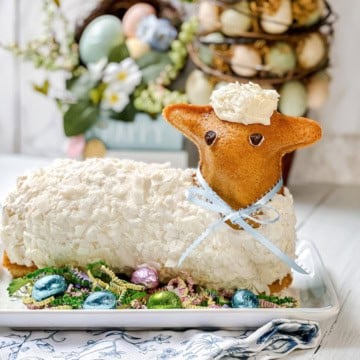
Easter Lamb Cake (Osterlamm)
Equipment
Ingredients
- ½ cup butter softened
- 1 teaspoon vanilla extract
- 1 cup granulated sugar
- 2 eggs at room temperature
- 2 tablespoons lemon juice about ½ of a large lemon
- 2 cups all purpose flour
- 1 teaspoon baking soda
- 1 ½ teaspoon baking powder
- ½ teaspoon salt
- zest of 1 lemon
- ⅔ cup buttermilk
Vanilla Frosting
- 3 cups powdered sugar
- ⅓ cup butter softened to room temperature
- 1 ½ teaspoons vanilla extract
- milk or cream to achieve desired consistency (about 2 tablespoons)

Instructions
- Preheat the oven to 375℉ and generously grease the inside of the lamb cake mold (both halves) with shortening, butter, or baking spray with flour.
- In a mixing bowl, cream the butter, sugar, vanilla, eggs, and lemon juice until the mixture is light and fluffy.
- Whisk together the flour, baking soda, baking powder, salt, and lemon zest in a separate bowl.
- Add the flour mixture to the butter mixture, alternating with the buttermilk. Mix until the batter is smooth; about 2 minutes.
- Transfer the batter to the bottom half of the mold (the half with the lamb's face). Place the top of the mold (the back of the lamb) on the top, interlocking the seams. Be sure the vent hole on the back of the lamb's face is on the top, allowing the steam to escape during baking. Place filled mold on a baking sheet.
- Bake for 45-55 minutes or until a toothpick inserted in the vent hole comes out clean. In my oven, the cake is done at about 46 minutes. Remove from the oven and let cool in the mold for 5 minutes. Carefully remove the top half of the mold and continue to cool in the pan for another 5 minutes. Invert the mold carefully and trim the bottom of the cake if the surface is not flat. This helps the lamb stand.
Decorating the Lamb Cake
- If frosting the cake, I find it best to refrigerate or freeze the cake until completely cool and chilled. This helps make a firmer surface for the icing. When ready to frost, place a dab of icing on the bottom of a serving plate and stand the cake upright. Frost with vanilla buttercream or your favorite frosting. I like to add shredded coconut to resemble a lamb's coat.
- Or, you can also dust the cake with powdered sugar (which is more traditional in Europe) and tie it's neck with a sweet bow.
Vanilla Frosting
- Combine powdered sugar and butter. Then stir in the vanilla and 1-2 tablespoons of milk. Beat until the frosting is smooth and has a spreading consistency. Sometimes, I double the recipe depending on how thick I want the frosting to be on the cake.
Notes
- Do not overfill the lamb mold: fill it to just under the seam line so it fits tightly, with no batter in the seams.
- Frosting: If you want Lemon Frosting, omit the vanilla and replace the milk with lemon juice.
Tips for Success:
- Grease the lamb mold very thoroughly, making sure to reach all the small details to prevent sticking
- Do not overfill the mold; fill about ¾ full to allow room for the cake to rise
- Let the cake cool slightly before removing it from the mold to help it hold its shape
Decoration Ideas:
- Dust with powdered sugar for a traditional Osterlamm presentation
- Frost with vanilla buttercream and sprinkle with coconut flakes to resemble wool
- Add raisins, chocolate chips, or cloves for the eyes
- Tie a ribbon around the neck for a classic Easter look
Make Ahead:
- The cake can be baked one day in advance and stored covered at room temperature
- Decorate just before serving for the best presentation
Variation:
- Add lemon zest to enhance the bright, spring flavor
- Use a simple vanilla glaze instead of buttercream for a lighter finish
Nutritional information is only an estimate. The accuracy of the nutritional information for any recipe on this site is not guaranteed.
More Festive Easter Recipes
Easter Cake Recipes


If you try this recipe, I'd love to hear your comments and consider giving it a 5-star rating. Explore the recipe index for more easy, delicious ideas, and stay updated by subscribing to our newsletter and following us on Facebook, Pinterest, Instagram, and YouTube!
Comments
No Comments