
The 5 Teas Thrown into Boston Harbor
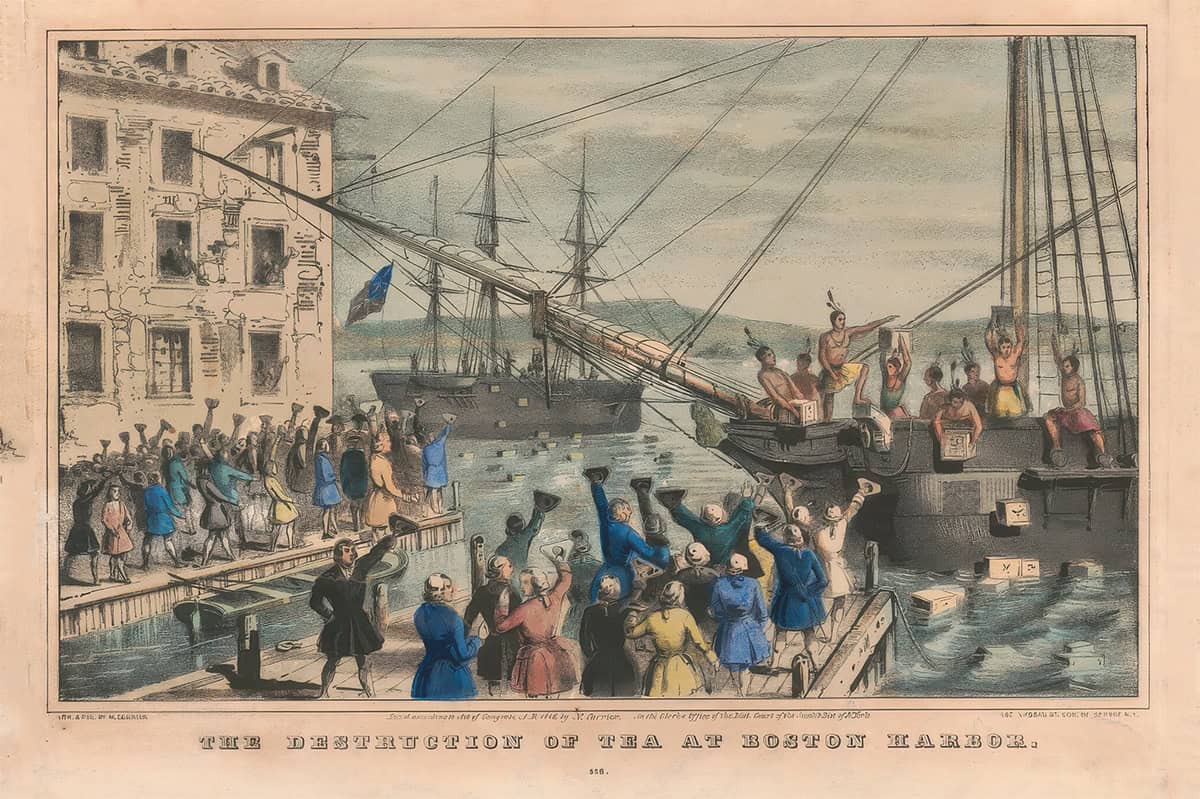
On the evening of December 16, 1773, the Sons of Liberty boarded three ships moored at Griffin's Wharf in Boston Harbor and threw 342 chests of tea into the cold Atlantic water.
It took three hours. When it was over, the harbor smelled of tea.
This post may contain affiliate links. Please read our disclosure policy.
Want to save this recipe?
Enter your email, and we'll send it to your inbox. Plus, you'll get delicious new recipes from us every Friday!
John Adams, writing in his diary the following morning, called it "the most magnificent Movement of all." He was not being hyperbolic. What happened that night set in motion a chain of events that would end with a new nation - and it began with tea.
But here is the detail that most accounts leave out: the tea that went into the harbor that December night was not vague, undifferentiated "tea." It was five specific varieties, all from China, each with its own character, its own history, and its own place in the daily life of the colonists who were about to surrender it as an act of defiance.
These are those five teas - what they were, why they mattered, and where you can find them today, 250 years later.
Before the Manifest: A Few Things Worth Knowing
The tea aboard the Dartmouth, the Eleanor, and the Beaver had been shipped by the British East India Company - not from India, as is commonly assumed, but entirely from China. Tea would not be cultivated in India until the 19th century. Every chest that went into Boston Harbor that night contained Chinese tea.
The tea had been plucked in 1770 and 1771, warehoused in London for two to three years, then shipped to the colonies under the Tea Act of 1773 - legislation designed to bail out the financially struggling East India Company by giving it a monopoly on tea sales in America, even at prices lower than smuggled alternatives. The colonists were not protesting the high cost of tea. They were protesting the principle that Parliament could tax them without their consent and use commerce to enforce that power.
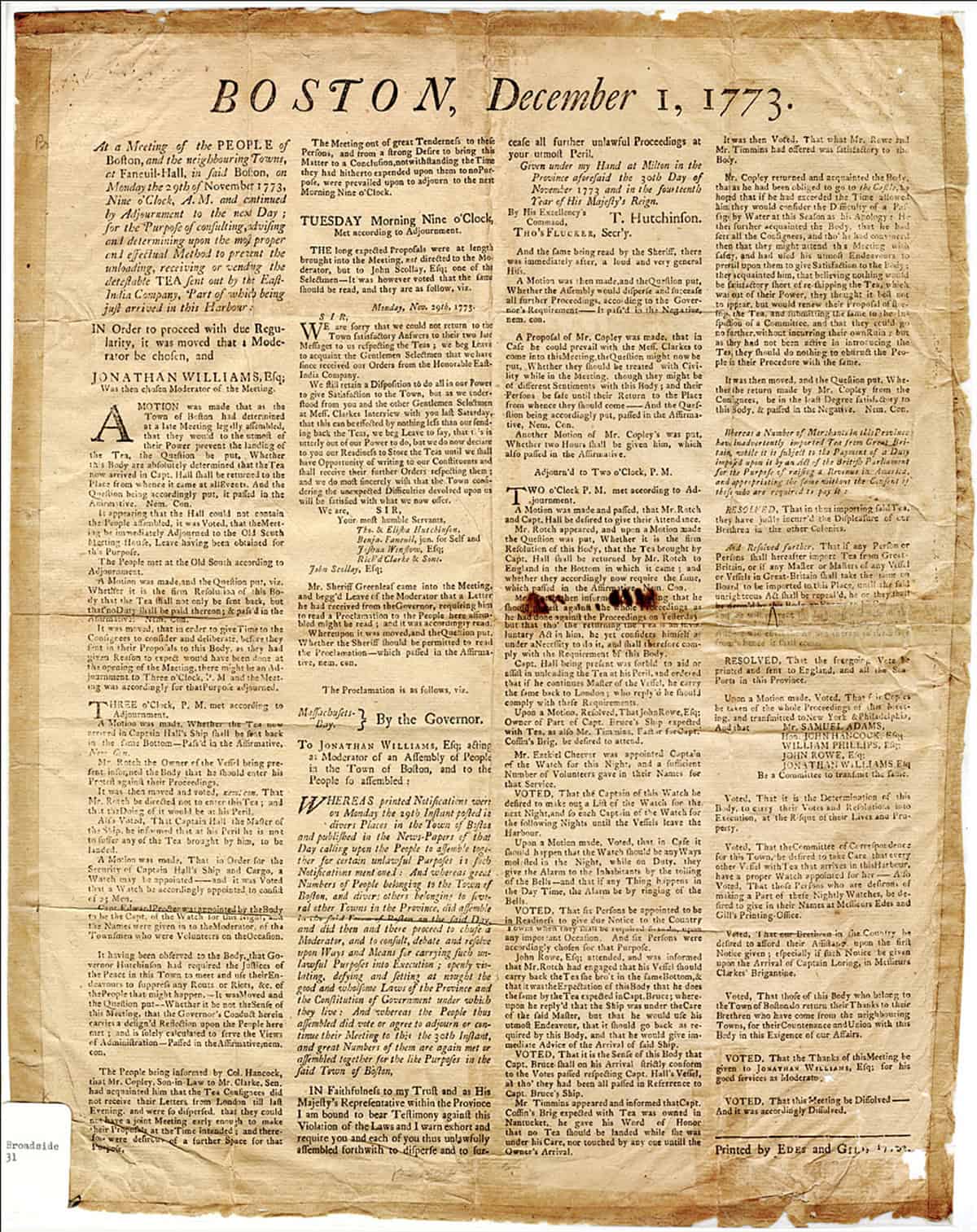
This broadside - printed just fifteen days before the harbor action - records the public meeting at Faneuil Hall where Bostonians gathered to demand that the tea ships leave Boston without unloading. It is the organizing that preceded the harbor, the moment the decision was made in public. The Sons of Liberty did not act impulsively on December 16. They acted after weeks of public deliberation, documented in broadsides like this one.
The full documentary record of the tea shipments - letters, invoices, and correspondence between the East India Company and its colonial agents - is preserved in Tea Leaves: Being a Collection of Letters and Documents Relating to the Shipment of Tea to the American Colonies in the Year 1773, published in Boston in 1884 and available in full through the Library of Congress digital archive. It is a remarkable primary source and a wonderful afternoon's reading.
John Adams' diary entry from December 16-18, 1773, is digitized and available through the Massachusetts Historical Society - including his account of the events at the Old South Meeting House that preceded the action at the harbor.
The 5 Historic Teas of the Boston Manifest
1. Bohea (Black Tea) - The Heavyweight
240 of 342 chests · Black Tea · Wuyi Mountains, China
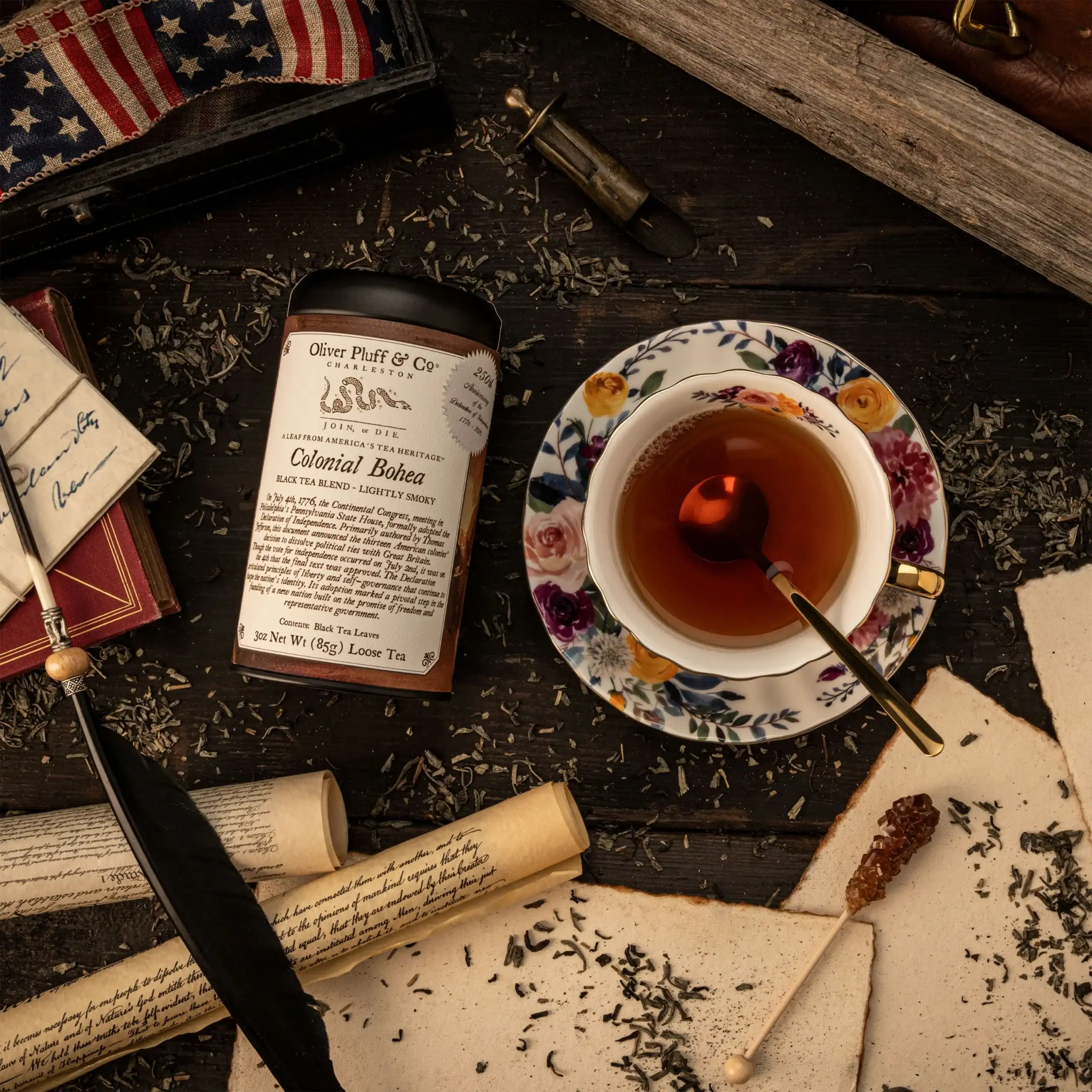
Pronounced boo-hee, Bohea was not a single tea but a catch-all blend - Orange Pekoe, Pekoe, and Souchong leaves swept together from the Wuyi Mountains of Fujian province. It was the absolute staple of colonial life, accounting for more than two-thirds of all the tea destroyed that night.
It was so ubiquitous, so woven into daily life, that colonists used the word "bohea" as a generic slang term for tea itself. When John Adams wrote in his diary the morning after the Tea Party, "Last Night 3 Cargoes of Bohea Tea were emptied into the Sea," he was using the word the way we use "coffee" - not as a variety, but as the thing itself.
The flavor: Toasty, robust, and deep, with subtle smoky undertones and a warm, winey finish.
Where to find it today:
- The authentic choice: Oliver Pluff & Co. of Charleston, South Carolina - their 250th Anniversary Colonial Bohea tin is as close to history as a cup of tea can be.
- The modern equivalent: A premium Keemun or a malty English Breakfast tea mirrors the character well.
2. Young Hyson - The Presidential Favorite
70 of 342 chests · Green Tea · Anhui Province, China
Made from young, early-spring leaves rolled into long, thin twists, Young Hyson was an expensive luxury - heavily taxed, highly prized, and favored by the colonial elite. George Washington and Thomas Jefferson both kept it in their households. Among the five teas destroyed that night, Hyson represented the greatest financial loss per chest.
The name comes from the Chinese Yu-tsien, meaning "before the rains" - a reference to the early spring harvest that produced its delicate, intensely aromatic leaves.
The flavor: Vibrant, sharp, and intensely green, with a bright, clean finish entirely unlike the black teas on the manifest.
Where to find it today:
- The authentic choice: The Boston Tea Party Ships & Museum Gift Shop carries historical replica tins of Young Hyson - a fitting source for the most prestigious tea on the manifest.
- The modern equivalent: A high-quality Gunpowder Green Tea closely mirrors the rolled leaf and bright flavor profile.
3. Singlo - The Surplus Green
60 of 342 chests · Green Tea · Anhui Province, China
Where Young Hyson was luxury, Singlo was practicality. Picked later in the spring season when the leaves were larger and less delicate, Singlo was a budget-friendly green tea - pan-fried, curled, and dried. The East India Company had accumulated a massive surplus of it in London warehouses, and the Tea Act was, in part, a mechanism to force that surplus onto the American market.
The colonists understood this. They were not simply being taxed - they were being used as a dumping ground for an oversupplied commodity, at the pleasure of a corporation backed by Parliamentary law. The Singlo chests were not incidental to the protest. They were the point of it.
The flavor: Buttery, toasted, and gently vegetal, with a distinctively sweet, plum-like finish that distinguishes it from the sharper Young Hyson.
Where to find it today:
- The authentic choice: Oliver Pluff & Co. carries historical Singlo tins.
- The modern equivalent: Chun Mee green tea, often called "Precious Eyebrows" for the curved shape of its dried leaves, perfectly mirrors this style.
4. Congou - The Elegant Leaf
12 of 342 chests · Black Tea · Fujian Province, China
The rarest tea on the manifest - only 12 chests among 342 - Congou was the choice of wealthy merchants who found everyday Bohea too unrefined. The name derives from Gongfu, the Chinese word for skill and mastery, signaling that the tea was meticulously hand-rolled to keep its long leaves entirely intact through processing.
At 12 chests, Congou was barely a footnote in the manifest's weight. But it was the tea that told you something about who was aboard the ships that night - men of means as well as principle, giving up something genuinely valuable.
The flavor: Smooth, naturally sweet, with subtle notes of baked apple and warm wood - the most refined and gentlemanly of the five.
Where to find it today:
- The authentic choice: Look for North Fujian Congou from high-end specialty loose-leaf suppliers.
- The modern equivalent: A smooth, premium Yunnan Black or a standard Gongfu Black Tea captures the character well.
5. Souchong - The Smokehouse Specialty
Approximately 35 chests · Black Tea · Wuyi Mountains, China
The most dramatically flavored tea on the manifest, Souchong was made from the larger, lower leaves of the tea plant, traditionally smoke-dried over open fires of resinous pinewood. Where Bohea had a subtle smokiness, Souchong wore it openly - an intensely bold, deeply smoky tea that was not for everyone, but was unforgettable for those who loved it.
Today, it is known almost universally by its full name: Lapsang Souchong. It may be the most immediately recognizable of the five historic teas to a modern palate - the one most likely to produce a "this is what they drank" moment of historical recognition.
The flavor: Intensely bold, heavy, and deeply smoky - the most assertive tea on the manifest by considerable distance.
Where to find it today:
- The authentic choice: Oliver Pluff & Co. carries an authentic Souchong.
- The modern equivalent: Lapsang Souchong from Harney & Sons is widely available and a beautiful modern version.
One More Tea Worth Knowing: Liberty Tea
After the Boston Tea Party, patriotic colonists boycotted British tea entirely - and turned to homegrown alternatives. Liberty Tea, made from rose hips, mint, lemon verbena, strawberry leaves, and raspberry leaves, became the drink of the resistance. Naturally caffeine-free, vibrantly colored, and entirely American in origin, it is the most fitting iced tea for a 250th anniversary table.
For a quick colonial inspired herbal blend, this Fresh Herb Liberty Tea is a simple, garden-inspired way to bring that history to the table.
A Note on Benjamin Franklin
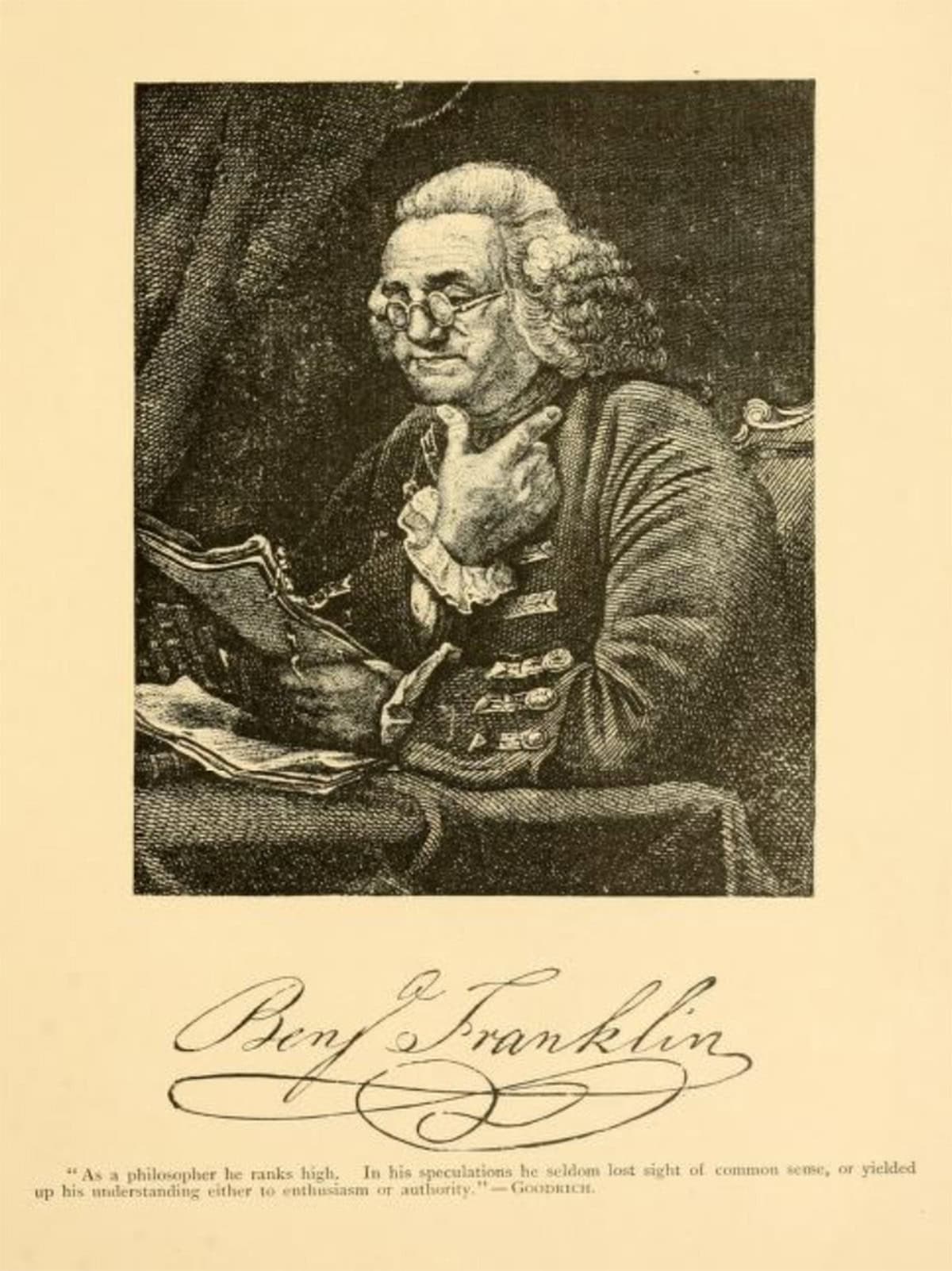
There is an irony worth noting about Benjamin Franklin and the Boston Tea Party.
Franklin was in London on December 16, 1773 - not throwing tea into a harbor, but sitting across tables from British officials, attempting to negotiate a resolution to the growing crisis. When he heard what had happened in Boston, he was furious. He believed the destruction of private property - even property being used as a tool of political oppression - was wrong, and that it would harden British resolve rather than soften it.
He was right about the hardening. The Coercive Acts of 1774, passed in response to the Tea Party, were far more severe than anything that had come before. And yet those acts united the colonies in a way no negotiation had managed to do.
Franklin eventually concluded that what happened in Boston Harbor, however impulsive it seemed, may have been necessary. Some things, it turns out, cannot be negotiated. They have to be declared.
Two years later, he helped write the Declaration.
Setting the Historical Tea Table
If you're planning a 250th anniversary afternoon tea - and we hope you are - the teas of the Boston manifest give your table a story worth telling. Not every guest needs to know the history. But every cup you pour carries it.
A few thoughts on presentation:
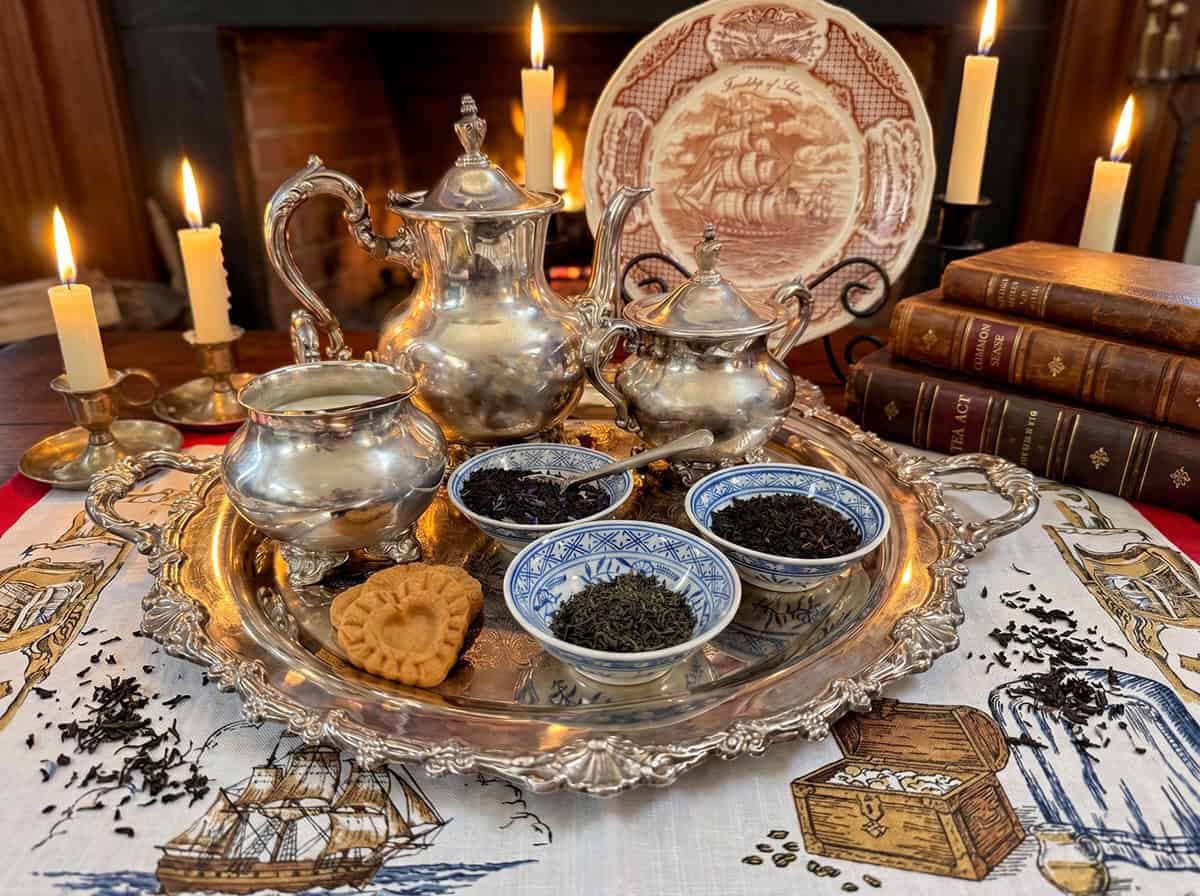
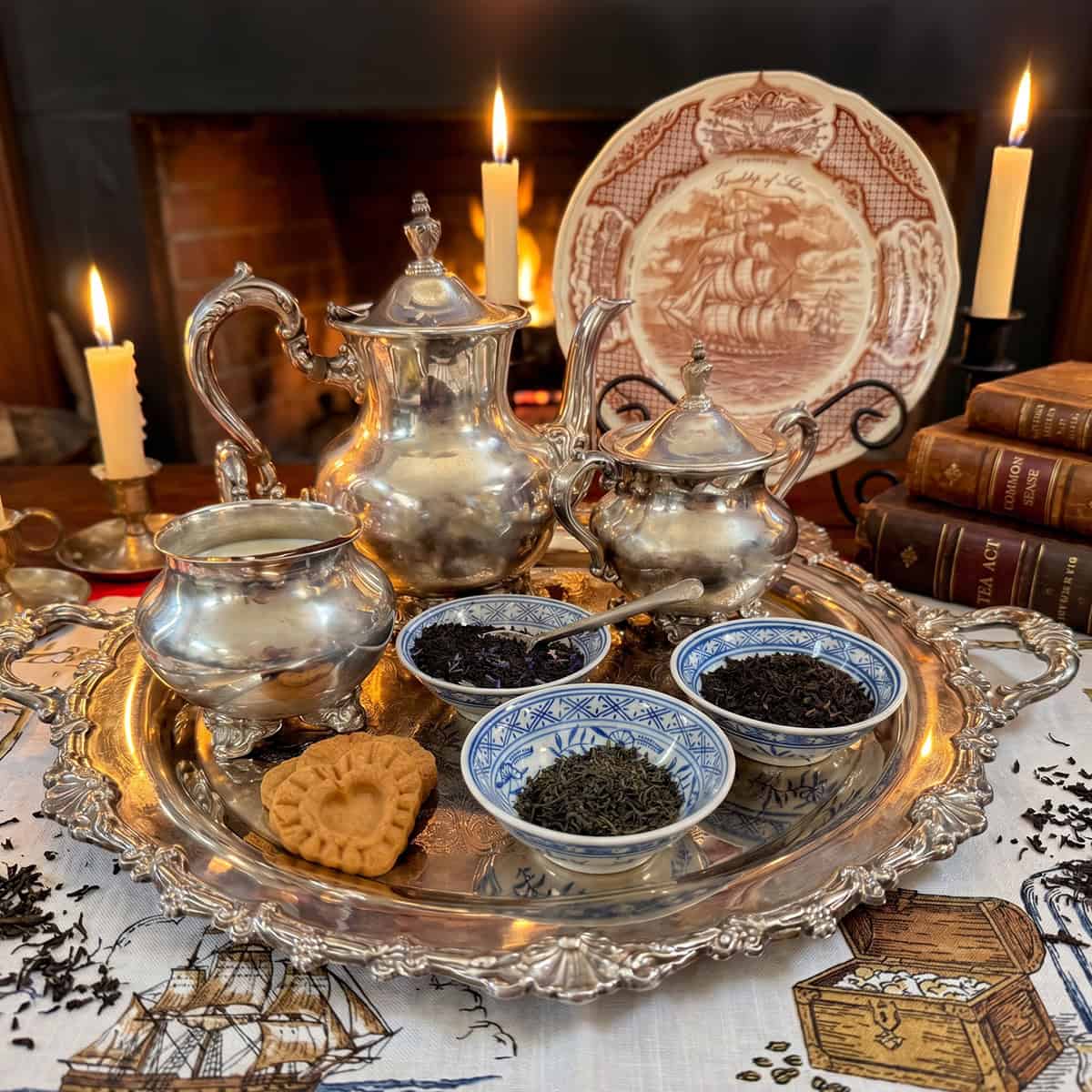
Serve the teas loose-leaf in the Chinese-style tea bowls that colonial Americans would have recognized - the blue-and-white Canton ware that came over on the same trade routes as the tea itself. Label each variety with a small handwritten card. Let guests choose. Let the conversation begin.
The Bohea for those who want to drink history. The Young Hyson for those who want something lighter. The Lapsang Souchong for those who want to understand why a harbor full of it smelled like a campfire for days afterward.
Continue the Series
This post is part of 31Daily's America's 250th Anniversary Tea series, celebrating the founding table and the foods and teas of early America.
- A Revolutionary Tea - America's 250th Anniversary
- Liberty Tea: A Colonial Herbal Brew
- Dolley Madison's Woodbury Cinnamon Teacakes
- Election Cake Recipe
- Colonial Williamsburg Gingerbread Cookies 1796 (coming June 23)
- Colonial Scones
Are you planning a 250th anniversary celebration this summer? I'd love to hear about it in the comments.
More Heritage Recipes

Popular Right Now
Love seasonal recipes and easy ideas for everyday cooking? Join 36,000+ readers and receive our newest recipes each week.
Subscribe to the Newsletter
Pekoe and Orange Pekoe are leaf sizes, not tea varieties.
The tea variety would be Lap Sang Souchong along with cast-off leaves (pekoe and orange pekoe cuts) blended for a common, every day tea.
Thank you, Kris, for adding this distinction. Pekoe and Orange Pekoe are indeed terms associated with tea leaf grading rather than two of the five named teas in the historic Boston cargo. For this article, I’ve followed the historical nomenclature for the five teas—Bohea, Congou, Souchong, Hyson, and Singlo. Tea terminology has certainly evolved over time, which makes this history especially fascinating. Thank you for joining the conversation!
Oh my goodness what a get write up, I was so impressed by all I read, that’s so amazing what they all went though in those days. , thank you for the info on our history of our country and great memories, love it , Happy Birthday to our great country 250 years.,Amen
Cindy, thank you so much for your kind words. I’m so glad you enjoyed the history behind those teas — it really is remarkable to think about what they lived through and the choices they made. Happy 250th birthday to our great country!
Inspired by the post, we tried out some gunpowder tea. It smelled mild, but definitely gives the taste buds a kick. Thanks for sharing the history of these teas!
I love that you tried gunpowder tea! It really does have that mild fragrance but a surprisingly bold flavor. Thank you so much for reading the post! For me, it makes the history feel so much more alive.
Thank you so much for the history and inspiration! I am ready to send out invitations to my own Independence Tea celebration!
Donna, this absolutely made my day! An Independence Tea celebration sounds beautiful, and I’m so honored the post inspired you. I hope it’s a wonderful gathering. You'll enjoy my Revolutionary Tea post coming next week!
A great post. Thank you for the history lesson.
Thank you so much, Lee! I’m really glad you enjoyed the history behind the post.