
Liberty Tea: Colonial Herbal Brew Recipe
After the Boston Tea Party on a cold December night in 1773, colonists faced a decision that went far beyond politics. Tea was not simply a beverage. It was a ritual - a daily comfort woven into the fabric of English-speaking life on both sides of the Atlantic. To give it up was an act of genuine sacrifice.
This post may contain affiliate links. Please read our disclosure policy.
Want to save this recipe?
Enter your email, and we'll send it to your inbox. Plus, you'll get delicious new recipes from us every Friday!
In the beloved American Girl film Felicity, the young colonial heroine says the line with quiet, steadfast conviction: "I shall take no tea." She repeats it like a promise. It is a child's act of patriotism - small, domestic, and utterly serious. And it captures something true about what the tea boycott actually looked like in colonial homes. It wasn't generals and battlefields. It was women and girls, at their own tables, choosing principle over comfort, one cup at a time.
And yet they did not simply go without. They invented something entirely their own.
They called it Liberty Tea.
Key Takeaways
- The Boston Tea Party led colonists to create Liberty Tea as a patriotic alternative to British tea.
- Liberty Tea consists of herbal infusions made from native plants and home-grown ingredients during the American Revolution.
- Popular ingredients included mint, rosemary, thyme, and dried fruits, creating unique blends labeled as Liberty Tea.
- A simple Liberty Tea recipe combines dried mint, rosemary, thyme, and strawberries for a flavorful infusion.
- Historical variations of Liberty Tea include Mint Liberty Tea, Garden Herb Liberty Tea, and Fruit and Herb Liberty Tea.
In This Post
Liberty Tea History
When the Sons of Liberty dumped 342 chests of East India Company tea into Boston Harbor, they ignited more than a revolution. They ignited an act of domestic ingenuity that belongs in every American kitchen.
The Daughters of Liberty - the women who organized spinning bees, wove their own cloth, and quietly kept colonial households running during the years of boycott - turned to their gardens and forests for answers. According to Smithsonian Gardens horticulturist Erin Clark, colonists brewed tea from native plants, edible fruiting plants, and Mediterranean herbs, including sage, rosemary, thyme, peppermint, and spearmint. They might also use edible flowers from the garden, dried berries, and leaves gathered closer to home.
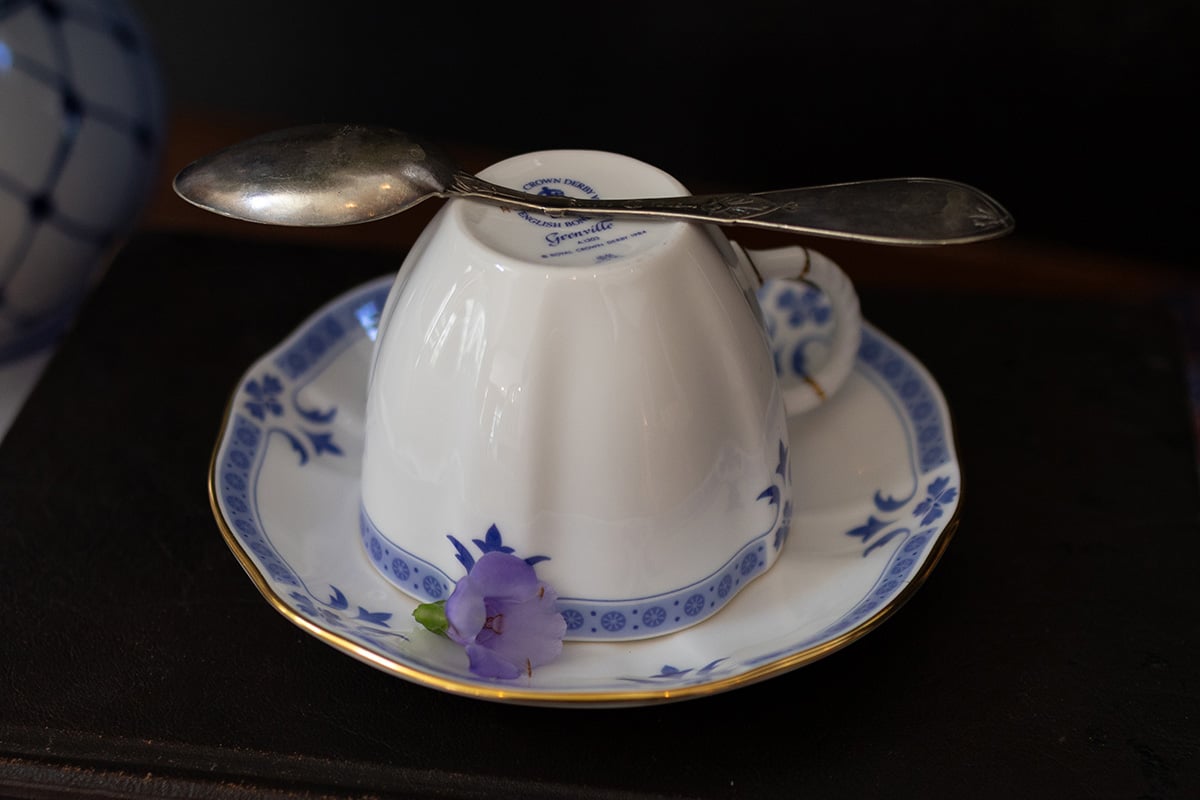
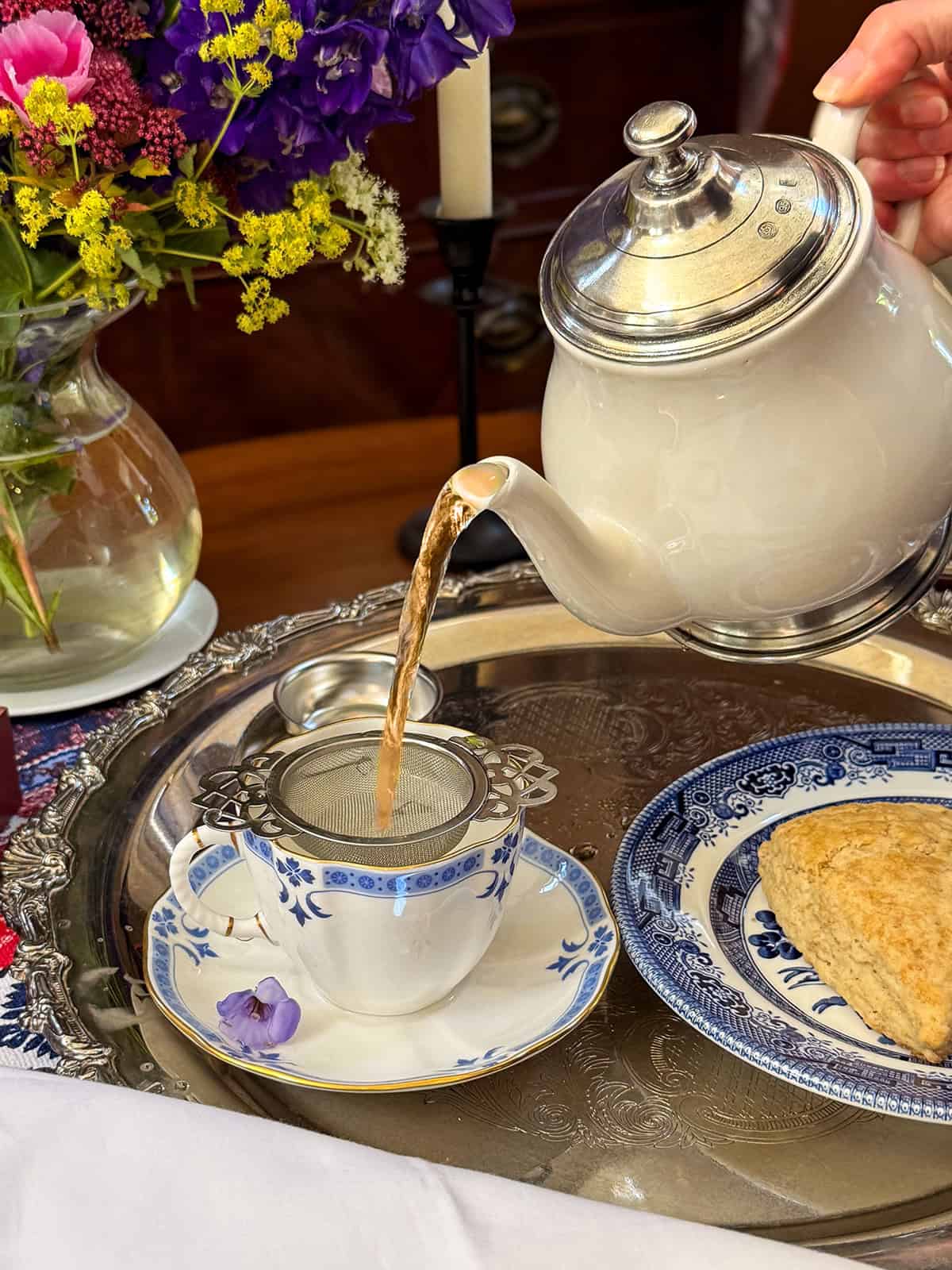
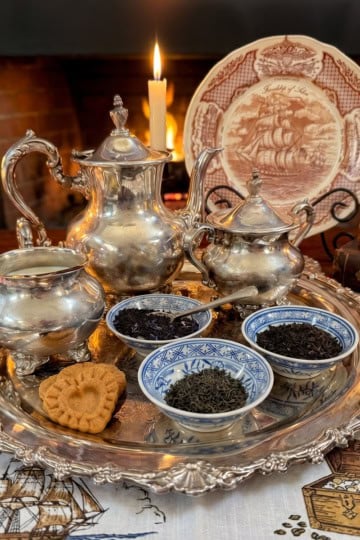
As a quiet sign of resistance, colonists began brewing tea from ingredients grown in their own gardens or foraged. And as Felicity said, "I shall take no tea." And if you're a fan of this movie, you will understand the image above.
One native infusion became particularly popular: New Jersey Tea, made from the shrub Ceanothus americanus - also called Indian Tea, Walpole Tea, and Redroot. A 1768 Boston Gazette article reported that tea made from this plant was served to a gathering in Newburyport, where guests pronounced it "nearly, if not quite, its equal in flavor to genuine Bohea." Ironically, this homegrown Liberty Tea was eventually shipped to England and the rest of Europe as one of America's earliest exports. Tax-free, of course. (Boston Tea Party Ships & Museum)
Not far from Mount Vernon, at Kenmore - the Virginia home of George Washington's sister, Betty Lewis - the tradition has been preserved. The Kenmore gift shop still sells a Liberty Tea blend honoring that history.
What Is Liberty Tea?
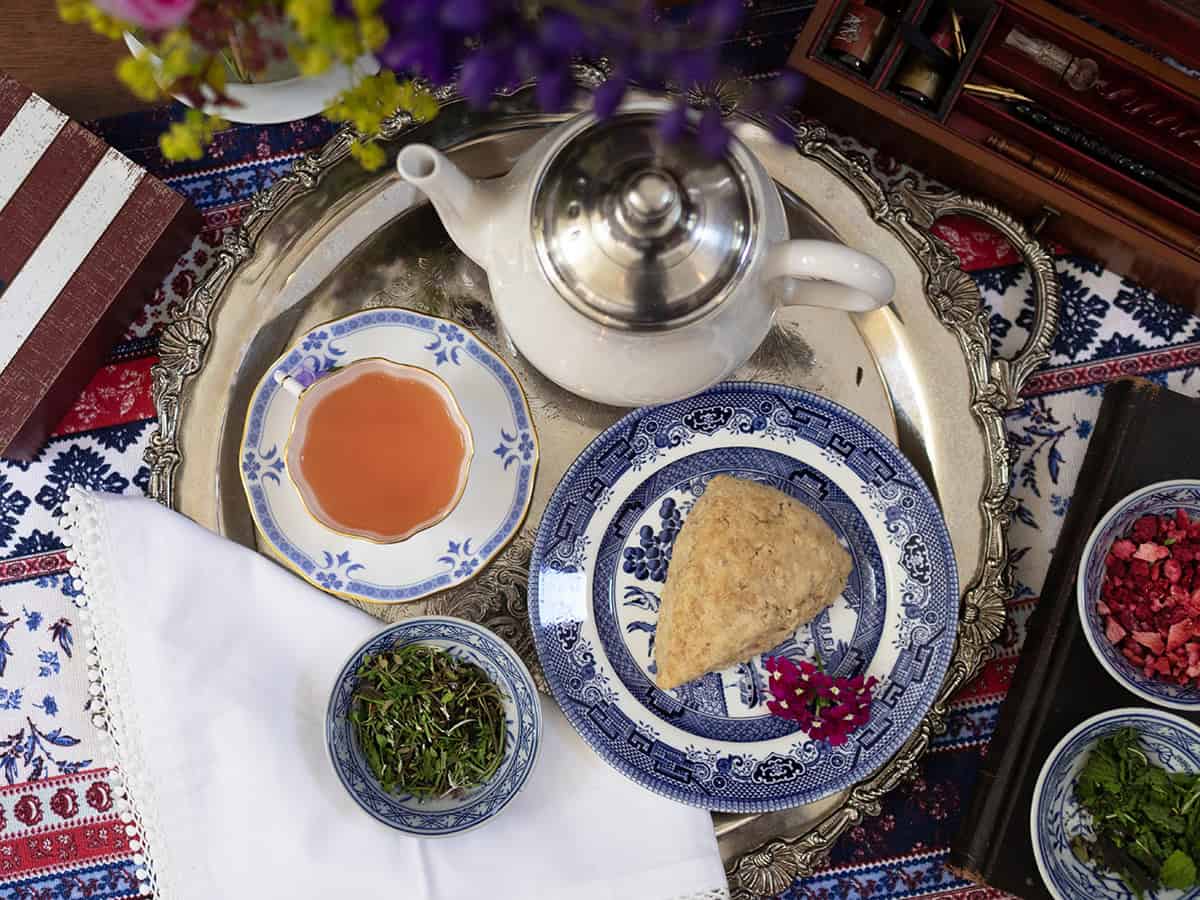
Liberty Tea was not one single recipe. It was a patriotic name for the herbal infusions colonists made as alternatives to imported British tea during the years surrounding the American Revolution.
True tea comes from the Camellia sinensis plant and was imported through British trade channels during the colonial era. As tensions grew over taxation and British imports, many colonial households turned to ingredients they could grow, gather, or find at home. These homemade teas could include native plants, garden herbs, berries, leaves, flowers, and dried fruits. Some blends were simple. Others were more fragrant and layered. But the meaning was the same: a cup of tea made without British tea.
This Liberty Tea Recipe
Several of you wrote after the Boston Tea Party post to ask about the teas that replaced those thrown into the harbor. This recipe is for you.
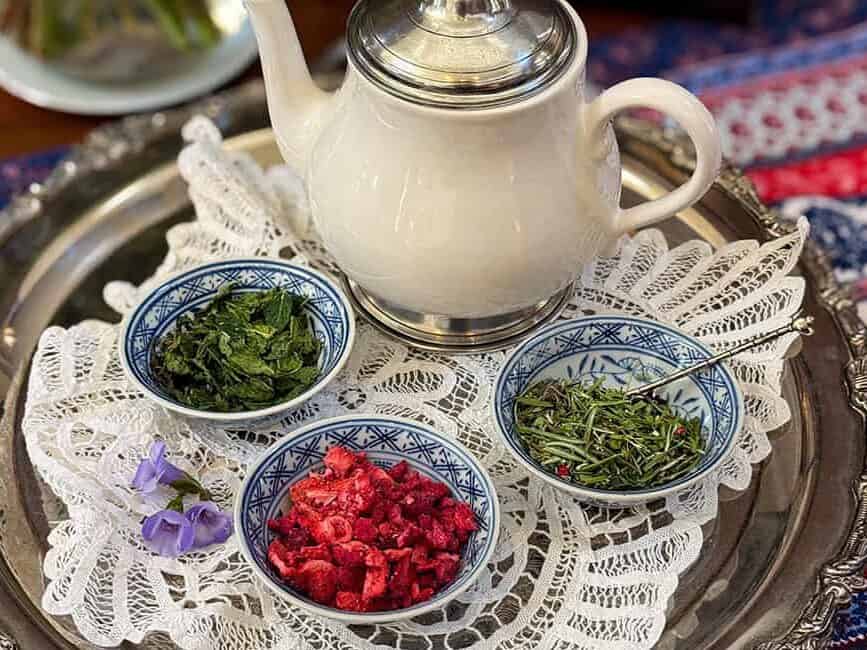
Drawing on the Smithsonian Gardens research on colonial herb use, I'm using a blend of dried mint, rosemary, and thyme - the Mediterranean herbs that would have been at home in a colonial kitchen garden - along with dried strawberries for a gentle natural sweetness. Strawberries and their leaves were among the fruiting plants colonists turned to, and the dried fruit adds a soft, rounded quality to the cup without overpowering the herbs.
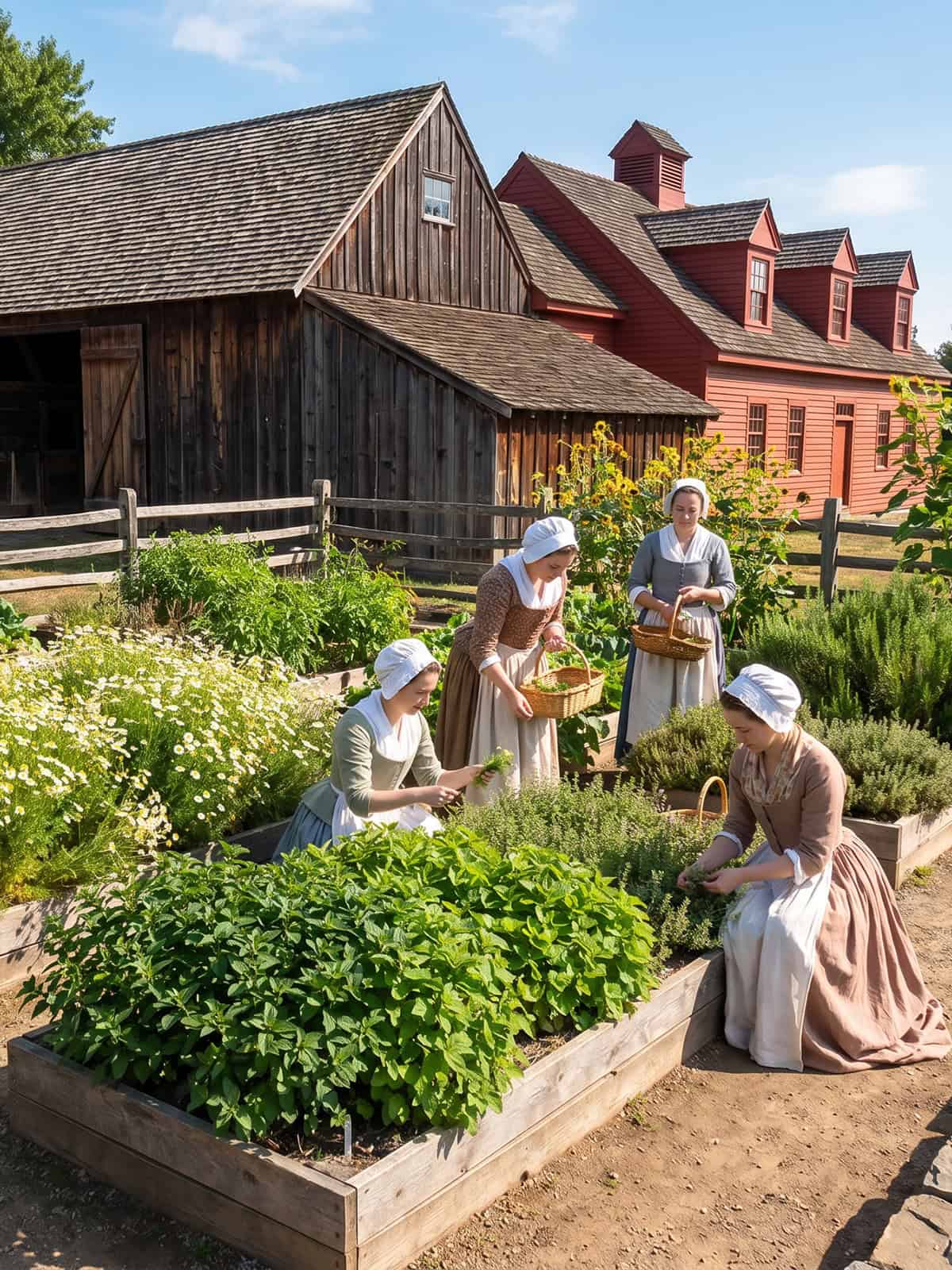
I chose dried herbs over fresh for this recipe. Dried herbs were how colonial households actually preserved and used what their gardens produced. Practically speaking, dried herbs are also more accessible - available at any grocery store year-round, with no garden required. And for tea, they deliver a more consistent, tea-like depth of flavor that fresh herbs, however lovely, don't quite replicate.
If you have fresh mint, sage, thyme, or rosemary on hand and want to brew quickly, you might also enjoy my Fresh Herb Liberty Tea - a quick garden-to-teacup version that steeps in about 5 minutes.
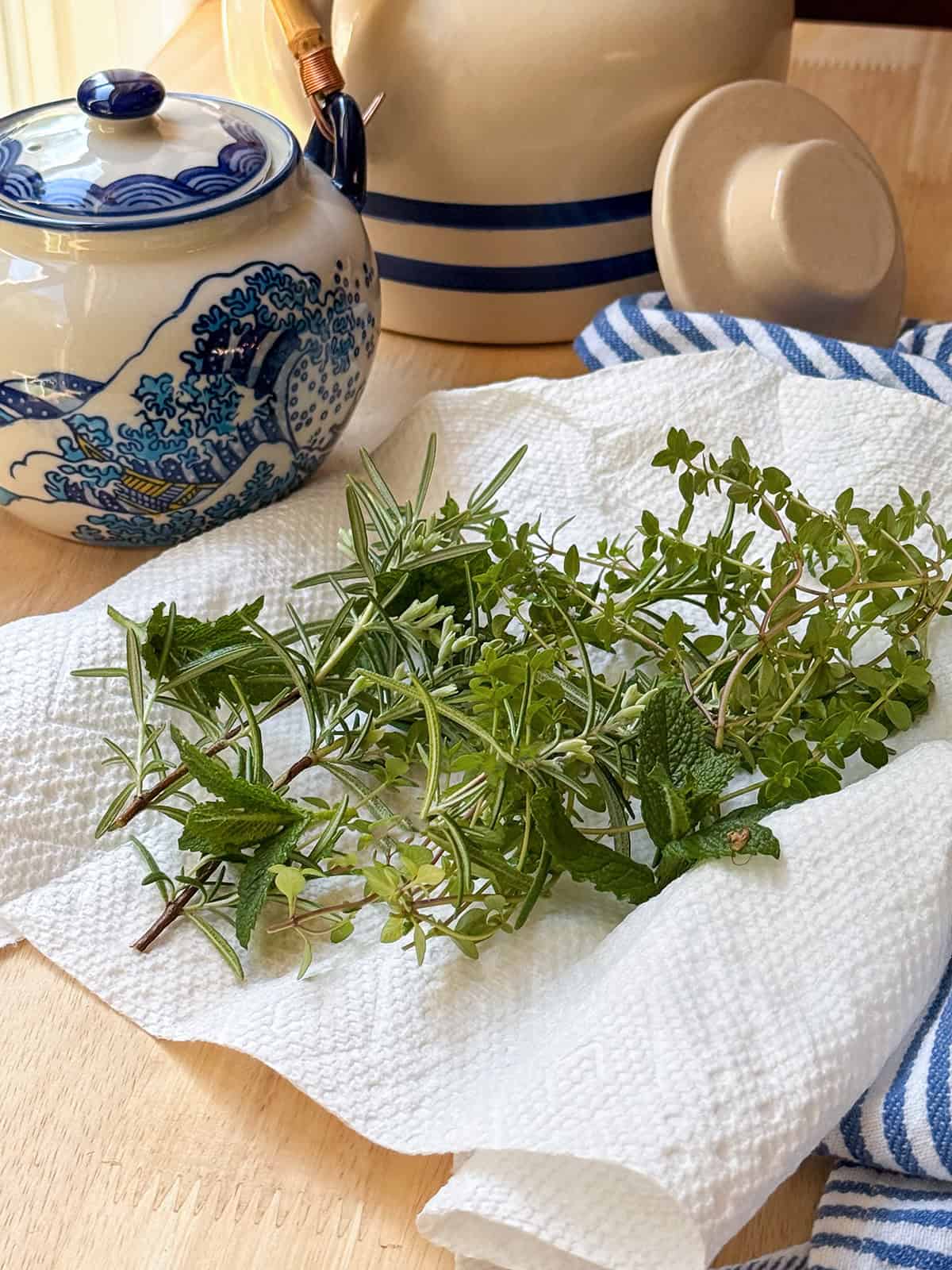
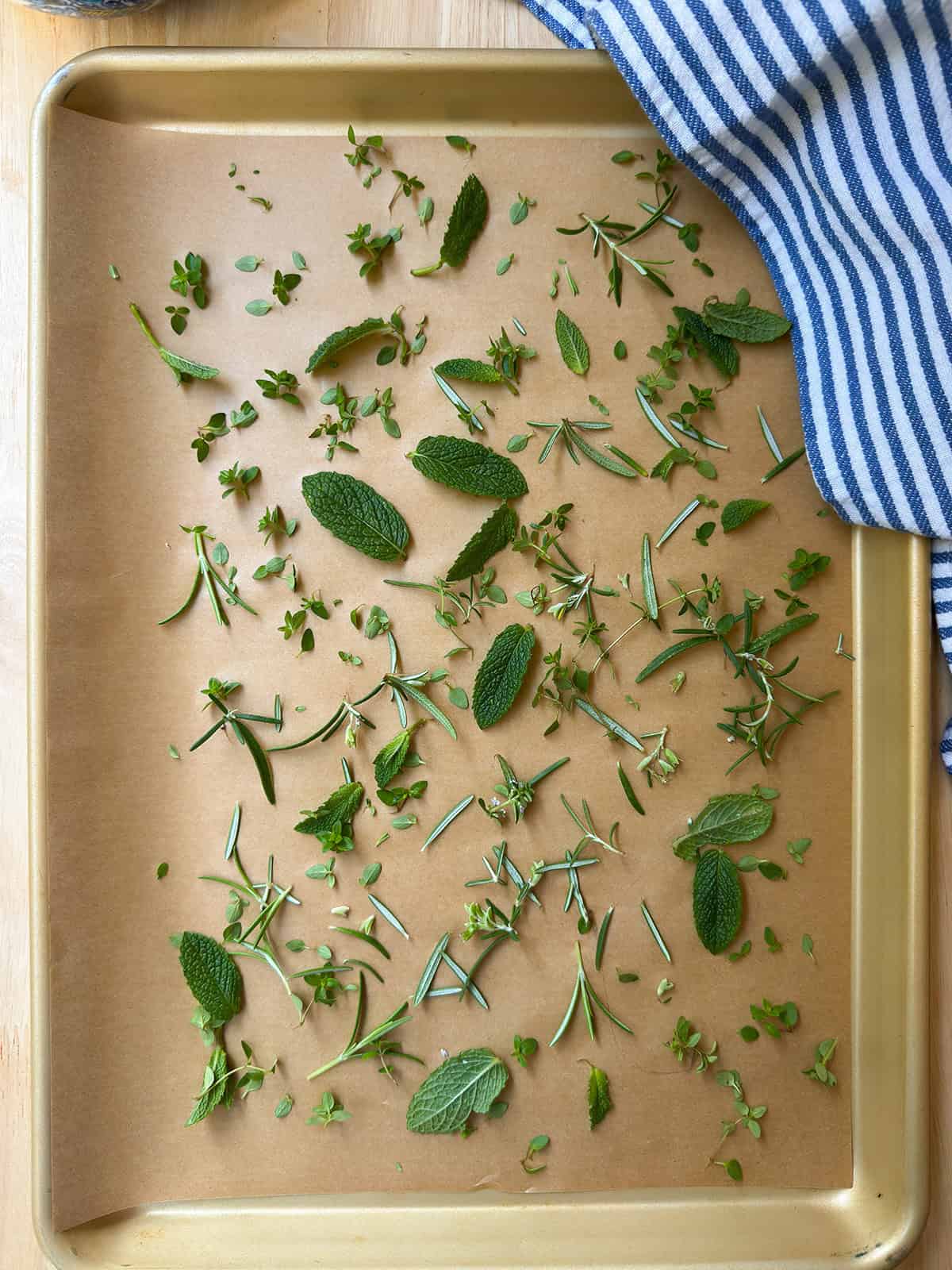
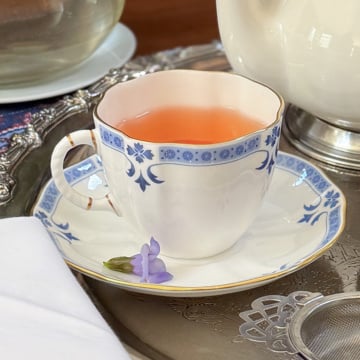
The result is something quietly beautiful: earthy and aromatic, faintly sweet, and entirely its own. Serve it warm in a teapot with honey, or chill it and pour over ice with a slice of lemon and a sprig of fresh mint.
If you grow your own herbs, my guide to growing a tea garden covers everything you need to get started - and how to brew what you grow.
Serving Ideas
Liberty Tea is lovely on its own, but it pairs especially well with the other recipes in this series. Consider serving it alongside:
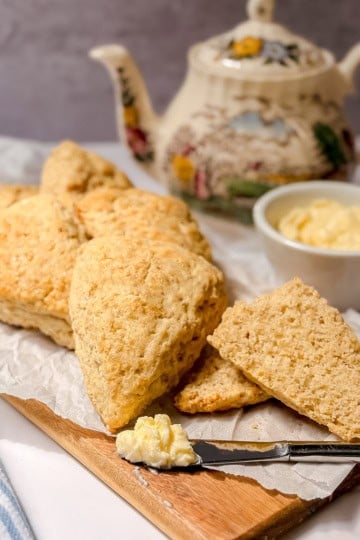
- Colonial Scones
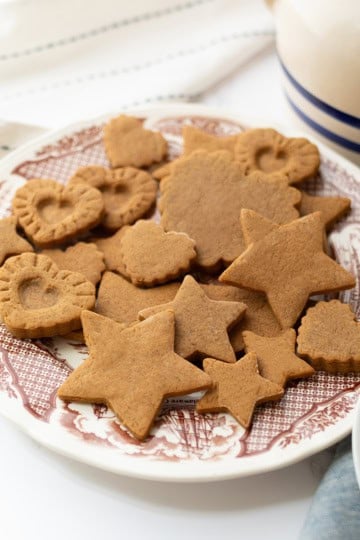
- Colonial Williamsburg Gingerbread Cookies
- Woodbury Cinnamon Teacakes
- Revolutionary Tea menu items
For a summer table, serve it cold in a pitcher with lemon slices and sprigs of fresh mint - a colonial-inspired cousin to herb lemon water, and one of the prettiest things you can put on an outdoor table before the Fourth of July.
Liberty Tea: Herbal Tea Recipe
Ingredients
- 1 tablespoon dried thyme
- 2 tablespoons dried mint leaves peppermint or spearmint
- 2 teaspoons dried rosemary
- 1 tablespoon dried raspberries blueberries, strawberries, or sliced apples (for natural sweetness)
- 6 cups freshly boiled water about 210℉-212℉
- honey or maple syrup for sweetening, optional
Instructions
To make the Liberty Tea blend:
- Combine the dried thyme, mint, rosemary, and dried strawberries. Store in an airtight glass jar in a cool, dark place until ready to brew.
To brew one cup:
- Use 1 heaping teaspoon of the tea blend per cup of freshly boiled water. Steep for 5 to 7 minutes, then strain. Sweeten with honey or a small pour of maple syrup, if desired.
To brew a teapot:
- Add 3 tablespoons of the tea blend to the bottom of a teapot. Pour 6 cups of freshly boiled water over the herbs. Let steep for 5 to 7 minutes before straining into teacups. The longer the steeping time, the richer and more aromatic the flavor.
To serve iced:
- Brew as directed for a teapot, then strain and chill. Serve over ice with fresh mint and a thin slice of lemon. It's especially lovely for a Fourth of July table.
Notes
- Can you use fresh herbs? Yes, but dried herbs create a more concentrated, tea-like flavor and infuse more consistently in hot water. Fresh berries or fruit can also soften the flavor, but they may dilute the tea slightly or change its texture.
- Best 1 cup ratio: A good starting point is 2 parts mint, 1 part thyme, and slightly less rosemary, since rosemary can be more savory and assertive. Add 1 to 2 chopped dried strawberries per cup for gentle natural sweetness. For a fruitier brew, add more dried strawberries. For a brighter, more mint-forward tea, add a little extra mint.
- Storing Liberty Tea Herbs: Store the dried herbs and fruit in an airtight glass jar in a cool, dark place. For best flavor, use within 6 to 12 months. Crumble larger leaves just before brewing for the freshest flavor.
Nutritional information is only an estimate. The accuracy of the nutritional information for any recipe on this site is not guaranteed.
Historical Variations
Colonial Liberty Tea was as varied as the gardens that produced it. If you'd like to explore beyond this blend, here are a few directions rooted in the historical record:
Mint Liberty Tea: The simplest version. Steep peppermint or spearmint alone in boiling water. Mint was among the most widely used colonial tea substitutes and makes a fresh, familiar cup that needs nothing else.
Garden Herb Liberty Tea: Add a small sage leaf alongside the mint, rosemary, and thyme. Sage can be strong - use it sparingly - but it adds a savory, woodsy note that is distinctly colonial in character.
Fruit and Herb Liberty Tea: Add dried apple slices or a few dried berries to the steeping herbs for a fruitier cup, inspired by the dried fruits colonists also relied on.
A note on raspberry leaf and rose hips: both appear in historical Liberty Tea references and remain popular today. However, each carries health considerations for certain individuals, so I've chosen to focus this recipe on widely accessible, straightforward herbs.
In America's 250th Series
This recipe is part of my growing heritage series honoring America's 250th anniversary. You may also enjoy:
- Election Cake
- Woodbury Cinnamon Teacakes
- The 5 Teas Thrown into Boston Harbor
- A Revolutionary Tea
- Colonial Scones
- Colonial Williamsburg Gingerbread Cookies
If you try this recipe, I'd love to hear your comments and consider giving it a 5-star rating. Explore the recipe index for more easy, delicious ideas, and stay updated by subscribing to our newsletter and following us on Facebook, Pinterest, Instagram, and YouTube!
More Heritage Recipes

Popular Right Now


Love seasonal recipes and easy ideas for everyday cooking? Join 36,000+ readers and receive our newest recipes each week.
Subscribe to the Newsletter
Loved this tea and the history behind it. Thank you!
Thank you so much, Lee! I’m so glad you enjoyed both the tea and the history behind it. I loved sharing this one.
This is such a fun way to celebrate summer and the 4th of July. I love to experiment with herbal ratios and serve it both warm and iced!