
Colonial Williamsburg Gingerbread Cookies: A 1796 Recipe
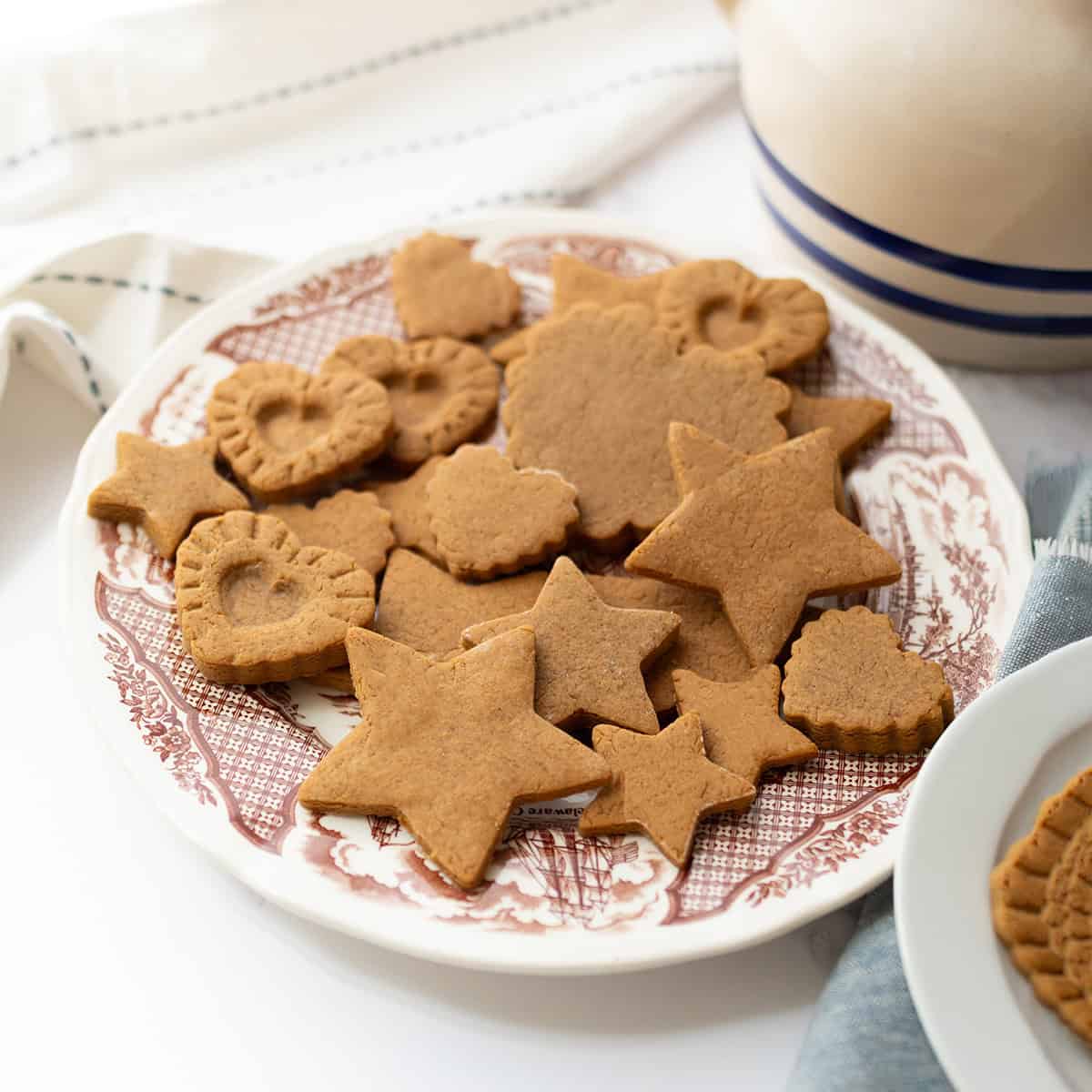
These Colonial Williamsburg Gingerbread Cookies are warmly spiced, deeply fragrant, and inspired by a 1796 recipe with a beautiful tradition behind it.
This post may contain affiliate links. Please read our disclosure policy.
Want to save this recipe?
Enter your email, and we'll send it to your inbox. Plus, you'll get delicious new recipes from us every Friday!
There is a tradition in colonial Williamsburg that most people don't know about.
Gingerbread was not cut into stars and snowflakes in the 18th century. It was cut into hearts.
Not as a romantic gesture - but as a symbol of hospitality. In the language of colonial American decorative arts, the heart represented the warmth of the household toward its guests. It appeared on furniture, on pottery, on quilts, and on the baked goods set out for visitors. To offer someone a heart-shaped gingerbread was to say: you are welcome at this table.
That tradition is why, when I made these cookies for the first time, I reached for the heart cutters. And it is why they are the right cookie for a 250th anniversary tea - a gesture of welcome that is two and a half centuries old.
Jump to:
The Recipe Behind the Cookie
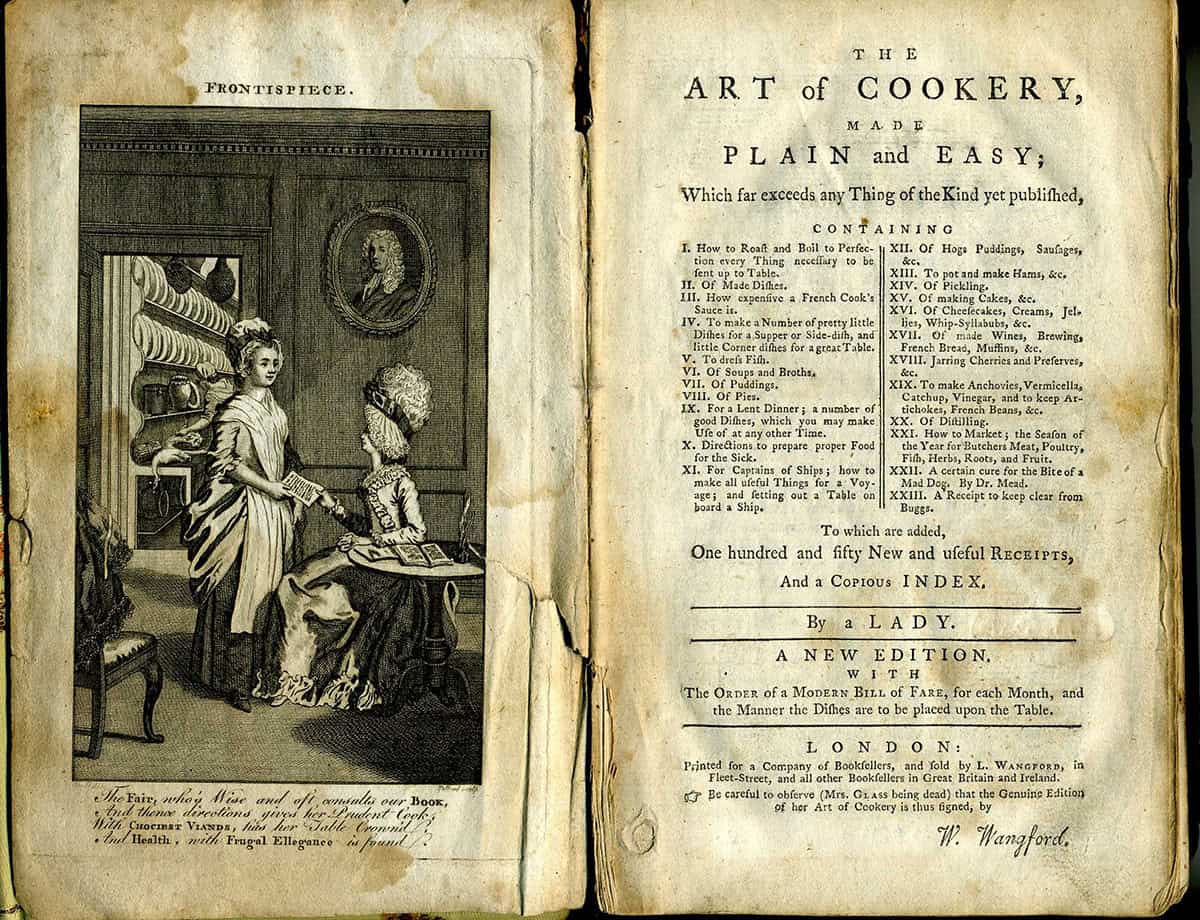
This recipe is adapted from Hannah Glasse's The Art of Cookery Made Plain and Easy - one of the most influential cookbooks of the 18th century, and a book that shaped how ordinary households cooked throughout the colonial era. Her original gingerbread recipe reads:
"Take three pounds of flour, one pound of sugar, one pound of butter rubbed very fine, two ounces of ginger beat, one large nutmeg grated, then take a pound of treacle, a quarter of a pint of cream, make them warm together, and make up the bread stiff. Roll it out."
Six ingredients. No measurements beyond weight. No oven temperature. No baking time. And absolutely no leavening - which is precisely why the original produced a dense, hard, durable biscuit designed for storage and travel rather than the tea table.
The flavor, though, is extraordinary. Deeply spiced, warmly aromatic, and less sweet than anything we associate with gingerbread today.
When I first served these at a family gathering, our European relatives recognized something immediately familiar - that less-sweet, heavily spiced quality that never fully left European baking the way it left American baking after the sugar boom of the 19th century. Our American family members, I'll admit, gravitated toward the peanut butter blossoms. That is not a failure of the recipe. It is historical accuracy in action.
These cookies taste like what they are: a recipe from another century, adapted with care and served with pride.
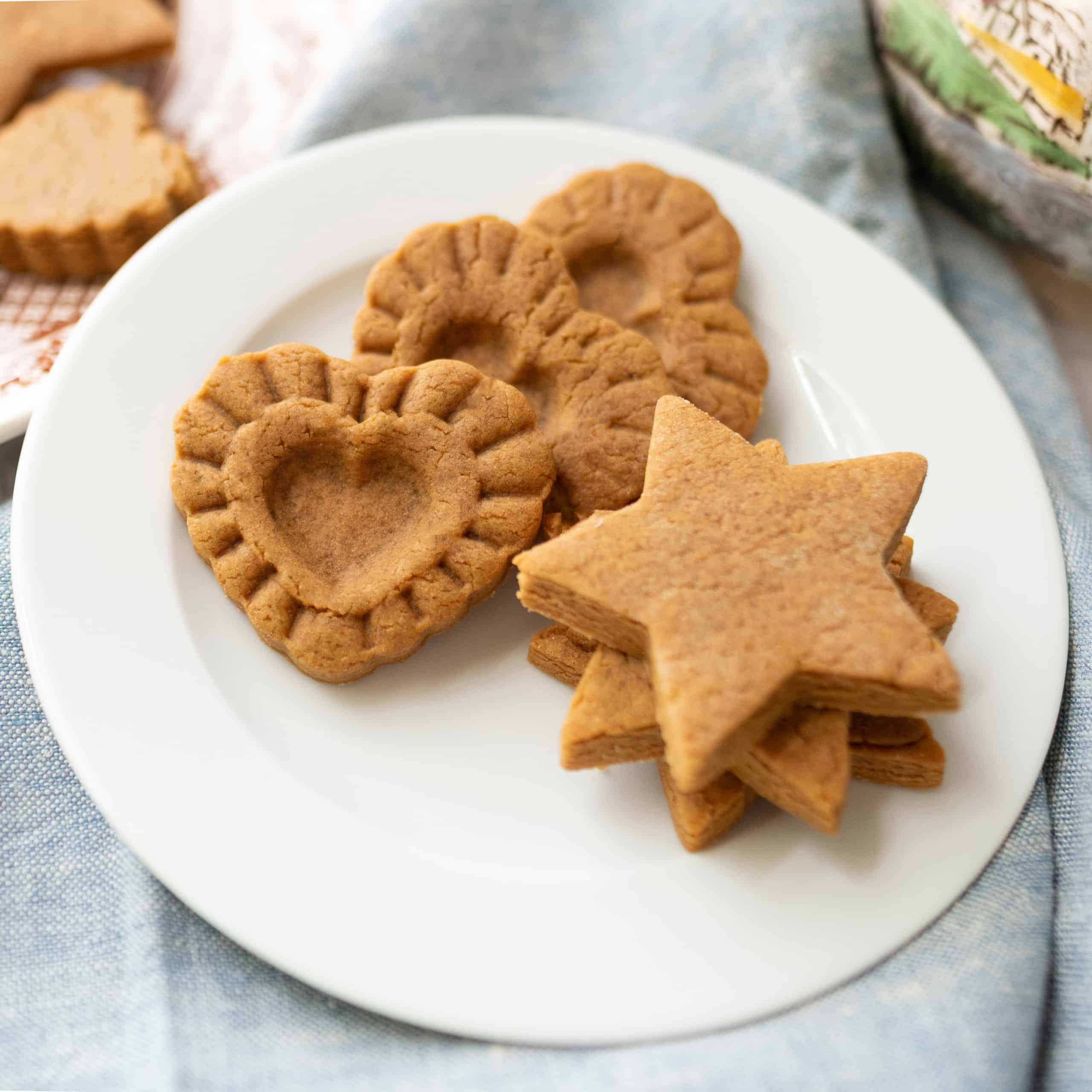
Why Heart Shapes
In colonial Williamsburg, gingerbread and spiced cakes were traditionally formed into heart shapes - a custom that often surprises modern bakers, who associate hearts with Valentine's Day rather than hospitality.
The distinction matters. In the 18th-century American decorative tradition, the heart was a symbol of welcome - the warmth of the household extended toward guests. It appeared everywhere a home wanted to signal graciousness: carved into chair backs, painted onto pottery, stitched into quilts, pressed into molds for celebration cakes.
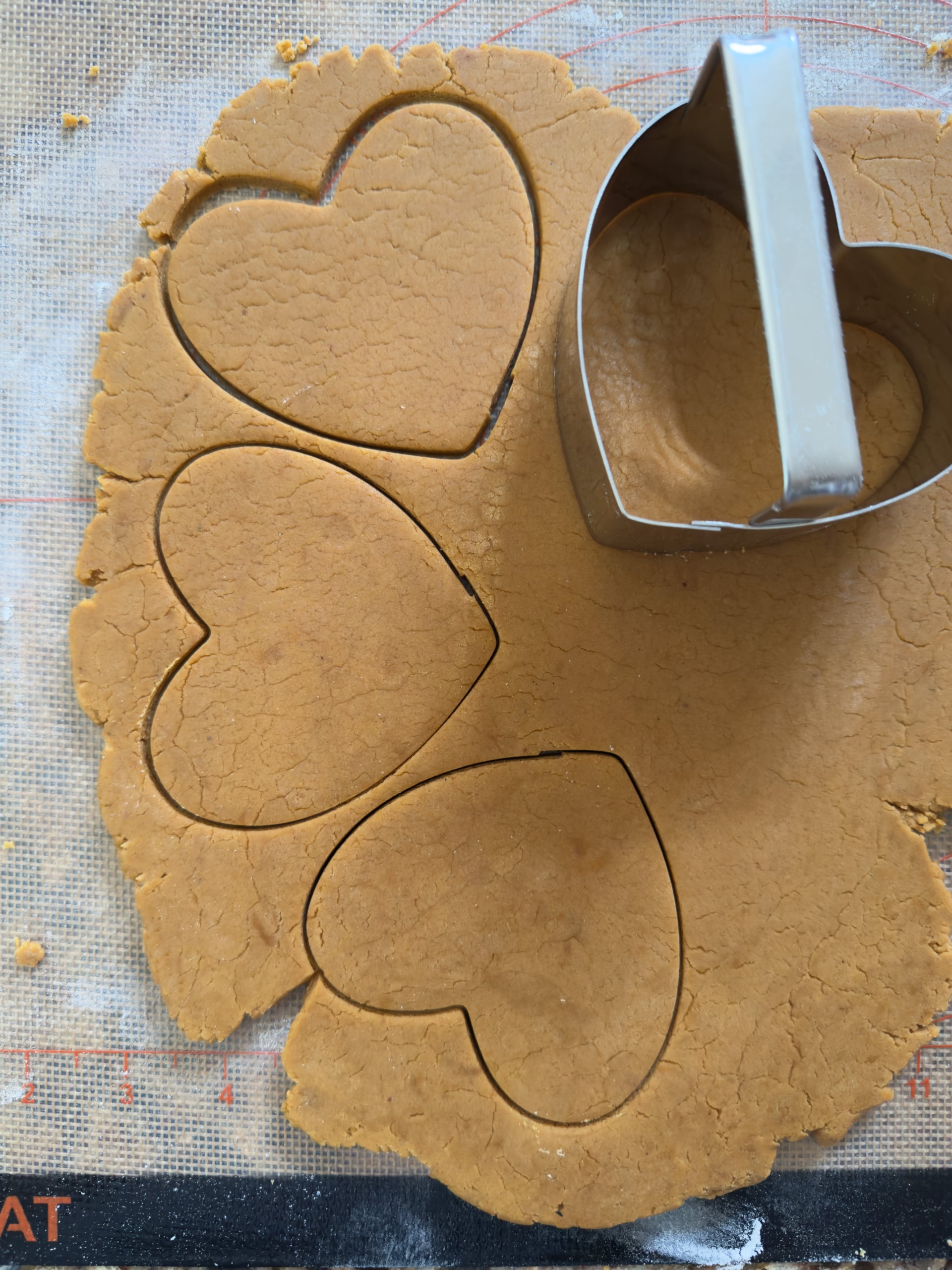
Serving heart-shaped gingerbread at your tea table is not a romantic gesture. It is an ancient one. A gesture that says: this table is set for you.
For this 250th anniversary batch, I added star cutters alongside the hearts - a small gesture toward the nation those hearts were welcoming into being.
How We Scaled the Original Recipe
Hannah Glasse's original called for five pounds of flour. That is not a misprint - it was a recipe designed to produce a large traveling brick of dough that could survive weeks of storage and long journeys. For a modern kitchen batch, we needed to reduce it significantly while preserving the exact ratios that give the cookie its character.
By converting the original to baker's percentages - where flour is always fixed at 100%, and every other ingredient is measured relative to that weight - we can scale the recipe precisely without losing the proportional balance that makes it authentic.
| Ingredient | Weight | Baker's % | Role |
|---|---|---|---|
| All-Purpose Flour | 425g | 100% | Structural base |
| Butter | 113g | 26.5% | Shortness and flavor |
| Molasses | 120g | 28% | Historical sweetening agent |
| Brown Sugar | 100g | 23.5% | Moisture retention |
| Heavy Cream | 30g | 7% | Liquid richness |
| Ground Ginger | 10g | 2.3% | The signature warm spice |
| Ground Nutmeg | 2g | 0.5% | Earthy aromatic contrast |
| Baking Soda | 3g | 0.7% | Our modern softening agent |
This table tells the story of the original recipe at a glance: the high proportion of molasses and ginger relative to flour is what gives these cookies their depth and warmth. These are not background-spiced cookies. The spice is the point - just as it was in 1796.
Three Modern Adjustments
We honored the flavors of the original recipe entirely. Where we adapted, we did so for texture and practicality - and only where the culinary science clearly supported it.
Treacle → Molasses: Dark treacle is a distinctively bitter British syrup. High-quality unsulphured dark molasses maintains the deep, historic color and offers a smoother, warmer flavor that works beautifully in an American kitchen.
Raw Sugar → Dark Brown Sugar: Glasse's original used unrefined, coarse raw sugar. Dark brown sugar - with its natural moisture and molasses content - keeps the cookie soft and contributes to that characteristic color.
Leavening: The original recipe contained no chemical leaveners, which is why the historical biscuit was genuinely hard. A small fraction of baking soda reacts with the natural acids in the molasses to produce the microscopic air pockets that soften the crumb, making these cookies edible for modern teeth without changing their flavor.
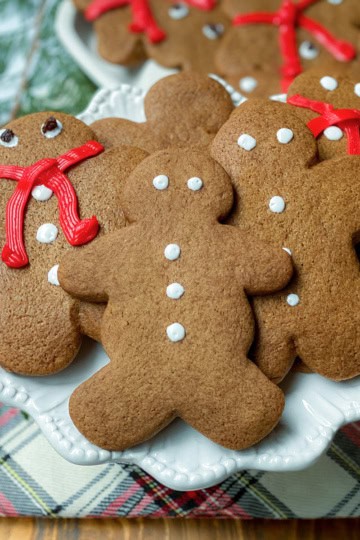
If you love ginger cookies, try our German-inspired Gingerbread People cookies or this reader favorite Ginger Spice Cookies too.
Three Things to Know Before You Bake
Chill the dough. Because we substituted brown sugar for raw sugar and added a softening leavener, this dough will feel much softer than a standard 18th-century dough. Wrap it tightly and chill it for at least 30 minutes. This fully hydrates the flour and keeps the dough from sticking as you roll it.
Watch the temperature. Molasses contains complex natural sugars that scorch easily at high heat. Where modern cookies often bake at 375°F, this historical dough performs best at a steady 350°F for 8 to 10 minutes. Watch the bottoms - when they begin to set, and the edges are just barely firm, they are done.
The cracking is the point. After extensive testing, the one thing I stopped trying to fix was the surface cracking that appears as these cookies bake. It is not a flaw - it is the signature of a molasses-heavy, historically authentic dough doing exactly what it should. A quick search confirms what experienced bakers have long known: if your gingerbread doesn't crack, it isn't worth making. Lean into it.
Gingerbread Cookies of 1796
Ingredients
- 8 tablespoons butter softened to room temperature
- ½ cup brown sugar packed
- 3 ¾ cups all-purpose flour
- 1 ½ tablespoon ground ginger
- ¾ teaspoon ground nutmeg
- ½ teaspoon baking soda
- ½ teaspoon salt
- ½ cup molasses
- 3 tablespoons heavy cream
- 1 tablespoon water
Instructions
- Cream the Butter: In a large bowl, cream the butter and brown sugar together until combined.
- Warm the Liquids: In a small saucepan over low heat, or for a few seconds in the microwave, combine the molasses, cream, and water. Stir just until warm and combined-do not let it boil.
- Mix the Dough: Add the flour, ground ginger, nutmeg, baking soda, and salt to the creamed butter and mix until the dough is crumbly. Pour the warm liquid into the flour mixture and mix until a stiffer dough forms. If it feels too sticky to roll, add a tablespoon more flour; if it's too crumbly, add a teaspoon of water.
- Roll and Cut: Roll it out to about ¼ inch thickness on a floured surface and cut into shapes, rounds, or rectangles. Chill for 30 minutes while preheating the oven to 350℉.
- Bake: Hannah Glasse wouldn't have had a thermostat, but a "moderate oven" for these translates to 350°F (175°C). Bake for 10-12 minutes until the edges are firm. They will crisp up as they cool.
Notes
- Cookie Size & Yield: I'm using a 3 to 4-inch cutter, which will yield about 24-25 cookies and bake for 10-12 minutes, depending on the thickness. If using a 2-inch cutter, reduce the baking time to 8-9 minutes. I prefer to combine these two sizes, using the smaller cutter for leftover dough scraps. That gives me closer to 30 cookies.
- Chilling the Dough: I prefer to roll out the cookie dough, transfer to the baking sheet, and then chill until cold. This helps reduce spreading (although these cookies spread very little) and cracking. When cookie dough becomes warm, it tends to spread and crack.
Nutritional information is only an estimate. The accuracy of the nutritional information for any recipe on this site is not guaranteed.
Serving at the Colonial Tea Table
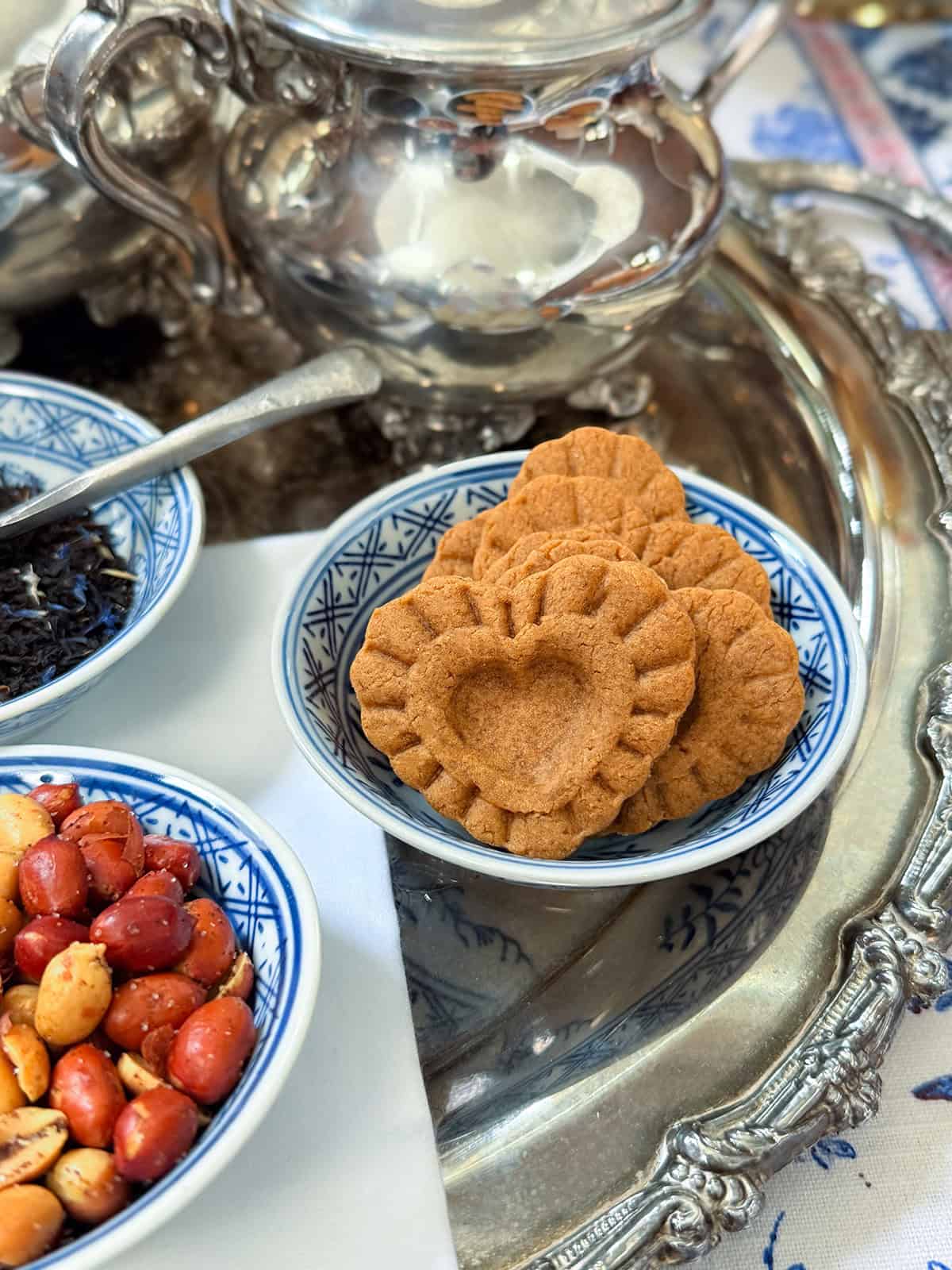
These gingerbread cookies belong at a tea table - which is, of course, exactly where they would have been served in colonial America.
For a 250th anniversary tea, serve them alongside Dolley Madison's Woodbury Cinnamon Teacakes for a historical sweets course that comes entirely from the founding era. Both are spiced, both are less sweet than modern expectations, and both carry the specific warmth of 18th-century American baking.
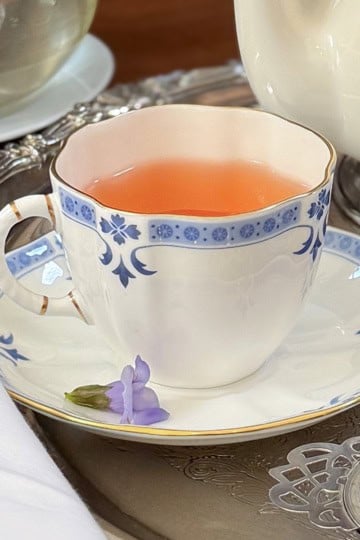
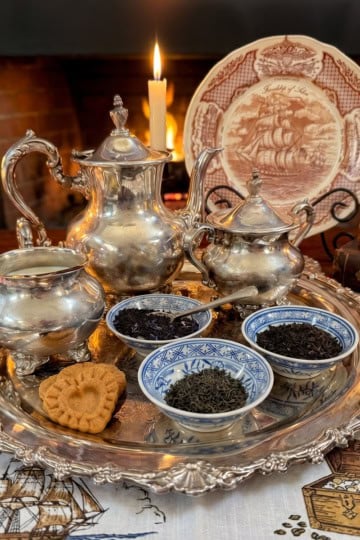
Pair with the Colonial Bohea tea from Oliver Pluff & Co. - the same variety that colonial Americans would have sipped alongside cookies exactly like these, before the events of December 16, 1773, made that a very complicated cup of tea to drink.
Continue the Series
This post is part of 31Daily's America's 250th Anniversary Tea series.
- Revolutionary Tea
- The 5 Teas Thrown into Boston Harbor
- Dolley Madison's Woodbury Cinnamon Teacakes
- Election Cake
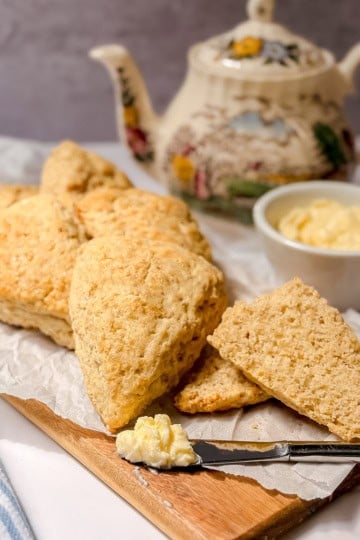
- Colonial Scones (coming June 26)
Have you made colonial-era baked goods before? I'd love to hear about it in the comments.
More Gingerbread Recipes
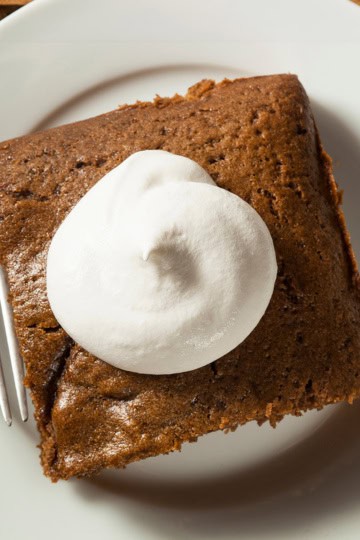
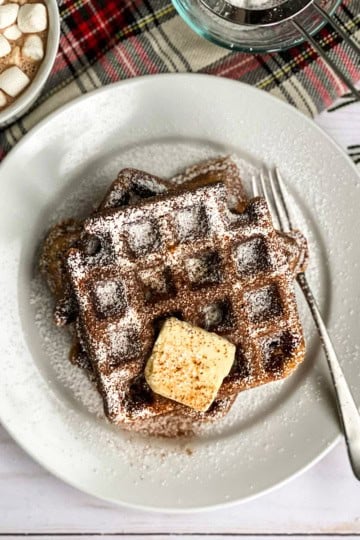
If you love ginger cookies, try our German-inspired Gingerbread People cookies or this reader favorite Ginger Spice Cookies too.


If you try this recipe, I'd love to hear your comments and consider giving it a 5-star rating. Explore the recipe index for more easy, delicious ideas, and stay updated by subscribing to our newsletter and following us on Facebook, Pinterest, Instagram, and YouTube!
More Heritage Recipes

Popular Right Now
Love seasonal recipes and easy ideas for everyday cooking? Join 36,000+ readers and receive our newest recipes each week.
Subscribe to the Newsletter
I have dozens and dozens of these cookies in my freezer. They have become a favorite. Not only for their historic roots, but the elevated ginger and spices and the soft texture have made them a favorite!