
A Revolutionary Tea Honoring America's 250th
On the evening of December 16, 1773, a group of colonists boarded three ships in Boston Harbor and threw 342 chests of tea into the water.
It was an act of protest - against taxation without representation, against the monopoly of the British East India Company, against the quiet accumulation of indignities that a young nation in waiting had decided it would no longer accept. The tea that sank into the harbor that night was worth more than a million dollars in today's money. The idea it represented was worth considerably more.
This post may contain affiliate links. Please read our disclosure policy.
Want to save this recipe?
Enter your email, and we'll send it to your inbox. Plus, you'll get delicious new recipes from us every Friday!
Two hundred and fifty years later, we are still drinking tea. And this summer, as America marks its 250th anniversary, it feels exactly right to set a tea table that honors both the history and the celebration - the revolution and the republic it made possible.
This is that table.
In This Post
What Makes This Tea Gathering Different
Most afternoon teas look to England for their inspiration - the tiered trays, the finger sandwiches, the bone china, the ritual of the pot. This one looks to America. Specifically, to the founding era: to the flavors, the foods, and the teas that were actually on colonial tables in the years when this country was being imagined and argued into existence.
The teas served here are drawn from the historical record - the very varieties that were aboard the Dartmouth, the Eleanor, and the Beaver on the night of the Boston Tea Party. The sweets are rooted in colonial American baking traditions. The savories are from the 31Daily tea table, chosen for their resonance with the era.
It is a tea that celebrates 250 years of America by beginning at the beginning.
The Teas of 1773 - and Where to Find Them Today
Before we set the table, a word about what goes in the cup.
The tea destroyed in Boston Harbor on December 16, 1773, was not from India, as is commonly assumed. It was entirely from China - imported through the British East India Company's extensive trade routes with Chinese merchants. All five varieties were loose-leaf, because tea bags were still 150 years in the future, and the colonists had no taste for tea bricks.
Historical records are precise about what was lost that night: 240 chests of Bohea, 15 of Congou, 10 of Souchong - all black teas - and 60 of Singlo and 15 of Hyson, both green teas from the Chinese province of Anhui.
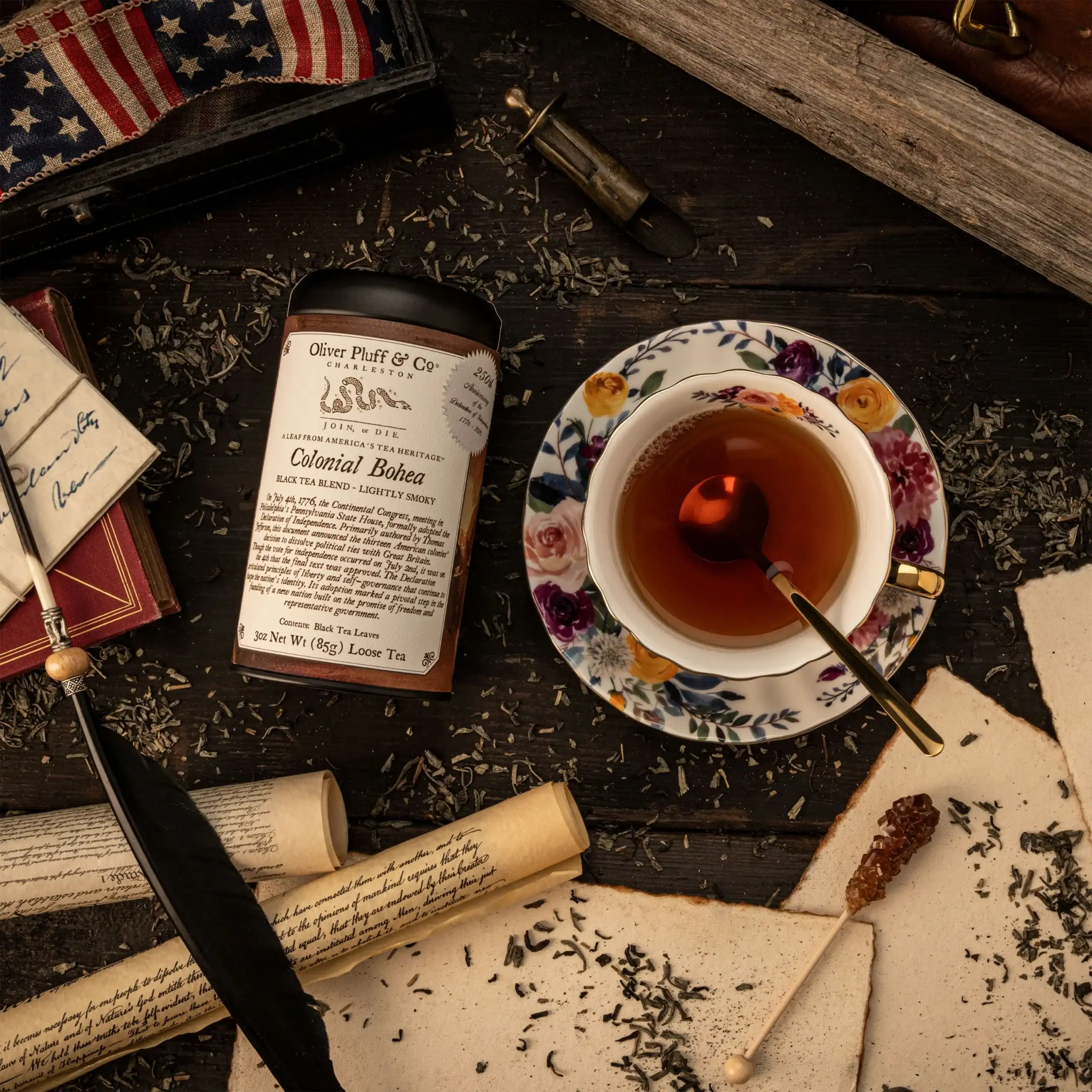
The remarkable news for a 250th tea table is that all five of these teas are available today, faithfully recreated by Oliver Pluff & Co., a Charleston, South Carolina, tea company that has done the historical work of sourcing and blending these varieties with care and accuracy. When you raise a cup of their Colonial Bohea, you are tasting something as close to history as a cup of tea can be.
Here is what to know about each:
Colonial Bohea (pronounced boo-hee) - This was the most common tea in colonial America by far. So dominant was it that "bohea" simply became the slang term for tea itself. John Adams' diary entry from December 17, 1773, reads: "Last Night 3 Cargoes of Bohea Tea were emptied into the Sea." The flavor is smoky, winey, and warm - lighter than a Lapsang Souchong but with the same Wuyi Mountain character. Oliver Pluff's 250th Anniversary Bohea is the centerpiece of this tea service.
Lapsang Souchong - The more widely available cousin of the Bohea, Lapsang Souchong is slowly dried over pine fires in the Wuyi Mountains, developing its characteristic smoky depth. Harney & Sons carries a beautiful version. Offer this alongside the Bohea for guests who prefer a bolder, smokier cup.
Young Hyson - A green tea, lighter and more delicate than the blacks. For a summer tea table, consider serving this Young Hyson Tea cold-brewed overnight - smooth, clean, and gently grassy. It is the natural iced tea of a 250th celebration, beautiful in a glass pitcher with a sprig of fresh mint.
Liberty Tea - After the Boston Tea Party, patriotic colonists boycotted British tea entirely and turned to herbal alternatives. Liberty Tea - made from rose hips, mint, lemon verbena, and berry leaves - became the drink of the resistance. For guests who prefer an herbal option, a pitcher of Liberty Tea, naturally red-toned and caffeine-free, is both historically fitting and visually perfect for a red, white, and blue table.
For a fresh-from-the-garden variation, my Fresh Herb Liberty Tea is a simple 5-minute herbal tea made with mint, sage, thyme, and rosemary - perfect for an America 250 tea table.
See How to Grow a Tea Garden for more herbal ideas.
Setting the 250th Tea Table
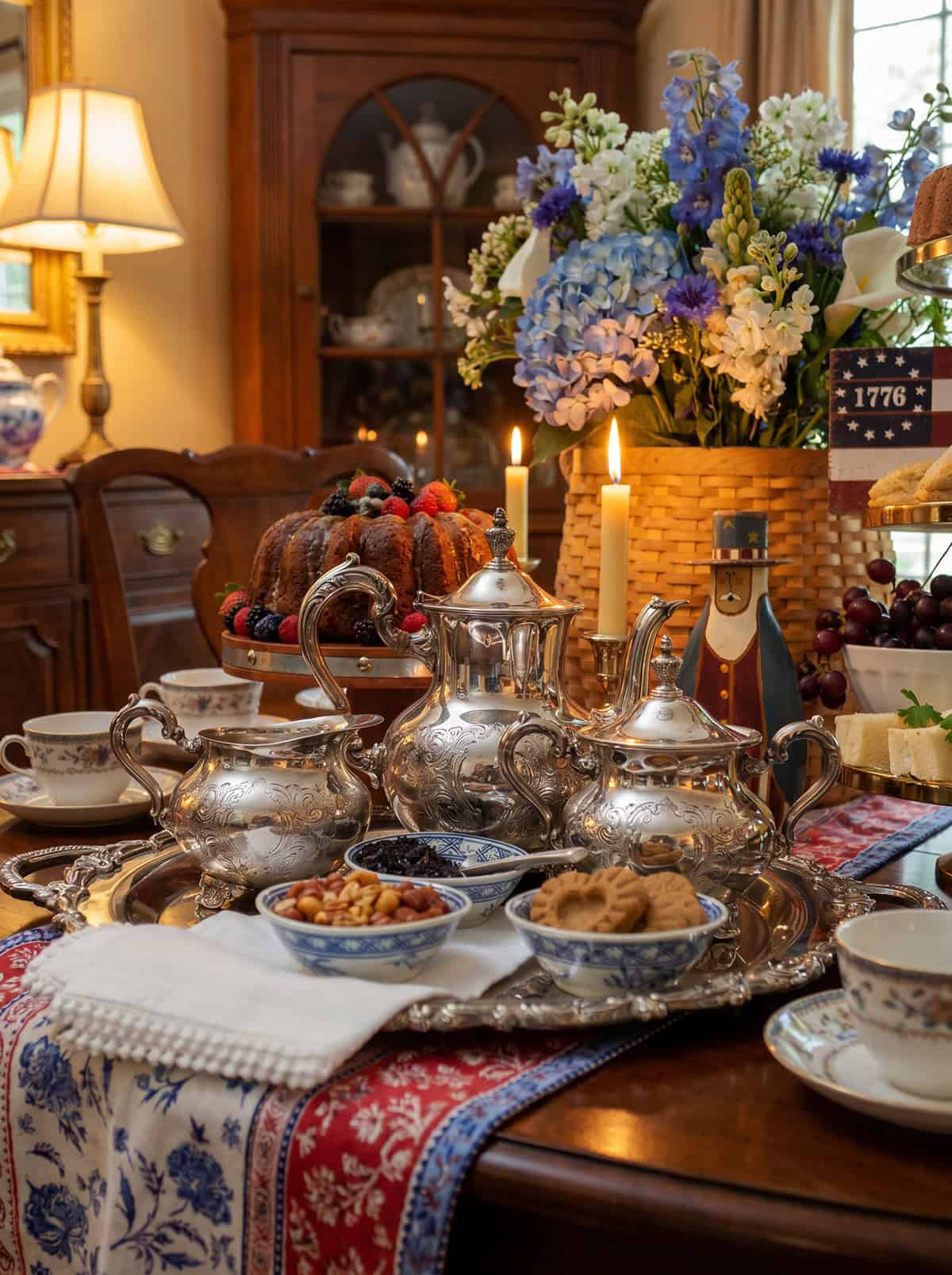
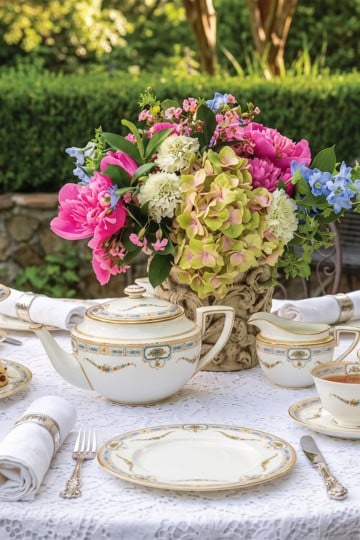
A red, white, and blue tea table does not need to be obvious to be patriotic. The most beautiful version of this table is subtle - a nod to the era rather than a declaration of it.
For this shoot, I worked with a vintage-style basket, a tea tablecloth in soft linen, and a length of vintage-style bunting draped loosely at the table's edge. The goal was colonial America suggested, not shouted: the kind of table that Abigail Adams might have recognized, set in a spirit she would have appreciated.
A few styling details that make the difference:
Bunting, draped loosely. Not flags flying, but the gentle suggestion of the era's colors - red, white, and a blue that reads more as indigo than primary.
Simple earthenware or early American-style ceramics. Colonial tea was served in bowls without handles - a detail worth noting in your table setting, even if you serve in handled cups. The blue and white willow pattern, so associated with the colonial era, is a natural choice.
Garden flowers in a simple container. Wildflowers, herbs in bloom, or simple white flowers in a basket or a plain pottery jug. Nothing formal. The founding era did not have florists.
Loose-leaf tea, visibly presented. A small bowl or open caddy of Colonial Bohea on the table connects the visual to the history. The Oliver Pluff tin itself is beautiful enough to place on the table - the 250th anniversary label tells its own story.

The 250th Afternoon Tea Menu
This menu is organized as the colonial tea table actually was - not as a single tiered tray of interchangeable items, but as distinct courses that moved through the afternoon with intention. Bread came first, then savories, then the sweet course. Fruit, cheese, and preserves appeared throughout, set on the table as the season and the household provided.
Each recipe here is linked to the 31Daily archives. Most are already in the collection - a few are newly written for this series and published for the first time this summer.
The Bread Course - Where Every Colonial Tea Began
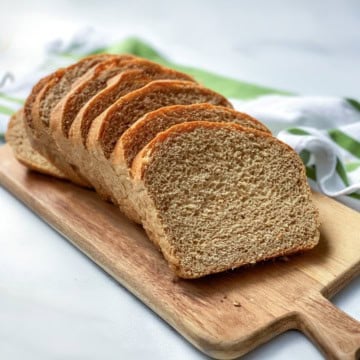
Before the finger sandwich became an art form, there was bread and butter - and on the colonial American tea table, it was never an afterthought. Bread, sliced thin or thick and spread generously with freshly churned butter, was the foundation of every tea service in the 18th century. It appeared at every table, from the most modest household to the most formal gathering, and it was never skipped.
Alongside the bread came watercress - one of the simplest and most historically authentic savories you can offer at a Revolutionary-era table. Watercress grew wild along streams and in kitchen gardens throughout colonial America and Britain, and a watercress sandwich required nothing more than what every household already had: thinly sliced bread, softened butter, a generous handful of fresh watercress, and a pinch of salt. Spread the butter on both slices, lay the watercress flat across one side so the leaves just reach the edges, press the slices together, trim the crusts, and cut into fingers or triangles. That is the whole recipe - and it is exactly what it would have been in 1776.
If watercress is unavailable, baby arugula is the closest modern substitute in both flavor and character - peppery, tender, and distinctly green. Either way, serve immediately. This is not a make-ahead course.
A note on the table: Colonial hostesses also set out fruit alongside the bread course - fresh grapes, summer berries, and whatever the season offered from the kitchen garden. Hard cheeses appeared as well, cut into simple pieces rather than arranged on elaborate boards. And always, always, a dish of preserved fruit - the jam, the conserve, the fruit butter that had been put up from the summer harvest. These were not garnishes. They were provisions, offered generously, in the spirit of a table that had enough and wanted to share it.
Savories
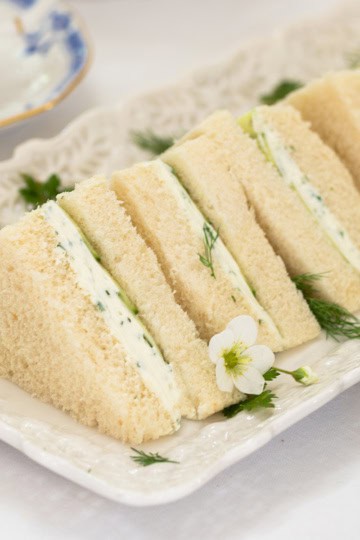
Benedictine Tea Sandwiches: Created at a Louisville tearoom in the early 1900s but rooted in the cucumber-and-herb flavor tradition of early American entertaining, Benedictine sandwiches are a natural bridge between the founding era and today. Cool, creamy, and herbaceous - serve on thin-cut white bread, fingers trimmed, tucked with a simple herb garnish.
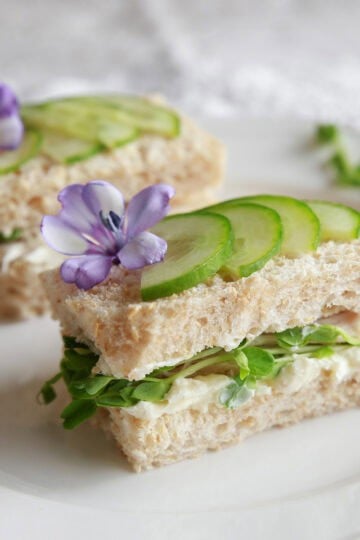
Easy Make Ahead Tea Sandwiches: The full 31Daily tea sandwich repertoire - cucumber, smoked salmon, herb cream cheese, and more - gathered in one place and designed to be made ahead so the afternoon is unhurried. For a Revolutionary 250th table, lean toward the herb-forward, savory varieties that echo the flavors of the founding era.
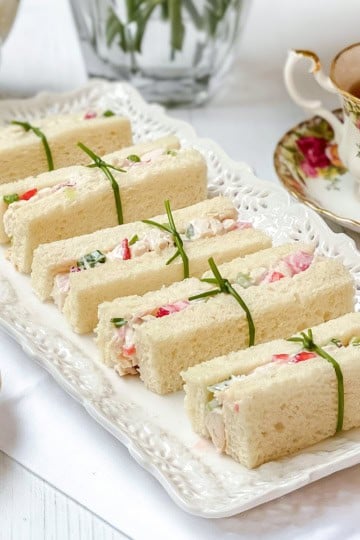
Strawberry Chicken Salad Tea Sandwiches: Strawberries were cultivated in colonial American gardens, and chicken salad - though not in its modern form - has roots in early American entertaining. This version, bright with fresh strawberry and lemon, brings summer and history together on one tray.
Historical Sweets - From the Founding Table
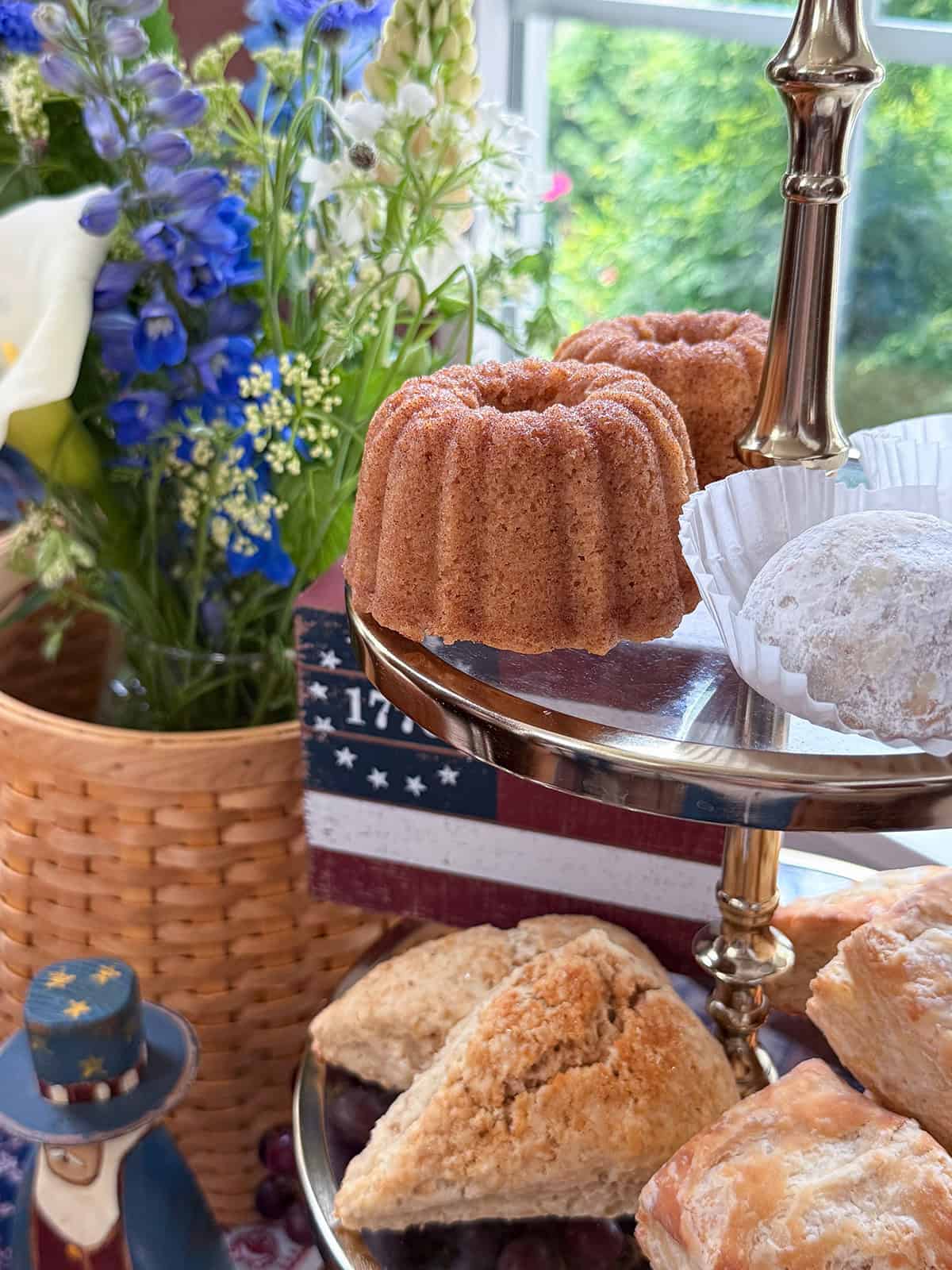
This is the heart of the Revolutionary Tea: four recipes with direct roots in colonial and early American tradition, each with a story worth telling at the table.
Dolley Madison's Woodbury Cinnamon Teacakes: The centerpiece of a 250th tea table. Compiled from primary source documents including The Presidents' Cookbook and early White House records, these cinnamon teacakes were served by the First Lady who defined American hospitality. Unapologetically spiced, deeply historical, and - as bakers across the country have discovered - impossible to stop eating.
Colonial Williamsburg Gingerbread Cookies - 1796: Adapted from an 18th-century recipe using baker's math to scale the original precisely, these gingerbread cookies carry the full weight of their era - less sweet than modern expectations, deeply spiced, and cut in the heart shapes that colonial Williamsburg used as a symbol of hospitality and welcome. For a 250th table, they are both historically faithful and genuinely delicious (recipe coming soon).
Election Cake: One of the oldest American celebration traditions, Election Cake was baked in New England towns when citizens gathered to vote - a rich, spiced yeast cake offered as a refreshment and a symbol of community. The 31Daily version honors the 18th-century original while making it achievable in the modern kitchen. For the 250th Revolutionary tea table, there is no sweeter, historically resonant.
Berry Trifle with Pound Cake and Chantilly Cream: Trifle was a fixture of colonial American entertaining, brought from England and made American through the abundance of summer berries. Red strawberries, blueberries, and Chantilly cream make this one of the most naturally patriotic desserts on the table.
Scones and Breads
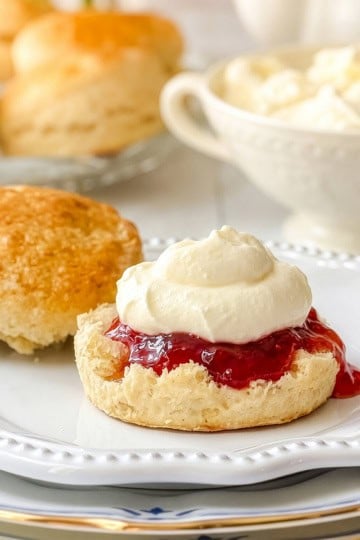
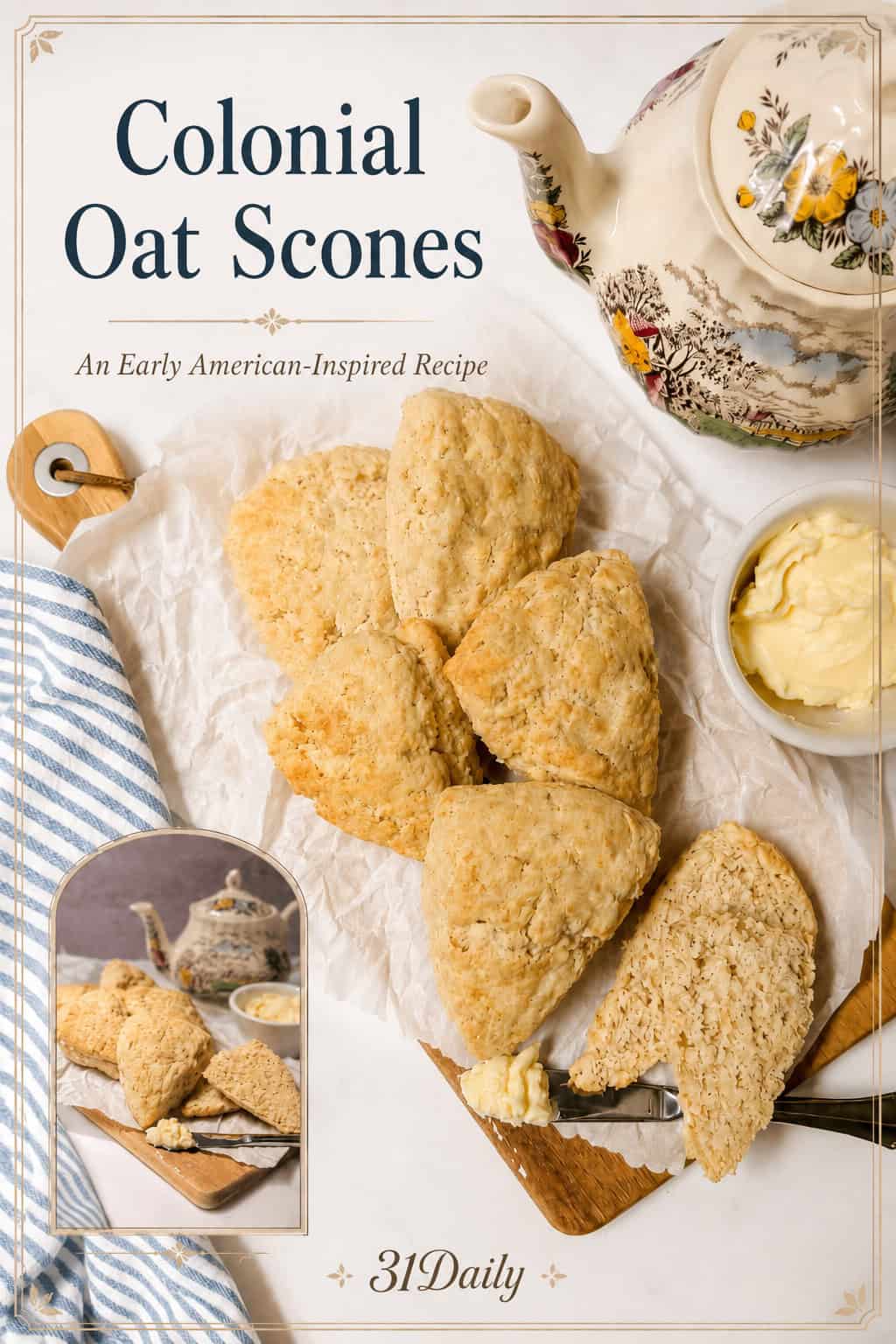
Colonial Oat Scones: Descended directly from the Scottish bannock brought to America by early settlers, these oat scones were a staple of the colonial tea table long before refined wheat flour was widely available. Sweetened with maple syrup - the natural sweetener of the New England colonies - and baked to a hearty, satisfying crumb, they are the most historically grounded scone you can serve. Cut into triangles in the bannock tradition, or shaped into rounds. Serve with butter and fruit preserves (recipe coming soon).
Homemade Mock Clotted Cream: If you are serving the colonial scones with something richer than butter, this five-minute mock clotted cream is the answer. Spread it generously - the colonial tea table was never stingy - alongside a dish of strawberry jam or whatever preserve the season offers.
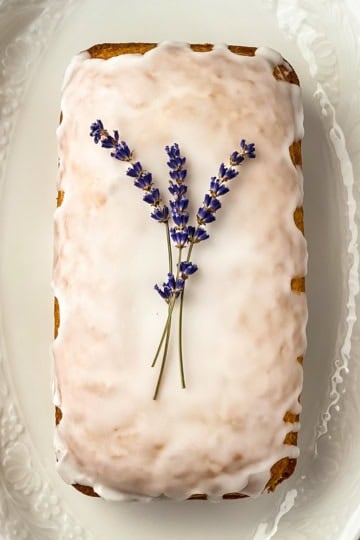
Lavender Tea Bread: Lavender was grown in colonial American kitchen gardens and used in both cooking and medicine. This tea bread - fragrant, tender, and deeply summery - has become one of the most beloved recipes at 31Daily. Sliced thin and offered alongside the historical sweets, it bridges the colonial garden and the modern tea table quietly and beautifully.
A Note on the Boston Tea Party Teas
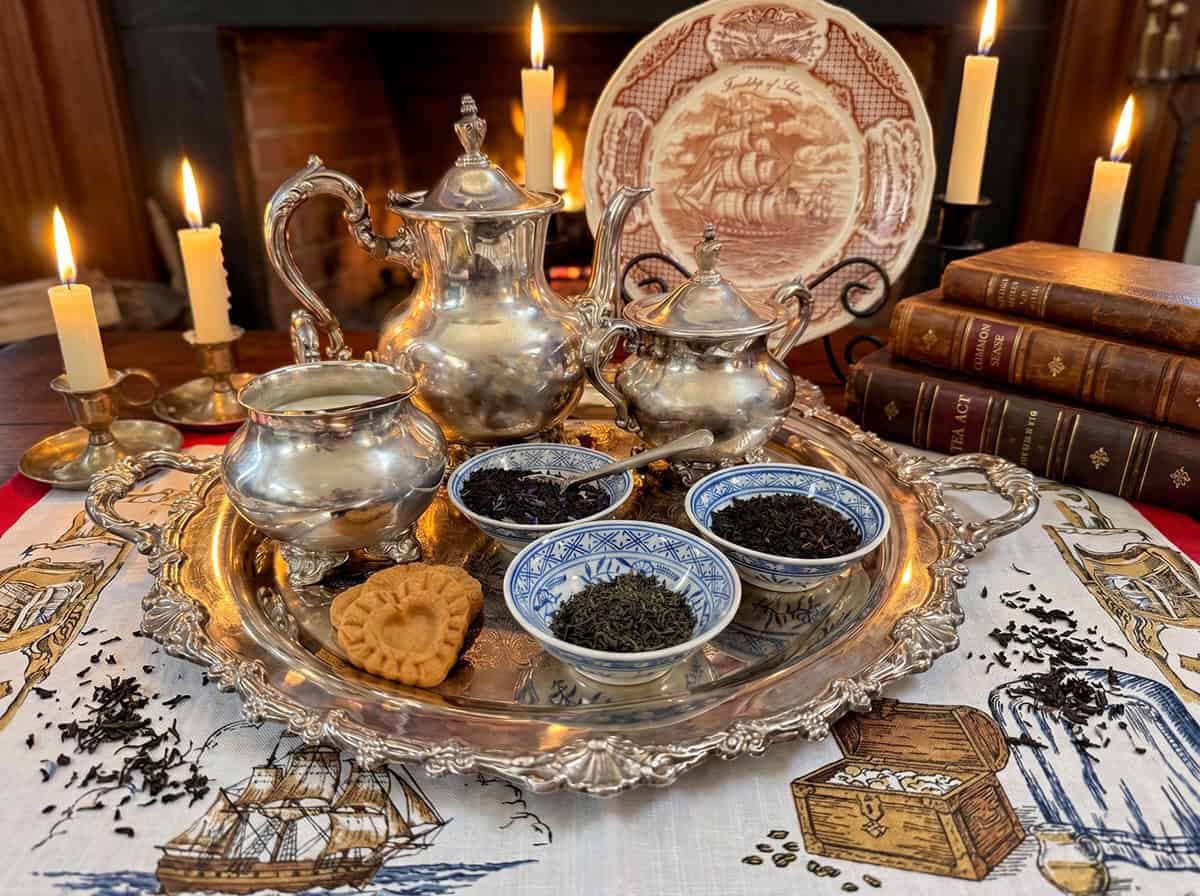
The five teas destroyed in Boston Harbor - Bohea, Congou, Souchong, Singlo, and Hyson - were all produced in China, not India. Tea would not be cultivated in India or Sri Lanka until the 19th century. The colonists who dumped them into the harbor that December night were protesting not the tea itself, which they loved, but the monopoly and the taxation that surrounded it.
It is worth noting, as the historian Benjamin Woods Labaree recorded, that the teas aboard the ships were already past their prime - plucked in 1770 and 1771, warehoused in London for two years, then shipped to the colonies. The Sons of Liberty were making a political statement about tea that was, frankly, not very good tea. The irony is complete.
The teas available from Oliver Pluff & Co. today are considerably fresher. Packaged to order and shipped within a business day, they represent the historical varieties at their best rather than their most politically convenient.
Why Tea, for a 250th Celebration
It might seem counterintuitive to serve tea at a celebration of American independence, given that the most famous act of pre-revolutionary protest involved throwing it into a harbor.
But tea was never the enemy. The taxation was. The monopoly was. The principle that a government could impose its will on a people who had no voice in its decisions - that was what went into the harbor on December 16, 1773.
Tea itself was beloved. The colonists drank it daily, served it to guests, and built their social lives around it. When they gave it up after the Boston Tea Party - turning to coffee, to Liberty Tea, to whatever alternatives they could find - it was an act of genuine sacrifice. They loved what they were surrendering.
Serving tea at a 250th anniversary celebration is not an act of contradiction. It is an act of reclamation - of the tradition that was always ours, returned to us in freedom rather than under compulsion.
That is something worth raising a cup to.
For more reading you may also enjoy, I wrote about what was actually served at the first Fourth of July celebration - and the table looked very different from what we imagine today.
More Afternoon Tea Inspiration
Browse the full Afternoon Tea by Month collection for seasonal tea menus year-round.
- A Rare Day in June - Afternoon Tea (June)
- Easy Make Ahead Tea Sandwiches
- Easy Afternoon Tea Party Desserts
- How to Serve an Easy Afternoon Tea
- Dolley Madison's Woodbury Cinnamon Teacakes
- Election Cake
Are you planning a 250th celebration this summer? I'd love to hear about it in the comments.
More Afternoon Tea
Popular Right Now



Love seasonal recipes and easy ideas for everyday cooking? Join 36,000+ readers and receive our newest recipes each week.
Subscribe to the Newsletter
This is an education. Thank you.
I'm so glad you enjoyed it, Charles!
Love this...thank you for sharing!
Thank you so much, Lori! I’m so glad you enjoyed it. This series has been such a meaningful one to write.